A few loose boards after a winter storm are one thing. Finding soft spots, bubbling paint, or rising energy bills is something else entirely. For many homeowners, the hard part is not spotting that siding has a problem. It is deciding whether that problem calls for a targeted repair or a full replacement.
That is where a clear look at the condition of your home matters. The right answer depends on how widespread the damage is, what kind of siding you have, how old it is, and whether you are trying to solve a cosmetic issue or a bigger performance problem. In a siding decision, there is no prize for choosing the cheapest option today if it leads to a larger bill next year.
Siding replacement vs repair: what is the real difference?
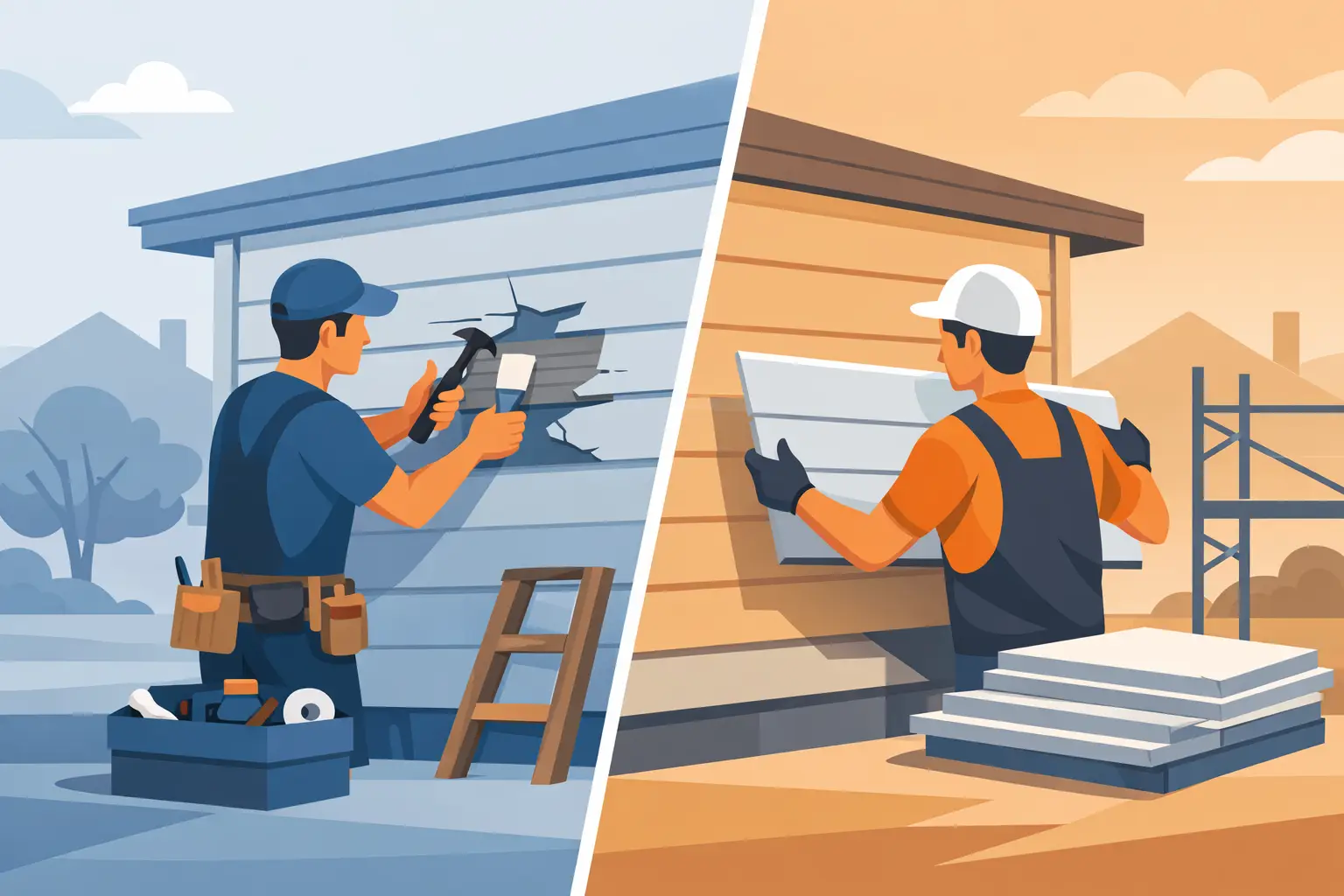
Siding repair is the better fit when damage is limited and the rest of the exterior is still doing its job. That usually means one section took on storm damage, a few panels cracked, or one area around a window or door has started to fail. In those cases, a skilled crew can remove the damaged material, inspect what is underneath, and restore that section without disturbing the rest of the house.
Siding replacement is a broader investment. It makes sense when the siding is nearing the end of its lifespan, when multiple elevations are showing wear, or when hidden moisture issues may be affecting the sheathing beneath. Replacement also gives you the chance to improve insulation, weather resistance, curb appeal, and overall value in one coordinated project.
The biggest difference is not just scope. It is whether you are correcting an isolated issue or solving a system-wide problem.
When repair makes the most sense
Repair is often the smart move when the siding damage is recent, localized, and easy to match. If a branch hits one wall during a storm, or a few vinyl panels come loose in high wind, a targeted fix can restore protection without turning the job into a full exterior remodel.
Homeowners also lean toward repair when the siding is still relatively new. If the product has many good years left and the color has not faded unevenly, replacement may be unnecessary. A well-executed repair can buy you a long stretch of added life.
There is also a budget reality here. A repair usually costs less upfront, and for the right situation, that is a responsible choice. If the structure underneath is dry and sound, and the damage has not spread, a repair can be the practical answer rather than a temporary patch.
Still, repair works best when the problem is truly contained. That is the key distinction.
Signs a repair may be enough
If you see a small number of cracked, warped, or missing pieces, repair is worth serious consideration. The same goes for minor storm damage, limited pest damage, or a single problem area caused by an installation issue from years ago.
What matters is consistency. If 90 percent of the siding is in solid condition and only one section has failed, replacing the entire exterior may be more than the house needs.
When replacement is the better long-term call
Replacement becomes the stronger option when problems keep repeating or show up in more than one place. If you have repaired one wall, then another, and now a third area is failing, the siding is telling you something. At that point, the issue is usually age, widespread weathering, poor original installation, or moisture getting behind the cladding.
Water is often the deciding factor. Stained interior walls, moldy smells, swollen trim, or soft sheathing beneath the siding are signs that the problem is not just on the surface. If moisture has been getting in, replacing the siding gives your contractor the chance to inspect the wall assembly, repair damaged areas, and rebuild the exterior envelope correctly.
Replacement also makes sense when matching is no longer realistic. Older siding fades, manufacturers discontinue product lines, and repaired sections can stand out in a way that hurts the appearance of the home. If curb appeal matters to you, a pieced-together exterior may not be the outcome you want.
Signs it is time to replace siding
If the siding is warped in multiple places, has widespread rot, needs frequent repainting, or shows repeated loose panels after wind events, replacement is often the safer investment. Rising heating and cooling costs can also point to performance issues, especially when old siding and poor weather protection are part of the same problem.
Age matters too. Even if the house is not in crisis, older siding that has become brittle, faded, or high-maintenance may be costing you more in upkeep than it is worth.
The hidden cost question: cheaper now or better value later?
This is where many homeowners get stuck. Repair usually wins on upfront price. Replacement often wins on long-term value.
A small repair is cost-effective when it solves the issue fully. But repeated repairs can add up fast, especially if crews need to revisit the same trouble spots every year or two. There is also the risk of paying to fix the visible damage while hidden moisture or structural wear continues behind the wall.
Replacement is a bigger project, but it can reduce maintenance, improve energy performance, and eliminate uncertainty. It also gives you one coordinated schedule, one finish standard, and one complete result rather than a series of one-off fixes.
For homeowners planning to stay in their house for years, replacement can be easier to justify. For those dealing with one isolated problem on otherwise healthy siding, repair may offer the best return.
Material type changes the answer
Not all siding ages the same way. Vinyl can crack, loosen, or fade, but isolated repairs are often possible if matching product is available. Wood has a classic look, but it needs ongoing maintenance and can hide rot if moisture gets behind it. Fiber cement is durable, though repairs can be more labor-intensive depending on the damage and installation details.
The original workmanship matters just as much as the material. If siding was installed without proper flashing, trim details, or moisture management, repairs may only treat symptoms. In that case, replacement gives you the chance to correct the assembly the right way.
That is why a proper evaluation should look beyond the outer surface. Good siding work is not just about what you see from the street. It is about what protects the home underneath.
What a good inspection should tell you
A trustworthy contractor should not rush this decision. They should inspect the damaged areas, check for softness or moisture beneath the siding, look at trim and flashing details, and explain whether the issue is local or widespread.
You should also get a realistic conversation about options. Sometimes the answer is a straightforward repair. Sometimes it is a phased plan, such as replacing the most exposed elevations now and scheduling the rest later. For many homeowners, that kind of good-better-best approach makes the decision easier because it aligns scope with budget without cutting corners on quality.
If you live in Peabody, Essex County, or the greater Boston area, that local experience matters. Coastal weather, winter freeze-thaw cycles, and wind exposure can shorten the life of exterior materials and make small failures spread faster. A contractor who understands those conditions can help you make a decision based on how homes perform here, not just in a brochure.
Siding replacement vs repair and your next move
If your siding has one damaged section and the rest of the house is in strong shape, repair may be the right call. If you are seeing recurring problems, visible aging across multiple sides, or signs of moisture getting in, replacement is usually the better path.
The best decision is the one that solves the real problem, protects the house for the long run, and fits your plans for the home. That is how we approach exterior work at US Home Improvement - with a careful inspection, a detailed quote, and a clear explanation of what makes sense now and what will hold up later.
If you are unsure which side of the line your home falls on, start with an honest evaluation. A good contractor should make the choice feel clearer, not more complicated.