A roof replacement usually moves from "maybe next year" to "we need to deal with this now" after a leak, missing shingles, or one too many repair visits. That shift can feel abrupt, especially when you are trying to protect your home, stay on budget, and avoid a project that drags on for weeks.
For most homeowners, the real challenge is not understanding that the roof matters. It is figuring out whether replacement is truly necessary, what kind of system makes sense for the house, and how to avoid paying for shortcuts that show up later as stains, drafts, or damaged decking. A good roofing project should solve a problem for the long term, not just make the house look better for a season.
When roof replacement makes more sense than repair
Not every roofing problem means you need to start over. A small area of storm damage on a newer roof may be a clean repair. One section with lifted shingles around a vent boot might be handled without touching the rest of the system. But there is a point where repeated patchwork stops being practical.
Age is the first factor. If an asphalt shingle roof is nearing the end of its expected service life, repairs often become a temporary fix. You spend money to stop one leak, then another weak area appears a few months later. At that stage, replacement is usually the better value because it addresses the whole system at once.
Condition matters just as much as age. Curling shingles, widespread granule loss, soft spots in the roof deck, recurring leaks, flashing failures, and visible sagging are all signs that deeper issues may be present. Water rarely stays where it first gets in. By the time you see staining on a ceiling, moisture may already have affected underlayment, decking, insulation, or trim.
There is also the issue of matching. If your existing shingles are discontinued or badly faded, a repair can leave the roof looking patched together. Some homeowners can live with that. Others would rather invest once and get a clean, uniform result that protects curb appeal and resale value.
What a roof replacement actually includes
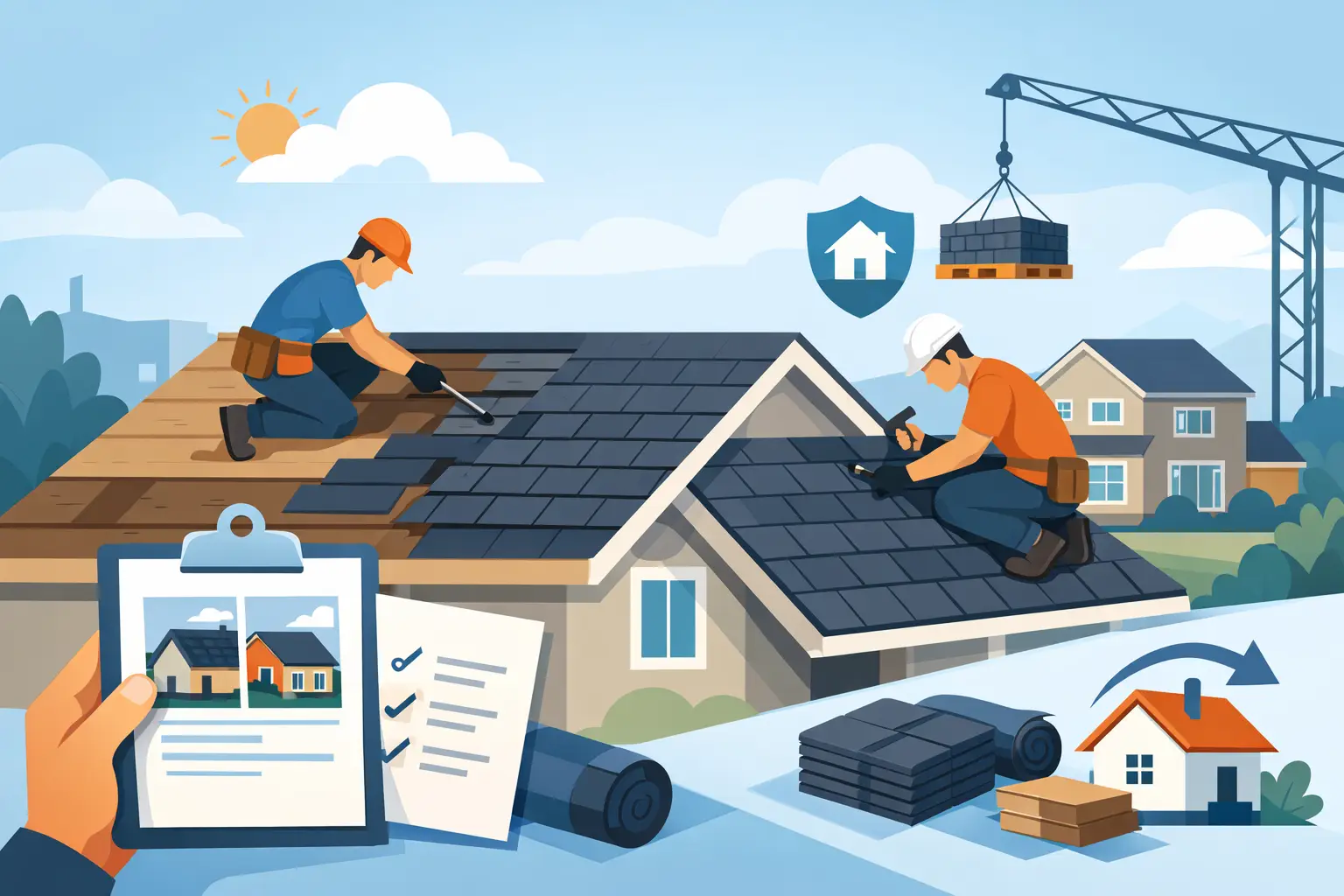
Homeowners often think of roofing as shingles only, but a proper roof replacement is a system, not just a surface. The visible shingles matter, but so do the parts underneath and around them.
In most cases, replacement includes tear-off of old roofing materials, inspection of the roof deck, underlayment, flashing at critical areas, ventilation components, and installation of the new shingles or roofing product. If damaged decking is found once the old roof is removed, that may need to be replaced before the new system goes on. This is one reason detailed quoting and clear communication matter so much. Some conditions are visible from the start, while others are only confirmed once the roof is opened up.
Ventilation is another part homeowners tend to overlook. A roof can fail early not because the shingles were bad, but because heat and moisture were trapped in the attic. Good ventilation helps regulate temperature and moisture, which supports the life of the roofing system and can reduce problems like mold, ice dams, and premature shingle wear.
Flashing deserves attention too. Chimneys, valleys, skylights, walls, and vent penetrations are common leak points. A new roof over old failing flashing is not much of an upgrade. That is where workmanship shows.
Roof replacement costs depend on more than size
The first question many homeowners ask is fair and simple: what will it cost? The honest answer is that roof replacement pricing depends on several moving parts, and square footage is only one of them.
Roof pitch can raise labor complexity. Tear-off may reveal hidden deck damage. Material choice affects both price and life expectancy. A straightforward ranch home is different from a steep, cut-up roof with dormers, valleys, and multiple penetrations. Accessibility matters too. If setup, protection, and cleanup are more involved, that affects the project.
The cheapest quote is not always the lowest final cost. Low bids can leave out essentials, such as proper ventilation updates, ice and water protection in vulnerable areas, or replacement of flashing components that should not be reused. Sometimes the number looks attractive because the scope is thin.
That is why a detailed estimate matters. Homeowners should be able to see what is included, what assumptions are being made, and where allowances may apply if hidden damage is uncovered. Clear options also help. A Good, Better, Best approach can be useful because it gives homeowners a way to compare material levels and warranty value without guessing what is worth the upgrade.
Choosing materials for your home and climate
In Essex County and the greater Boston area, roofs need to stand up to wind, driving rain, snow load, freeze-thaw cycles, and humid summer weather. Material choice should reflect that reality.
Architectural asphalt shingles are a popular option because they balance appearance, durability, and cost. For many homes, they offer the right mix of value and performance. Higher-grade products can improve wind resistance and visual depth, which is worth considering if you plan to stay in the home for years.
Not every house needs the highest-end product on the market. But not every house should get the bare minimum either. If your roof gets strong exposure, shade that holds moisture, or repeated winter weather stress, upgrading key components can be money well spent.
Color is part of the decision, but it should come after performance. Homeowners often focus first on how the roof will look from the street. That matters. The roof is a major part of curb appeal. Still, the better question is whether the full system is right for the structure, attic conditions, and local weather patterns.
How to judge a roofing contractor
A roof replacement is one of those jobs where process matters almost as much as materials. The product can be solid, but poor scheduling, weak communication, or careless installation can turn the experience into a headache.
Start with how the contractor handles the estimate. Is the quote detailed? Are options explained in plain language? Do they talk through what happens if decking damage is found? Can they give you a realistic timeline instead of a vague promise?
Then look at operations. Who is actually doing the work? Is the crew experienced? Will the site be protected and cleaned daily? Will someone communicate with you during the job if conditions change? These are not small details. For a homeowner, they are the difference between a stressful project and a well-run one.
Longevity matters too. A contractor with deep local roots has a reputation to protect. That does not guarantee perfection, but it usually says something about accountability. A company that has been serving area homeowners for decades, with in-house crews and a workmanship-first approach, is making a different promise than a contractor built around speed and volume.
For homeowners who want a steady process, this is where experience shows. Companies like US Home Improvement, serving local communities since 1978, understand that people are not just buying shingles. They are buying confidence that the job will be quoted clearly, scheduled honestly, completed professionally, and backed when it is done.
What to expect during a roof replacement
The job itself is often faster than homeowners expect, but preparation makes a big difference. There will be noise. There may be vibration inside the home. Driveways, landscaping, and entry points need protection. If weather shifts, schedules can move.
A well-managed crew will explain the sequence, protect the property, and keep the site picked up throughout the project. That daily cleanup matters more than people realize. Roofing debris, nails, and loose materials should not be left as the homeowner's problem.
You should also expect some decisions during the process if hidden conditions are found. That is normal. What matters is whether those conversations are handled promptly and clearly, with photos or direct explanations instead of pressure.
Roof replacement as a long-term home decision
A new roof is not the kind of upgrade you choose just for looks, but appearance is still part of the value. A clean roof line, updated shingle color, and professionally finished details can change the feel of the whole exterior. More important, a sound roof protects everything below it.
If you are already thinking about siding, gutters, trim, or windows, roof replacement may be worth planning as part of a broader exterior strategy. Timing related projects well can reduce disruption and help the finished house look more cohesive. It depends on your budget and priorities, but it is worth discussing before work begins.
The right time to replace a roof is usually before failure becomes expensive. If you are seeing signs of age or repeated problems, do not wait for the next storm to make the decision for you. Get a clear evaluation, ask direct questions, and choose a contractor who treats workmanship, communication, and cleanup as part of the job, not extras.