
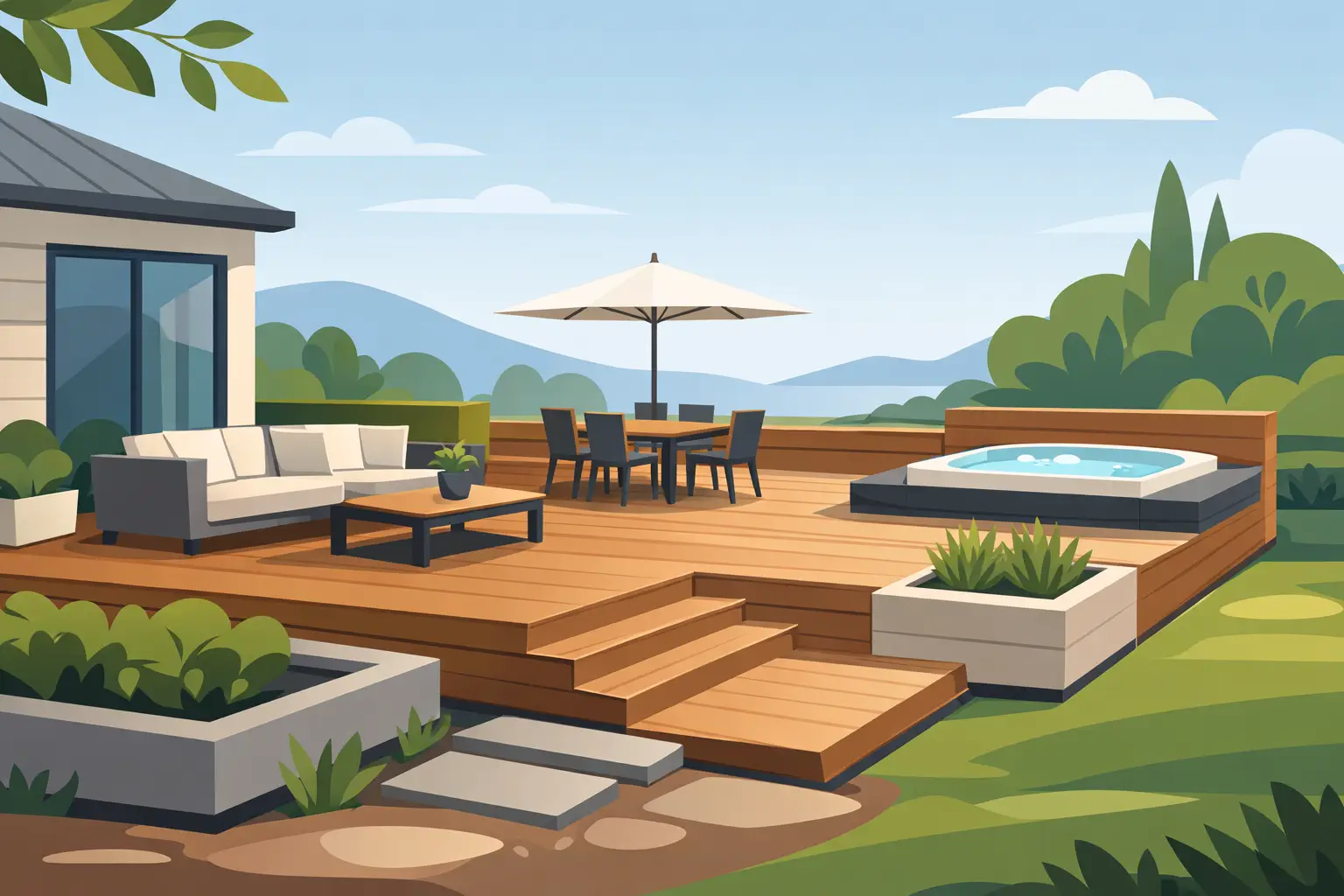
A deck usually looks simple once it is built. The hard part is getting the design right before the first footing goes in. If you are figuring out how to design a deck, the best approach is to think beyond size and boards. A good deck has to fit your house, work with your yard, handle New England weather, and feel worth the investment every time you step outside.
That is where many homeowners get stuck. They know they want more outdoor living space, but they are weighing cost, layout, materials, maintenance, and whether the finished deck will actually improve how they use the property. Good design answers those questions early, before a project turns into change orders, delays, or a deck that never feels quite right.
Start with how you will really use the space
The first step in how to design a deck is not picking colors or railings. It is deciding what the deck needs to do. A deck for quiet morning coffee is different from one built for summer cookouts, big family gatherings, or a backyard that connects to a pool.
Think in terms of use, not just square footage. If you want a dining table with six chairs, that takes one kind of footprint. If you want lounge seating, a grill zone, and enough room for guests to move around without squeezing past one another, that takes another. Homeowners often underestimate circulation space, and that is one of the most common reasons decks feel cramped even when they look large on paper.
It also helps to be honest about frequency. If you entertain a few times each summer, your design priorities may be different than if the deck will be your main warm-weather living area from April through October. The right design is not the biggest one. It is the one that supports how you live.
Let the house lead the design
A well-designed deck should look like it belongs to the home, not like it was added as an afterthought. That means paying attention to scale, shape, rooflines, door locations, and the relationship between interior and exterior spaces.
A small rear entry does not always call for a massive multi-level structure. On the other hand, a broad back facade may feel undersized with a narrow platform deck tacked onto one corner. The size and shape should feel balanced with the architecture of the house.
Access matters just as much. The location of the door from the house often drives traffic patterns, furniture placement, and stair location. If the door opens into the center of the deck, you have more flexibility. If it lands tight to one side, the layout has to work harder so the entry does not interrupt the whole space.
This is also the point where homeowners should think about sightlines. Ask yourself what you will see when you step outside and what neighbors will see looking in. Privacy screens, stair orientation, and railing style can all affect comfort without making the deck feel closed off.
Design for the yard you have, not the one you wish you had
Flat lots are easier. Most yards are not that cooperative.
Slope, drainage, sun exposure, tree coverage, and property lines all affect deck design. A yard with a grade change may be a strong candidate for a raised deck with stairs to a patio or lawn. A shaded backyard may stay cooler in summer but hold moisture longer, which matters when choosing materials and detailing. A bright, open deck can be beautiful, but if it gets full afternoon sun, you may want to plan for shade from the start.
This is where experienced planning pays off. Decks do not exist in isolation. They interact with gutters, siding, foundations, walkways, and landscaping. A smart design works with those conditions instead of fighting them.
In older New England neighborhoods, lot constraints can be tight. Setbacks, height rules, and permit requirements may limit what can be built and where. That does not mean you cannot create a strong outdoor space. It means the design has to be realistic from day one.
Choose a layout that matches the budget
When homeowners ask how to design a deck, they often jump straight to materials. Material choice matters, but layout is what usually moves the budget the most.
A basic rectangular deck is generally the most efficient shape to build. Once you introduce multiple levels, angled corners, wide stairs, built-in seating, custom lighting, or elaborate rail systems, costs rise quickly. None of those upgrades are bad ideas. They just need to earn their place in the project.
The simplest way to think about it is this: put your budget into the features that change how you use the deck. Sometimes that is low-maintenance decking. Sometimes it is a stair layout that improves access to the yard. Sometimes it is a larger footprint that gives you space for dining and seating instead of forcing you to choose one.
This is where a Good, Better, Best approach can help. You can compare what matters most, what can wait, and where spending more now may save maintenance or replacement costs later.
Pick materials based on maintenance, not just appearance
Every deck material has trade-offs. Pressure-treated lumber can be budget-friendly and structurally reliable, but it requires ongoing care if you want it to keep looking good. Composite decking offers lower maintenance and long-term convenience, but upfront costs are higher. PVC and premium synthetic products can perform very well, though not every homeowner wants that price point.
Railing choices carry the same kind of decisions. Wood railings can match a traditional home nicely, but they come with upkeep. Aluminum rails are durable and clean-looking. Composite rail systems can create a more finished appearance, though they add cost.
The right answer depends on how long you plan to stay in the home, how much maintenance you are willing to take on, and how important long-term appearance is to you. For many homeowners, paying more for easier upkeep makes sense. For others, especially if the deck is smaller or the budget is tighter, a well-built wood deck may still be the better fit.
Think through stairs, railings, and transitions early
A lot of deck designs look good in a sketch and feel awkward in real life because the transition points were treated as secondary details.
Stairs should feel natural to use and easy to find. Railings should provide safety without blocking the best view. If the deck sits above grade, the way it meets the yard becomes a major part of the experience. A poorly placed stair can cut the usable deck area in half. A smart stair location can make the entire backyard work better.
The same goes for transitions at the house. Threshold height, door swing, and weather exposure all influence the final design. If you are also updating siding, doors, trim, or nearby exterior finishes, coordinating those pieces at the same time often leads to a cleaner result.
Plan for weather, wear, and the long haul
In Massachusetts, deck design is not just about looks. Freeze-thaw cycles, moisture, snow load, and seasonal movement all matter. A deck should be built for durability from the ground up, starting with proper footings, framing, flashing, and attachment details.
That may not be the glamorous part of the project, but it is the part that decides whether the deck still feels solid years from now. Good workmanship shows up in the details homeowners may not notice on day one but will absolutely notice after a few winters.
It is also worth planning for the future. If you think you may want lighting, privacy features, or under-deck use later, it is often smarter to account for that during the design stage. Small decisions made early can prevent expensive rework later.
How to design a deck with the right builder involved
Even if you already have a clear vision, deck design goes better when the builder is part of the planning process early. A strong contractor can point out structural needs, code issues, drainage concerns, and budget impacts before they become headaches.
That is especially important on homes where the deck ties into broader exterior work. If roofing, siding, trim, doors, or framing conditions are in play, the design should account for the full exterior system, not just the deck boards and railing. That kind of coordination is often the difference between a smooth project and one that drags on.
For homeowners on the North Shore and in the greater Boston area, working with an experienced local contractor matters because local permitting, weather exposure, and housing stock all shape what works best. At US Home Improvement, that practical planning mindset has been part of the process since 1978 - helping homeowners make clear decisions, understand their options, and move into construction with confidence.
A good deck should feel easy once it is finished. Easy to use, easy to maintain, and easy to trust. If you start with the way you live, the way your home is built, and the way your yard actually behaves, the design usually gets a lot clearer.