
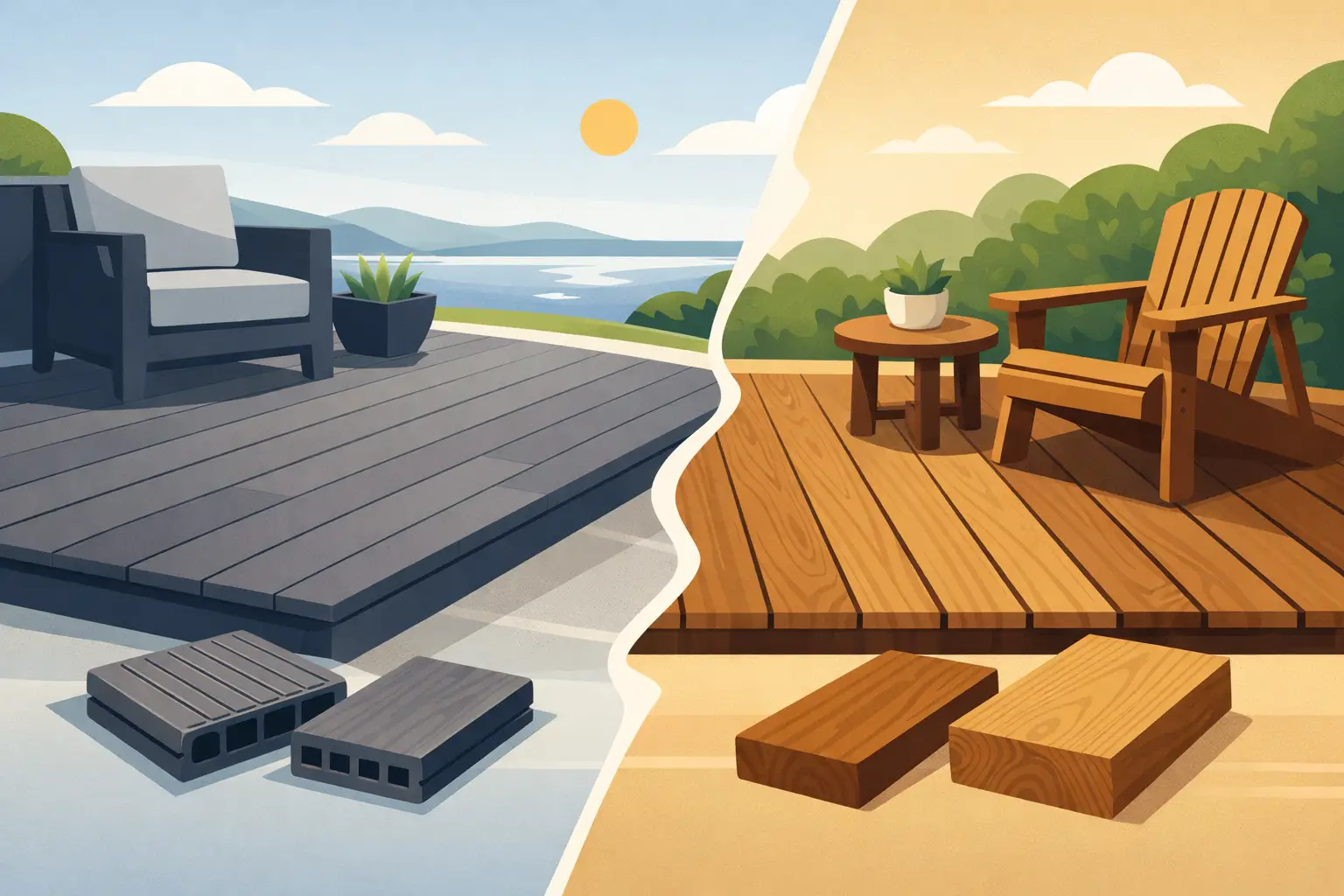
A deck looks simple from the driveway. Then the real questions start. Will it fade? Will it splinter? How much maintenance will it need in five years, not just this summer? When homeowners ask about composite decking vs wood, they are usually trying to avoid a mistake that will keep showing up every season.
Around the North Shore and greater Boston area, decks take a beating. Snow, freeze-thaw cycles, humidity, salt air, strong sun, and wet leaves all work on the material year after year. That is why the right answer is not about trends. It is about how you use the space, how much upkeep you want, and how long you plan to stay in the home.
Composite decking vs wood: the real difference
The biggest difference between composite decking and wood is not just appearance. It is the amount of work the deck will ask from you after installation.
Wood is the traditional choice. It has a natural look, a real grain pattern, and for many homeowners, that warmth is hard to beat. Pressure-treated lumber is often the most budget-friendly way to build a deck, especially if the footprint is large. Cedar and other premium wood options can improve the look, but they also raise the price.
Composite decking is manufactured from wood fibers and plastics or similar synthetic materials, depending on the product line. It is designed to resist rot, insect damage, and much of the wear that affects standard wood decking. It usually costs more upfront, but it reduces the cycle of sanding, staining, sealing, and board replacement that comes with many wood decks.
That trade-off matters. Some homeowners would rather invest more now and spend less time maintaining the deck later. Others are comfortable with regular upkeep if it means a lower initial project cost and the look of real wood.
Upfront cost vs long-term cost
If budget is the first filter, wood often wins the first round. Pressure-treated wood is usually less expensive to purchase and install than composite. For a homeowner trying to add outdoor living space without stretching the budget too far, that can make wood a practical choice.
But initial price is only part of the story. Wood needs regular care to hold up well. That means cleaning, staining or sealing, and replacing boards when moisture, movement, or wear takes a toll. Over time, those maintenance costs add up, whether you do the work yourself or hire it out.
Composite usually asks for a bigger investment at the beginning, but that higher price can make sense over the life of the deck. If you are planning to stay in your home for years and you want less annual maintenance, composite can be the better value.
This is where a detailed quote matters. A low starting number does not always mean the better long-term decision. Homeowners deserve to see the real picture, not just the cheapest line item.
How each material handles New England weather
This is where climate changes the conversation.
Wood can perform well in Massachusetts, but it needs attention. Repeated moisture exposure can lead to swelling, shrinking, cracking, and rot if the deck is not maintained properly. Snow sitting on the boards, damp shaded areas, and spring rain all create wear points. Fasteners can loosen as boards move over time, and splinters become more likely as the surface ages.
Composite is not maintenance-free, but it is generally more stable in harsh weather. It does not absorb water the way wood does, and it is less likely to crack, split, or become a buffet for insects. Quality composite products also resist fading and staining better than older generations did, though performance depends on the brand and product tier.
There are still trade-offs. Some composite boards can get hotter in direct summer sun than wood. Lower-grade products may show more expansion and contraction. And if the framing underneath is not built correctly, no decking surface will make up for poor construction.
The material matters, but the build matters just as much.
Appearance and curb appeal
For many homeowners, this is the hardest part of the decision.
Wood has natural variation that many people still prefer. No two boards are exactly the same, and that organic look can feel more at home on certain properties, especially traditional New England houses. If you enjoy the character of real lumber and do not mind maintenance, wood offers something composite cannot fully copy.
Composite, on the other hand, has come a long way. Better product lines offer richer color blends, more realistic grain patterns, and hidden fastener systems that create a cleaner finish. For homeowners who want a polished, low-fuss look that stays consistent over time, composite is often appealing.
Color choice also plays a role. With wood, you can stain and restain to refresh the look or shift the tone. With composite, the color is largely set at installation. That can be a plus if you want predictability, but it means less flexibility later.
Maintenance expectations
A wood deck asks for commitment. To keep it looking good and performing well, you will need to clean it regularly and protect it with stain or sealant on a schedule that fits the product and exposure conditions. Ignore that cycle too long, and the deck usually tells on you fast.
Composite is simpler. It still needs cleaning, especially after pollen season, storms, or leaf drop, but it does not need the same refinishing routine. For busy homeowners, or for anyone tired of spending part of every summer working on the deck instead of using it, that difference is often the deciding factor.
That said, low maintenance does not mean no maintenance. Dirt, mildew, and surface buildup can still affect appearance. The benefit is that routine care is lighter and more predictable.
Safety and everyday comfort
Families often ask practical questions first. Will bare feet be comfortable? Will kids get splinters? Will the deck be slippery when wet?
Wood can splinter as it ages, especially if it dries out or begins to crack. It can also become slick in shaded or damp areas if algae or mildew builds up. Composite avoids splinters, which is a real benefit for households with children or pets, but some products may feel hotter in strong sunlight.
Slip resistance depends on the specific board and finish, not just whether the material is wood or composite. This is another place where product quality matters. A deck should be chosen for how it will be used, not just how it looks in a sample.
Resale value and homeowner priorities
There is no one-size-fits-all winner in composite decking vs wood because buyers value different things.
If you are preparing a home for sale in the near term, a well-built wood deck may be a smart move if it improves outdoor living space without overinvesting. If you are staying put and want a deck that will hold its appearance with less upkeep, composite often lines up better with that goal.
The right choice depends on how you weigh three factors: upfront budget, tolerance for maintenance, and how long you want the deck to serve your household.
So which should you choose?
Choose wood if you want the natural look, need to keep initial costs lower, and are comfortable maintaining the deck on a regular schedule. Wood can still be a very good option when it is built well and cared for properly.
Choose composite if you want easier ownership, more resistance to weather-related wear, and a finish that stays consistent with less work year after year. For many homeowners, especially those planning to stay long term, that peace of mind is worth the higher initial price.
The best deck is not the one with the best sales pitch. It is the one that matches your home, your budget, and the way you actually live. A good contractor should help you compare both options honestly, explain the trade-offs clearly, and build it right from the framing up. That is how you get a deck you still feel good about years from now.
If you are weighing materials for a new deck or a replacement, start with the practical questions first. How much maintenance do you really want? How exposed is the space to sun and moisture? What fits the home without forcing the budget? Once those answers are clear, the right material usually becomes clear too.