
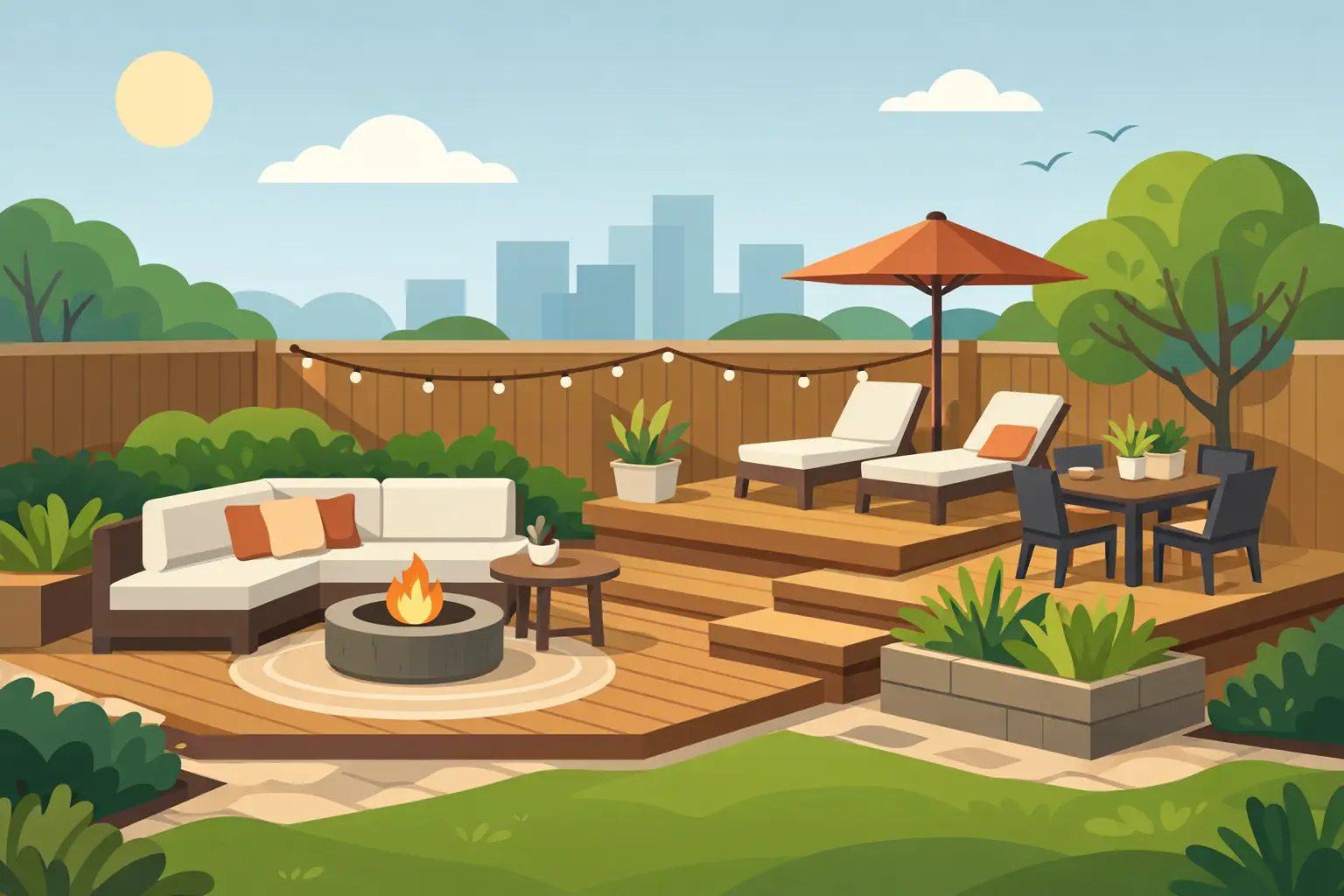
A small yard can get crowded fast. One grill, a couple of chairs, maybe a walkway to the back door, and suddenly the space feels more limiting than relaxing. That is exactly why custom deck design ideas for small yards matter so much. When every square foot counts, the right deck does more than add surface area. It helps the whole yard work better.
The best small-yard decks are not oversized versions of big backyard projects. They are planned around how you actually live. Maybe you want a quiet spot for morning coffee. Maybe you need room to entertain six people without the yard feeling packed. Maybe the goal is simple - cleaner access from the house to the yard, with less mud, less maintenance, and a more finished look.
What makes a small-yard deck work
In a compact space, good design starts with proportion. A deck should feel connected to the house and balanced with the yard around it. If it takes over the entire lot, the yard can feel boxed in. If it is too small, it will not solve the problem you built it for.
That is why layout matters more than square footage alone. A well-shaped 180-square-foot deck can feel more useful than a poorly planned 250-square-foot one. The right footprint keeps traffic moving, leaves room for landscaping, and gives furniture a natural place to sit without blocking doors or stairs.
Height matters too. A low platform deck can make a yard feel open and easy to use. A raised deck may be necessary if the home sits above grade, but it often needs more attention to stairs, railings, and privacy. There is no one-size-fits-all answer. It depends on the house, the slope, local code, and how the space will be used day to day.
Custom deck design ideas for small yards that earn their space
The strongest deck ideas do more than look good in a photo. They solve a real problem for the homeowner. In smaller yards, that usually means combining two or three functions into one clean design.
Keep the shape simple, then add smart details
In most small yards, simple shapes win. A rectangular or square deck usually gives you the best usable floor space and keeps construction efficient. That matters when you are trying to stay on budget without cutting corners on materials or finish work.
Where customization comes in is around the edges. Built-in bench seating can reduce the need for extra furniture. A picture-frame border can define the deck visually without making it feel heavy. A single step down to a patio area can create a subtle zone for grilling or planters without crowding the main deck surface.
This approach tends to age well. Clean lines are easier to furnish, easier to maintain, and less likely to feel dated a few years from now.
Use built-ins to reduce clutter
Freestanding furniture eats space quickly. Built-in benches, storage seating, planter boxes, and privacy screens can make a smaller deck feel organized instead of cramped. The trade-off is flexibility. Built-ins are not as easy to rearrange later.
That is why the design should follow your habits. If you host often and want consistent seating, built-in benches make sense. If you like changing furniture layouts from season to season, loose seating may be the better fit.
A storage bench is one of the smartest additions for a small yard. It gives you a place for cushions, gardening supplies, or kids' outdoor gear without adding another bulky cabinet or shed nearby.
Consider a multi-level transition
Not every small yard is flat, and that is not always a bad thing. A slight grade change can become a design advantage. A small upper deck at the back door with one or two steps down to a lower landing or patio can make the yard feel larger by breaking it into usable zones.
This works especially well on homes where the rear entry sits just high enough above the yard to make a single-level deck awkward. Instead of forcing one large platform into the space, a split-level layout can make movement feel more natural.
It does require careful planning. More levels mean more framing details, more finish work, and sometimes more cost. But when the site calls for it, the result can feel more custom and less like an afterthought.
Build around one main purpose
Trying to make a tiny deck do everything usually leads to disappointment. It is better to choose the primary job of the space and build around that.
If outdoor dining is the priority, plan for table clearance first. If lounging is the goal, make sure there is enough room for deeper seating and side tables. If the deck is mostly a transition space between the house and yard, keep the layout open and easy to navigate.
This is where experienced planning pays off. Homeowners often start with a long wish list, but good design helps narrow the focus so the finished deck feels comfortable and intentional.
Material choices matter more in compact spaces
On a smaller deck, every board, railing, and trim detail is more noticeable. There is less room for visual clutter, and low-quality materials tend to stand out faster.
Composite decking is a popular choice for small yards because it keeps maintenance low and finish quality consistent. It also works well when homeowners want a cleaner, more polished look over time. Pressure-treated lumber can still be a solid option when budget is the main driver, especially if the framing and finish details are done right.
Color also changes how the space feels. Lighter deck boards can make a compact area look more open. Darker tones add contrast and richness but may make the footprint feel tighter. The same goes for railings. In some yards, a simple black baluster railing keeps sightlines open. In others, skirting and trim in a matching tone help the deck feel grounded and tidy.
There is no automatic best choice. Good, Better, Best options often make the decision easier because you can weigh appearance, maintenance, and long-term value side by side.
Privacy without making the yard feel closed in
Privacy is a common concern in Essex County and Greater Boston neighborhoods, where homes can sit fairly close together. The challenge in a small yard is adding privacy without creating a wall effect.
A partial privacy screen can help define one seating area without enclosing the full deck. Horizontal slat details, lattice accents, or planter-backed screening can all work when sized correctly. The key is restraint. Too much enclosure can make a small backyard feel smaller.
Landscaping should be part of the deck conversation early, not added at the end. A deck that leaves room for shrubs, foundation plantings, or a narrow border bed will usually feel more integrated into the yard. Even a modest amount of greenery softens the structure and improves the overall finish.
Lighting and stairs should never be afterthoughts
Small decks are often used as everyday access points, which means safety and visibility matter just as much as appearance. Low-voltage post lights, stair lights, or subtle riser lighting can make the space easier to use without overdoing it.
Stairs deserve the same level of planning. In a compact yard, stair placement affects everything from furniture layout to lawn access. Side stairs may preserve more usable deck area. Front-facing stairs may feel more welcoming and direct. It depends on the shape of the yard and the way people naturally move through it.
This is one reason custom design matters. A deck should fit your home, not force you into awkward traffic patterns every time you step outside.
Why local planning experience makes a difference
Small-yard decks look simple on paper, but the details can get complicated quickly. Setbacks, grade changes, door height, drainage, railing requirements, and finish options all need to work together. That is especially true in older New England homes, where conditions are not always standard.
An experienced contractor can help you avoid common mistakes like overbuilding the footprint, undersizing the stairs, or choosing features that look nice but do not hold up to daily use. They can also help match the deck design to the rest of the home so it feels like part of the property, not an add-on.
For homeowners who want a guided process, it helps to work with a team that can explain material and layout options clearly, provide a detailed quote, and keep the project moving with clean, organized crews. That is the kind of planning that reduces stress and leads to a better result.
If you are thinking about a deck project, custom deck design ideas for small yards should start with your home, your lot, and the way you want to use the space. At US Home Improvement, that means looking closely, planning carefully, and building something that earns its place every day.
The right small deck does not need to be big to make a difference. It just needs to be built with purpose.