A roof replacement rarely arrives at a convenient time. For many homeowners, it starts with a leak, missing shingles after a storm, or a contractor pointing out that the roof is simply at the end of its service life. That is why knowing how to budget for roof replacement matters before the problem becomes urgent.
The good news is that roof budgeting does not have to be guesswork. A solid plan helps you avoid low-ball pricing, rushed decisions, and expensive surprises once the old roof comes off. If you understand what drives cost, what deserves priority, and where flexibility exists, you can make a smart decision without sacrificing workmanship.
How to budget for roof replacement without guessing
The first step is to stop thinking in terms of one flat number. Roof replacement pricing can vary widely because no two homes are exactly alike. Square footage matters, but it is only part of the picture. Roof pitch, number of layers to remove, chimney and skylight details, ventilation needs, flashing condition, and the type of shingle or roofing system all affect the final price.
That is why online calculators tend to mislead homeowners. They may give you a broad estimate, but they cannot see the valleys, dormers, decking issues, or access challenges that a contractor sees during an on-site inspection. If you are serious about budgeting, start with a realistic range rather than chasing a single number that may not hold up.
In Massachusetts and across the North Shore and greater Boston area, labor, disposal, permit requirements, and material choices can all push pricing higher than national averages. A roof on a simple ranch will budget differently than a roof on an older colonial with multiple peaks and penetrations. The more detailed the roofline, the more labor you should expect.
Start with the full project, not just shingles
One of the biggest budgeting mistakes homeowners make is assuming they are only paying for shingles. In reality, a roof system includes tear-off, underlayment, ice and water protection, flashing, ridge ventilation, pipe boots, drip edge, cleanup, and debris disposal. Depending on the age of the home, it may also include plywood replacement if damaged decking is found underneath.
This is where cheap quotes can become expensive jobs. If a proposal leaves out key components or buries them in vague language, you may be looking at change orders later. A detailed quote should spell out what is included, what happens if hidden damage is found, and what materials are being installed.
A good budgeting process accounts for the complete job from start to finish. It also leaves room for the unknown. Roofing is one of those projects where some conditions only become visible after tear-off begins. You do not want your finances stretched so tightly that one sheet of damaged decking throws the whole project off course.
Build your roof budget in layers
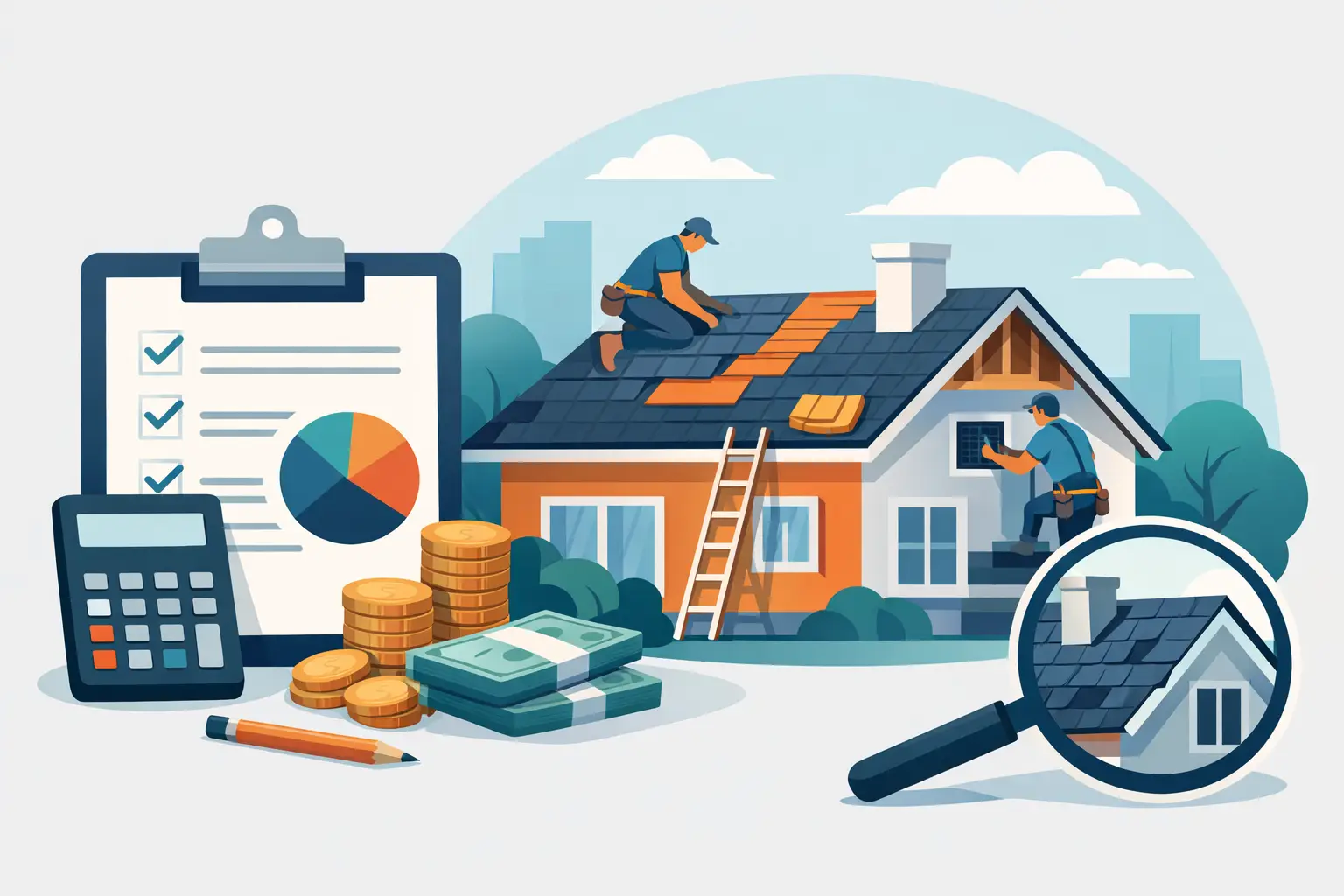
The most practical way to approach roof replacement is to divide the budget into three parts: the expected base cost, the material upgrade decisions, and a contingency reserve.
The base cost is the amount needed to complete the job with sound workmanship and standard materials appropriate for your home. This should cover the full roofing system, labor, permits, and cleanup. From there, material upgrades can move the price up. Architectural shingles, premium underlayments, enhanced ventilation, or manufacturer-backed system components may cost more upfront but can improve lifespan and performance.
Then comes the contingency reserve. A good rule is to keep an additional 10 to 15 percent available in case the roof deck, flashing areas, or ventilation need more work than expected. You may not spend it, but budgeting for it gives you breathing room.
That layered approach also helps you compare bids more clearly. If one quote is lower, you can ask whether it reflects fewer system components, lower-grade materials, or omitted repair allowances instead of assuming you found the same job for less.
Know where quality matters most
When homeowners ask how to budget for roof replacement, they are often really asking where they can save and where they should not. That is a fair question.
In most cases, it makes sense to protect the essentials first. Proper underlayment, flashing, ventilation, and installation quality matter more than chasing a small savings on the visible shingle alone. A roof can look fine from the street and still fail early if the details underneath were rushed.
This does not mean every homeowner needs the top-tier product on the market. It means the budget should support a complete, properly installed system that fits the home. Sometimes a mid-range option is the best value. That is why tiered proposals can be useful. A Good, Better, Best approach gives you room to weigh durability, appearance, warranty coverage, and price without feeling cornered into one option.
If your budget is tight, it may be smarter to choose a dependable material package from a reputable contractor than to chase a premium product installed by the cheapest bidder. Workmanship has a long memory.
Timing affects your budget more than people realize
Roof replacement is not always fully predictable, but planning ahead usually saves money and stress. If you wait until active leaks or storm damage become severe, you may lose flexibility in scheduling and decision-making. Emergency conditions often force fast choices, and fast choices are not always the most cost-effective ones.
If your roof is aging but not yet failing, now is the time to get inspections and detailed estimates. That gives you time to compare proposals, set aside funds, and decide whether the roof should be replaced as a standalone project or coordinated with gutters, trim work, or other exterior upgrades.
For some homeowners, bundling related exterior work can create better overall value. For others, keeping the roof as a separate phase is the better financial move. It depends on the condition of the home, available cash flow, and whether the work overlaps in a way that reduces labor duplication.
Financing, savings, or phased planning
There is no one right way to pay for a roof replacement. Some homeowners prefer to use savings and avoid financing. Others would rather preserve cash reserves and pay over time. The right choice depends on your financial comfort level, not just the contractor's payment options.
What matters is making the monthly and total cost understandable before the project starts. If financing is part of the plan, look at the full repayment amount, not just the monthly number. A low payment can feel manageable while masking a much higher total cost over time.
If the roof truly needs replacement now, delaying too long to save every dollar may also become expensive. Water intrusion, insulation damage, mold, interior repairs, and structural deterioration can quickly exceed the cost of acting sooner. Budgeting well means weighing the cost of the project against the cost of postponing it.
How to compare quotes the right way
Homeowners often collect three estimates and assume the lowest and highest numbers tell the whole story. They do not. A better approach is to compare scope, materials, communication, and accountability.
Look for detailed line items and plain language. You should know what is being torn off, what is being installed, how the property will be protected, how cleanup is handled, and what happens if the crew finds damaged wood. Ask who will actually perform the work and who oversees the schedule. A clear process is part of the value.
A contractor with a long local track record, organized crews, and a workmanship guarantee may not be the lowest bid, but that often reflects a more disciplined job from estimate to final cleanup. For many homeowners, peace of mind is not an extra. It is part of the purchase.
US Home Improvement has worked with homeowners across the North Shore and greater Boston area long enough to know that most people are not looking for the cheapest roof. They are looking for a roof done right, with a quote they can trust and a crew that respects their home.
Budget for the roof you need, not the number you hoped for
It is natural to start with the budget you want. But roofing works better when you start with the condition of the home and build the budget around a sound solution. Sometimes that means adjusting material choices. Sometimes it means financing part of the job. Sometimes it means replacing the roof now to avoid a larger repair later.
The key is to make decisions with open eyes. A realistic budget gives you options. A rushed budget usually takes them away.
If your roof is showing its age, the most helpful next step is not guessing at cost from your kitchen table. It is getting a detailed, on-site assessment so you can see the real scope, understand your options, and plan with confidence. That is how a roof project becomes manageable - one clear decision at a time.