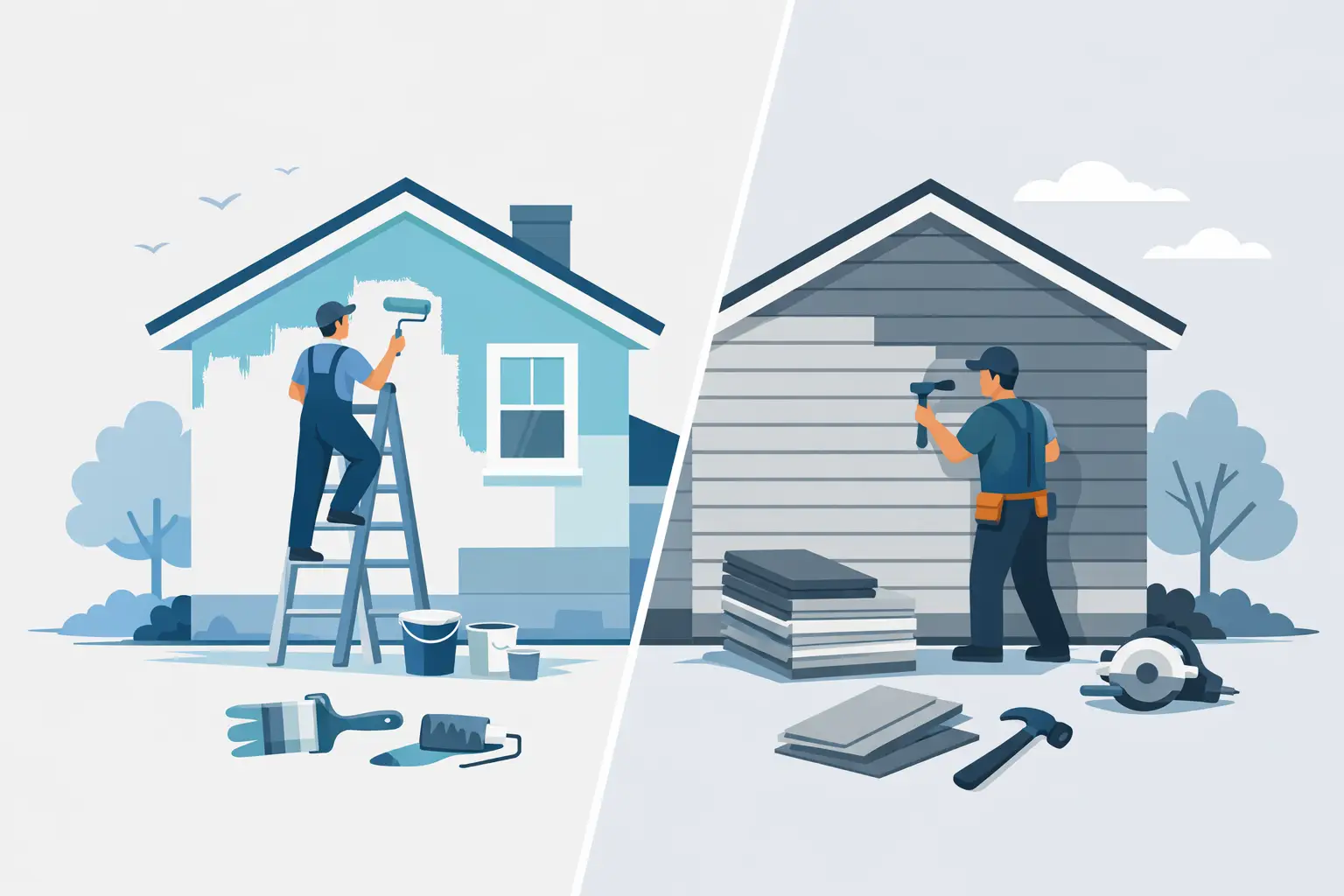
A lot of homeowners start in the same place: the house looks tired, the paint is fading, and a few boards or panels are showing their age. Then the real question hits - is this a paint job, or is it time for new siding? When you are weighing house painting vs siding replacement, the right answer depends less on looks alone and more on what is happening underneath the surface.
That distinction matters in New England. Homes in places like Peabody, Danvers, Salem, and across the North Shore take a beating from moisture, salt air, freeze-thaw cycles, and strong sun. A fresh coat of paint can absolutely transform a home, but it cannot solve hidden rot, failing materials, or years of water intrusion. On the other hand, replacing siding when the structure is still sound may be more than you need.
House painting vs siding replacement: start with condition
The first thing to evaluate is the actual condition of the exterior, not just the color or curb appeal. If your siding is structurally solid and the main problem is peeling paint, fading, minor surface wear, or an outdated color, painting may be the smart move. It is often the more budget-friendly option upfront, and when the prep work is done properly, it can give the home a clean, well-kept appearance.
But if you are seeing swelling boards, soft spots, recurring cracks, widespread rot, loose sections, warping, or signs that moisture is getting behind the siding, paint is not a fix. It may cover the problem for a short time, but it will not stop deterioration. In those cases, replacement is usually the better investment because it addresses the cause instead of just improving the appearance.
This is where an honest inspection matters. Homeowners are often told to repaint when what they really need is selective repair or full replacement. Just as often, they assume the whole house needs new siding when the material itself still has years left. A good contractor should walk you through what is cosmetic, what is repairable, and what is no longer worth patching.
When painting makes sense
Painting is a strong option when the siding is still doing its job. Wood clapboards, trim, and other paintable exterior surfaces can often be refreshed successfully if they are dry, stable, and properly prepared.
The key phrase there is properly prepared. A lasting exterior paint job is not mostly about the finish coat. It is about scraping failed paint, repairing damaged areas, sanding rough transitions, priming bare surfaces, caulking where needed, and making sure moisture issues are not being trapped under new paint. Skip those steps, and even premium paint will fail early.
Painting also makes sense when your goals are mainly visual. Maybe the house has good bones, but the color scheme feels dated. Maybe you are getting ready to sell and want to improve curb appeal without taking on a larger construction project. Maybe you replaced windows or doors and want the exterior to look cohesive again. In those cases, painting can deliver a noticeable upgrade without the cost and disruption of full siding replacement.
There is also a timing advantage. A paint project is typically less invasive and moves faster than residing. For homeowners who want an exterior refresh with less disruption to daily life, that matters.
When siding replacement is the better call
Siding replacement starts to make more sense when the exterior is failing in ways paint cannot solve. That includes widespread deterioration, chronic maintenance issues, and siding that has simply reached the end of its service life.
Wood siding that needs frequent scraping, patching, and repainting can become expensive in a different way. You may not be writing one large check for replacement, but you keep paying to chase problems that come back every few years. If water has been getting in, there may also be damage to trim, sheathing, or insulation behind the visible surface.
Replacement can also be the right move if your current siding is outdated, inefficient, or hard to maintain. Many homeowners choose new siding not because the old exterior is collapsing, but because they are tired of the cycle of upkeep. Modern siding materials can offer longer life, better weather resistance, lower maintenance, and a more consistent finish over time.
There is a curb appeal and value piece here too. New siding changes the look of a house in a bigger, more complete way than paint alone. It can sharpen lines, update the profile, and make older homes look noticeably more cared for. If the rest of the exterior is being improved at the same time - windows, trim, gutters, entry doors - replacement often fits better into the full plan.
Cost is not just the price of the project
For most homeowners, the decision comes down to budget at some level. Painting usually costs less upfront than siding replacement. That is real, and it matters. But the lowest upfront number is not always the lowest long-term cost.
If the siding is sound, painting can be excellent value. You spend less now, protect the exterior, and get several more good years before another major decision is needed. That is money well spent.
If the siding is already in decline, though, painting can become short-term spending that delays the inevitable. You pay for prep and paint now, then face repairs or replacement sooner than expected. In that situation, replacement may cost more today but save money over the life of the home.
This is why detailed quoting matters. Homeowners deserve to see real options, not a one-size-fits-all recommendation. In many cases, there is a good, better, best path. Maybe that means targeted repairs and painting now, with full replacement later. Maybe it means replacing only the worst elevations. Maybe it means doing the whole exterior once and being done with it for a long time.
Maintenance and lifespan matter more than most people expect
One of the biggest differences in house painting vs siding replacement is what happens after the crew leaves.
A painted exterior still needs attention. Depending on the surface, exposure, and quality of prep, repainting may be needed again in several years. South-facing walls may weather faster. Trim often needs upkeep sooner than larger wall sections. On older homes, maintenance is part of ownership, and many homeowners are perfectly comfortable with that.
Replacement siding changes that equation. Materials like vinyl and certain composite products reduce maintenance significantly. You still need cleaning, inspections, and occasional repairs, but you are not signing up for the same paint cycle. For busy homeowners, or for those planning to stay in the house long term, that lower-maintenance future is often a deciding factor.
That said, not every homeowner wants the same thing. Some prefer the character of painted wood and are willing to maintain it. Others want durability and predictability above all else. Neither choice is wrong if it matches the condition of the house and your plans for the property.
Energy performance and hidden improvements
Painting changes appearance and adds a layer of protection, but it does not usually improve insulation or weather resistance in a meaningful way. Siding replacement can.
When siding is removed, it creates an opportunity to inspect what is behind it. That can reveal moisture damage, air leaks, failed house wrap, or other issues that have been affecting comfort and efficiency. A well-executed siding replacement may improve the building envelope, especially when paired with trim updates and proper flashing details.
This is one reason replacement can have benefits homeowners feel, not just see. Rooms may be less drafty. Moisture problems may finally be corrected. The house may simply perform better through winter and summer.
The best decision usually comes from the right inspection
Most exterior decisions go wrong for one reason: the recommendation is made too quickly. A drive-by opinion is not enough. Neither is choosing based only on what the neighbor just did.
A proper evaluation should look at the age of the materials, visible damage, moisture exposure, maintenance history, and the homeowner's goals. Are you trying to buy five good years, or fifteen? Is resale around the corner, or is this your long-term home? Do you want to preserve original wood details, or reduce maintenance as much as possible?
Those answers shape the recommendation. After serving local homeowners since 1978, US Home Improvement has seen all versions of this decision, from homes that only needed careful prep and paint to homes where replacement was the only durable answer. The difference is taking the time to assess the exterior honestly and lay out options clearly.
If your siding is still solid, painting can be the practical, cost-effective way to protect your home and improve curb appeal. If the exterior is failing, replacement gives you a chance to solve the real problem and move forward with confidence. The best next step is not guessing - it is getting a detailed look at what your home is telling you.