
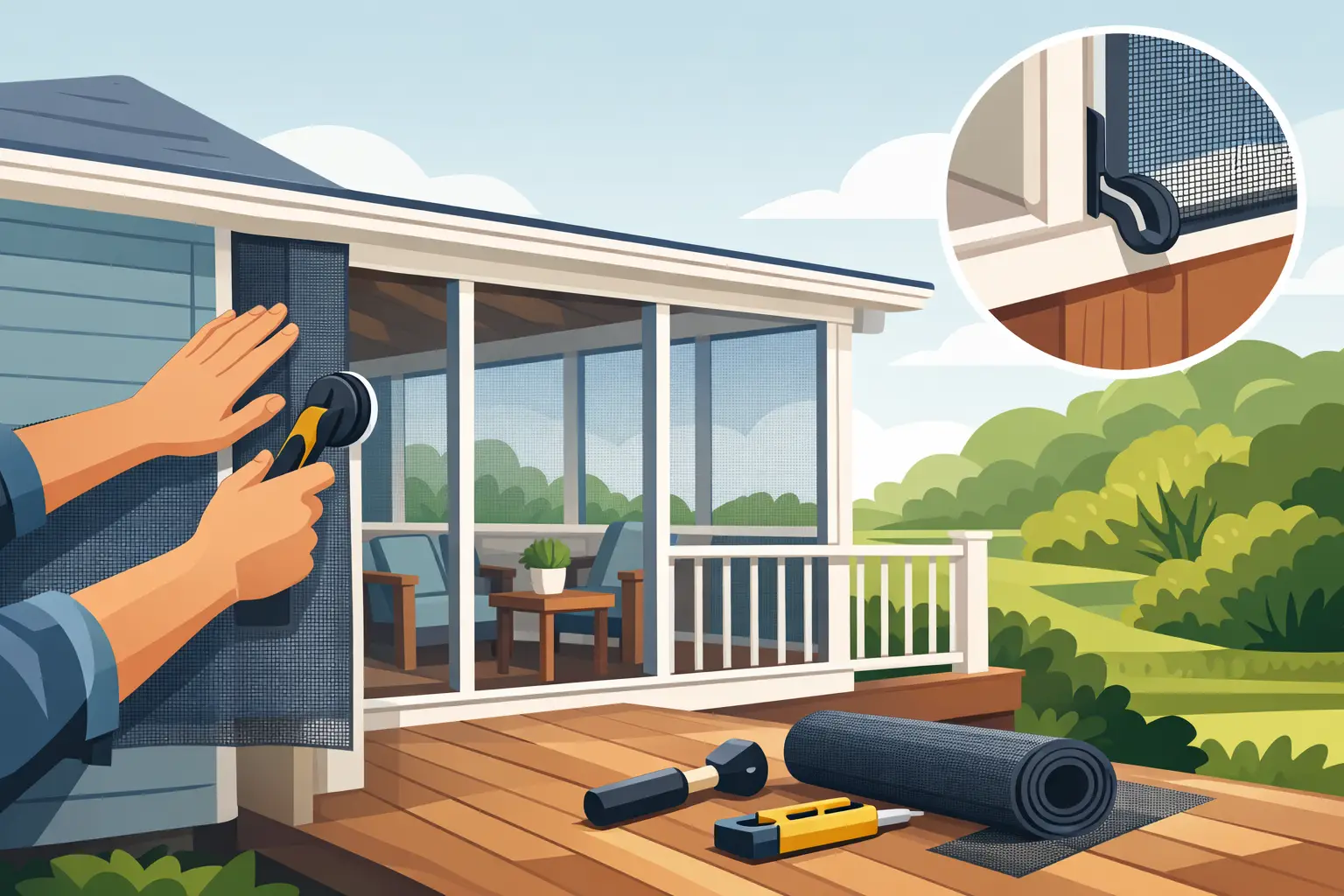
A porch can be the best seat in the house until mosquitoes, blowing leaves, and summer pollen take it over. If you're figuring out how to screen in a porch, the real goal is not just adding mesh. It is building an enclosure that looks finished, holds up to weather, and still feels open and comfortable.
That matters more than many homeowners expect. A screened porch sits right at the edge of the house, where small installation mistakes show up fast. Sagging screen, soft framing, poor drainage, and awkward door placement can turn a good idea into a constant maintenance issue. Done well, though, a screened porch gives you more usable living space without the cost and complexity of a full room addition.
How to screen in a porch without creating future problems
The first decision is whether your existing porch is truly ready to be screened. Some porches only need a clean enclosure system added between solid posts. Others need structural work first. If the framing is out of square, the floor is sloped the wrong way, or the roof line allows wind-driven rain inside, adding screens will not solve those issues.
Start with the bones. Check the posts, rails, headers, and floor framing. Wood that has been exposed for years may look fine from the yard but still have soft spots, movement, or hidden rot. If your porch has older trim details, it is worth looking closely at how new screen framing will tie in so the finished result looks intentional instead of patched together.
For many homeowners, this is where the project shifts from simple weekend plan to skilled carpentry job. A clean screened porch depends on straight lines, secure fastening, and a layout that matches the house. You are not just filling openings. You are building a finished exterior feature that should look like it belonged there from the start.
Decide what kind of screened porch you want
There is more than one way to screen in a porch, and the right choice depends on budget, appearance, and how much upkeep you are willing to take on.
A basic wood frame with stapled screen and trim is often the most affordable route. It can work well when built carefully, but it usually needs more maintenance over time. Wood moves with seasonal moisture, and in New England that movement is real. If the frame shifts, the screen can loosen or wrinkle.
A screen system with aluminum channels and spline tends to look cleaner and stay tighter longer. It can cost more up front, but it usually gives a neater finish and easier panel replacement later. For homeowners who want a more polished appearance, this is often the better long-term value.
There are also removable panel systems and porch enclosure products that can be paired with screens, storm panels, or seasonal windows. Those make sense if you want flexibility through spring, summer, and fall. They cost more than a standard screen installation, but they can extend how often you use the space.
The right answer depends on how you use the porch. If you mainly want bug protection for a few months a year, a straightforward screen system may be enough. If you want a more finished outdoor room that feels closer to a sunroom, the details matter more and the framing package usually gets more involved.
Choose the right screen material
Mesh selection is not a small detail. Standard fiberglass screen is common because it is affordable, easy to work with, and does not rust. For many porches, it is a practical choice.
Aluminum screen is stronger in some ways, but it can crease and dent more easily during installation. Pet-resistant screen is tougher and works well if dogs tend to push against lower panels, though it can slightly reduce airflow and visibility. There are also finer mesh products made to block smaller insects, which can be helpful in damp areas near marshes or wooded lots.
If your porch gets strong afternoon sun, you may also want to think about solar screen options. These cut glare and heat gain, but they darken the view more than standard mesh. That trade-off can be worth it on some exposures and disappointing on others.
Plan around weather, not just appearance
One of the biggest mistakes in porch screening is treating it like a finish-only job. In reality, water management and airflow make a huge difference in how the space performs.
A screened porch is not waterproof. Wind-driven rain can still enter, especially on open sides. That means the floor material matters. If the decking traps water or already has problem areas, screening the porch can make the moisture issue feel worse because the space gets used more often and the wear becomes more noticeable.
Door placement matters too. If the only screen door opens into the main path of traffic or swings against furniture, daily use gets annoying fast. A porch that looks great on paper can feel cramped once a table, chairs, and grill circulation are factored in.
In coastal and North Shore towns, salt air and weather exposure can also shorten the life of low-grade fasteners and cheap trim details. That is one reason professional exterior work tends to focus on material compatibility, not just price. The wrong fastener package or poorly sealed trim joint may not fail right away, but it will show up later.
Framing details make or break the finished look
If you want to know how to screen in a porch so it looks clean, focus on panel layout. Random-sized openings, bulky trim, and uneven bottom rails make a porch feel improvised. A balanced layout gives the whole structure a more finished, built-with-the-house appearance.
This usually means measuring every opening carefully and deciding where horizontal and vertical members should land before any screen goes in. On some porches, adding a knee wall or a wider base trim area helps protect the lower screen from damage and makes furniture placement easier. On others, full-height screening keeps the space lighter and more open.
There is no one perfect formula. It depends on post spacing, sight lines, privacy, and the architectural style of the home. A colonial, cape, or raised deck porch may each call for a different approach. Good design here is quiet. You do not notice it much when it is done right, but you definitely notice when proportions feel off.
Don’t overlook the screen door
The door is often the hardest-working part of the whole porch. It gets slammed, pushed, dragged, and used with full hands all summer long. If it is flimsy or poorly aligned, you will feel it every day.
A quality screen door should fit square, latch smoothly, and have hardware that can handle repeated use. A self-closing hinge may be worth it, especially if kids or guests tend to leave doors open. If the porch connects to a deck stair, think about whether the door swing creates a pinch point at the top landing.
This is another place where better materials tend to pay off. A cheap door can look acceptable on day one and still become the first thing that needs repair.
DIY or hire it out?
Some homeowners can handle a simple porch screening project, especially if the structure is solid, square, and already set up for clean panel installation. If you have strong carpentry skills and the porch is straightforward, a DIY approach can make sense.
But many porch projects are not straightforward. Existing porches settle. Old trim hides water damage. Roof overhangs are not always enough. Posts may need repair. Floors may need rebuilding before screening starts. Those are the jobs where experience matters, because the visible screen work is only part of the project.
A professional installer should be able to walk you through options clearly, explain what needs repair before enclosure, and give you a realistic sense of budget. That is especially important if you want the screened porch to match other exterior improvements like decking, trim replacement, siding work, or a future sunroom upgrade. Good planning upfront avoids the kind of piecemeal work that costs more in the long run.
For homeowners in older homes around Peabody and the greater Boston area, porch work often involves exactly that kind of judgment. The age of the structure, the exposure to weather, and the details of the original build all affect the right solution.
Budget for the whole porch, not just the mesh
When people ask how to screen in a porch, they often price only the screen and framing. In reality, the final cost can also include repairs, door installation, trim work, painting, flooring updates, lighting, and even minor electrical changes.
That does not mean every porch project has to become a major renovation. It just means a realistic quote should account for what the porch actually needs. A good, better, best approach can be useful here. One option may solve the immediate bug problem. Another may improve durability and appearance. A third may move the space closer to a true three-season porch.
That kind of planning gives homeowners control. It helps you match the project to your budget without cutting the details that affect performance.
A screened porch should make life easier, not add another maintenance headache to your list. If you take the time to get the framing, materials, and layout right, you end up with a space that earns its keep season after season.