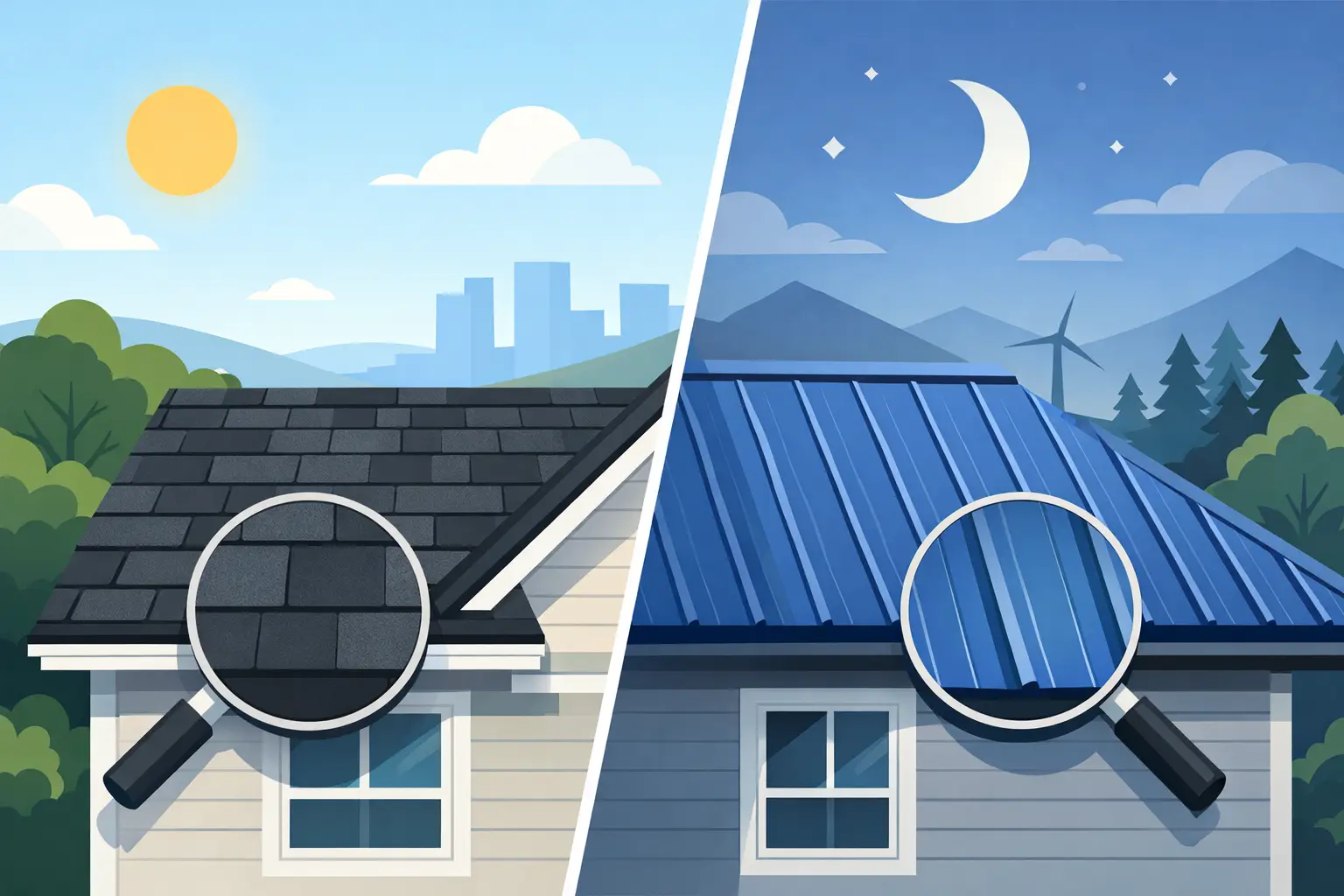
When homeowners ask about asphalt roof vs metal, they are usually not asking for a sales pitch. They want to know which roof will hold up, look right on the house, and make sense for the money. That is especially true in New England, where roofs take a beating from snow, wind, salt air, sun, and wide temperature swings.
The honest answer is that both materials can be good choices. The better roof depends on your house, your budget, how long you plan to stay, and how much value you place on lifespan, appearance, and maintenance. A roof is not just a product. It is a system, and the quality of the installation matters just as much as the material sitting on top of your home.
Asphalt roof vs metal: the biggest differences
Asphalt shingles are still the most common roofing material in Massachusetts for one simple reason - they offer solid performance at a lower upfront cost. They work on a wide range of home styles, repairs are usually straightforward, and homeowners are familiar with them.
Metal roofing sits in a different lane. It costs more at the start, but it can last much longer and offers a distinct look that many homeowners want. It is also known for shedding snow well and standing up to harsh weather when installed properly.
If you want the shortest version, asphalt usually wins on initial price and traditional appearance, while metal often wins on longevity and durability. But that quick answer skips over the details that actually affect your decision.
Cost is usually the first deciding factor
For most homeowners, budget gets the first vote. Asphalt shingles are typically more affordable to install than metal roofing. If you are replacing a roof due to age or storm damage and want a dependable option without stretching the project budget too far, asphalt often makes sense.
Metal roofing usually carries a higher material and labor cost. Part of that is the product itself. Part of it is the skill required to install it correctly. Flashing details, panel layout, trim work, and fastening all matter. A poorly installed metal roof can create expensive problems, which is why workmanship should never be an afterthought.
That said, cost should be viewed over time, not just on day one. If you plan to stay in the home for decades, a longer-lasting roof may offer better value even if the initial investment is higher. If you are trying to manage several exterior upgrades at once, asphalt may free up budget for windows, siding, trim, or gutter work that also needs attention.
Lifespan and long-term value
This is where metal often pulls ahead. A quality metal roof can last significantly longer than a standard asphalt shingle roof. Asphalt roofs can still deliver many years of reliable service, but they generally have a shorter service life, especially if ventilation, flashing, or attic conditions are not ideal.
Metal is attractive to homeowners who want to make one major investment and be done. That can be especially appealing for a forever home or a house that has already gone through several rounds of repairs over the years.
Still, longer lifespan does not automatically make metal the better buy for every homeowner. If you expect to move in the medium term, you may not personally realize the full value of that extended life. In that case, a well-installed asphalt roof may be the more practical decision.
How each roof handles New England weather
Roofing choices in our area should always be made with climate in mind. Winter snow loads, wind-driven rain, freeze-thaw cycles, and occasional coastal exposure all put pressure on a roofing system.
Metal performs very well in severe weather. It sheds snow efficiently, resists fire, and can hold up extremely well against wind when designed and installed correctly. For homes in exposed areas, or for homeowners concerned about heavy snow sitting on the roof, that benefit matters.
Asphalt shingles also perform well in New England when you choose the right product and the roof is installed with proper underlayment, ice and water protection, ventilation, and flashing. A lot of roofing failures blamed on shingles are really installation failures. Valleys, penetrations, chimney areas, and roof-to-wall transitions are often where trouble starts.
The local environment matters too. Near the coast, salt air can influence product performance and fastener choices. On heavily shaded lots, moss and moisture retention may affect roof aging. On older homes, attic ventilation may need correction no matter which roofing material you choose.
Appearance matters more than people think
Homeowners often start with performance and cost, then realize curb appeal is a major part of the decision. Your roof takes up a large visual footprint. It can sharpen the whole exterior or make an otherwise attractive home look mismatched.
Asphalt shingles tend to fit naturally on traditional colonials, capes, ranches, and many older New England homes. They come in a broad range of colors and profiles, and they usually blend well into neighborhood streetscapes.
Metal roofing makes a stronger visual statement. On some homes, that look is clean, sharp, and exactly right. On others, it can feel out of place if the style of the home does not support it. This is not about one material being better looking than the other. It is about proportion, architectural style, and how the full exterior works together.
That is one reason a detailed quote and a real conversation matter. Roofing should not be chosen in isolation from siding color, trim details, gutters, and the overall character of the home.
Noise, comfort, and everyday living
One concern homeowners often raise with metal is noise. People picture every rainstorm sounding like a drum. In most residential applications, that is overstated. When a metal roof is installed over proper decking and insulation, it is not typically the loud experience people imagine.
Still, the feel of the roof can differ. Some homeowners simply prefer the familiar look and sound profile of asphalt shingles. Others like the clean lines and premium feel of metal. There is a practical side to this decision, but there is also a comfort side, and that should not be ignored.
Energy performance comes up here too. Metal roofs can reflect more solar heat depending on the finish and color, which may help in warmer months. Asphalt can also perform well, especially with good attic insulation and ventilation. In many homes, the attic system has as much impact on comfort as the roofing material itself.
Repairs, maintenance, and future flexibility
Asphalt shingles are usually simpler and less expensive to repair in isolated areas. If a few shingles are damaged, targeted repairs may be possible depending on age and product availability. That flexibility can be helpful over time.
Metal roofs can be very durable, but repairs can be more specialized. Matching panels, finishes, and profiles is not always simple. Roof penetrations for future vents, fans, or additions also need careful planning. That does not make metal a bad choice. It just means you want to think beyond installation day.
This is also where contractor experience counts. The right crew will look at the roof system as a whole, not just the surface material. Deck condition, flashing details, ventilation, drainage, and tie-ins all affect how the roof performs year after year.
Which homeowners should choose asphalt roof vs metal?
If you want a dependable, attractive roof at a more approachable price, asphalt is often the right fit. It works well for many homes, offers design flexibility, and can deliver strong value when installed with care. It is a smart option for homeowners balancing quality with budget or managing several exterior projects at once.
If you plan to stay long-term, want maximum lifespan, and are comfortable with a higher upfront investment, metal may be worth a closer look. It can be an excellent choice for durability-focused homeowners and for houses where snow shedding, weather resistance, or a distinct appearance are priorities.
For some homes, the answer is also shaped by structure and design. Roof pitch, complexity, dormers, chimneys, and transition details can influence which system is more practical. A simple roofline may suit metal beautifully. A highly cut-up roof may make asphalt more cost-effective and easier to detail.
The best roofing decisions are rarely made from a price sheet alone. They come from looking at the house, understanding your goals, and weighing short-term budget against long-term plans. That is how good projects stay on track and homeowners feel confident in the result.
If you are choosing between asphalt and metal, do not rush to the cheapest number or the longest warranty label. Ask how the roof will be installed, how the flashing will be handled, and whether the full system fits your home. A good roof should do more than cover the house. It should give you one less thing to worry about every time the weather turns.