
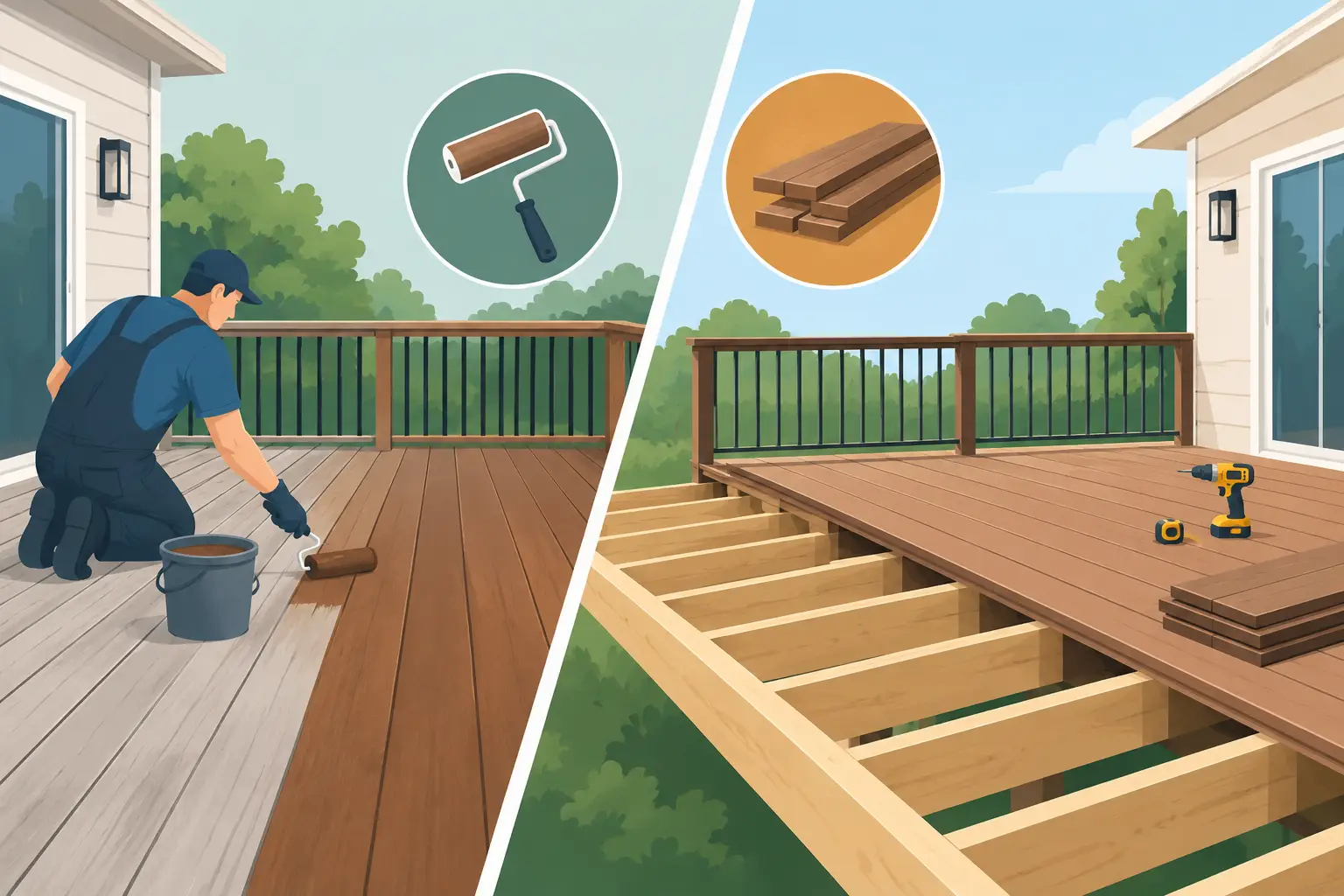
A deck can look tired long before it is truly worn out. Faded boards, peeling stain, splinters, and loose railings may point to a straightforward update, but they can also hide water damage where it matters most. The right choice in deck resurfacing vs rebuilding comes down to the condition of the structure beneath your feet, not just the appearance of the surface.
For homeowners across the North Shore and greater Boston area, that distinction matters. Our long winters, wet springs, humidity, and freeze-thaw cycles are hard on exposed wood and the connections that hold a deck together. A clear inspection before selecting materials protects your budget and helps ensure the finished deck is built to last.
What Deck Resurfacing Actually Means
Deck resurfacing keeps the existing structural frame in place while replacing the visible, high-wear components. Typically, this includes the deck boards, railing, stair treads, fascia, and sometimes the balusters. It is a practical way to give a structurally sound deck a clean new look without starting over from the ground up.
Many homeowners choose resurfacing when they want to move from aging pressure-treated lumber to low-maintenance composite decking. The result can be a major improvement in color, comfort, and upkeep. New railings can also change the character of the space, whether you prefer a traditional wood look, composite rails, or a cleaner aluminum profile.
Resurfacing is not simply a matter of placing new boards over an old frame. Before any new decking goes down, the joists, beams, posts, ledger board, footings, and hardware need a close look. A quality installation may include reinforcing framing, replacing damaged joists, installing proper flashing, correcting spacing, and adding blocking to meet the requirements of the new decking material.
If the framework is dry, solid, properly supported, and appropriately sized, resurfacing can deliver excellent value. You retain usable parts of the deck while directing more of the budget toward the finished surfaces your family sees and uses every day.
When Rebuilding Is the Better Investment
A full rebuild removes the existing deck and replaces the framing and finish materials. It involves more work up front, but it gives you the opportunity to correct structural concerns, update the layout, and build around how you use the space now.
Rebuilding is often the right call when rot has spread into framing members, posts have deteriorated near grade, or the deck has shifted or settled. It is also worth considering if the ledger board - the critical connection where the deck meets the home - lacks proper flashing or secure fastening. These are not cosmetic concerns. They affect the deck's ability to safely carry people, furniture, snow, and the everyday stress of outdoor use.
A rebuild may also make sense when your current deck is simply too small or poorly arranged. Perhaps the stairs land in the wrong place, the railing blocks a view, or there is no comfortable zone for grilling and dining. Starting fresh allows the design to work with the property instead of forcing a new surface onto an outdated footprint.
Permits and current building requirements may also shape the decision. Guardrail height, stair geometry, footings, attachment details, and load requirements have changed over time. A rebuilt deck can be planned and constructed around current standards, rather than asking an older structure to support improvements it was never designed to carry.
Deck Resurfacing vs Rebuilding: The Key Decision Points
The biggest question is simple: Is the existing frame worth saving? A professional inspection should go beyond a quick walk across the boards. It should examine the areas most likely to hold moisture or fail over time.
Start with the posts and footings. Wood posts that sit too close to soil or remain wet can decay from the bottom up. Check beam connections and the ends of joists, especially where they meet a beam, ledger, or rim board. Soft wood, dark staining, cracks, insect damage, and rusted connectors all deserve attention.
The ledger deserves special care because it ties the deck to the house. Water that gets behind this board can damage both the deck connection and the home's exterior wall. Proper flashing is essential, especially on homes where siding, trim, or drainage details have been altered since the deck was installed.
Joist condition and spacing matter as well. Composite boards are heavier and can have different spacing requirements than wood decking. A frame that held up under old cedar or pressure-treated boards may need repairs or added support before it can carry a new composite surface correctly. Installing premium decking on undersized or compromised framing is not a value move. It can lead to sagging, movement, and a shorter service life.
Finally, consider the age of the deck and its history. A deck that is 10 years old with surface-level weathering may be an excellent resurfacing candidate. A 25-year-old deck with several rounds of repairs, recurring loose railings, and visible settling may be telling you it is time to rebuild. Age alone does not make the decision, but it provides useful context.
Cost Is More Than the Initial Price
Resurfacing usually costs less than rebuilding because the footings and main framework remain. It can also be faster, which means less disruption around your home. For a sound structure, that is a sensible path to a better-looking outdoor space.
But the lower initial price should not be the only number considered. If substantial repairs are needed once old boards are removed, the cost gap can narrow quickly. There is a point where continuing to patch the old structure stops being efficient and starts delaying a more complete solution.
A rebuild has a higher starting cost because it includes demolition, new framing, new footings as needed, and full installation. In return, it provides a clean slate, a longer expected service life, and the freedom to adjust the size, shape, stairs, railing, lighting, and material selections. It can be the better long-term value when the existing deck has multiple structural concerns or no longer fits the home.
The best estimates separate these possibilities clearly. A detailed quote should explain what can be retained, what must be repaired, and what assumptions are based on visible conditions. Good, Better, Best options can be especially helpful here: one option may preserve a sound frame with new surfaces, while another prices a complete rebuild with upgraded materials and design features.
Material Choices Can Affect the Scope
Pressure-treated wood remains a dependable, budget-conscious decking option when it is installed correctly and maintained over time. It can be a strong fit for homeowners who prefer the natural look of wood and are prepared to clean, stain, or seal it as needed.
Composite decking reduces routine maintenance and offers consistent color options, but it requires proper framing, spacing, and fastening. It also costs more than many wood options. For many homeowners, the trade-off is worthwhile because it limits sanding, staining, and splinter concerns over the years.
Railings deserve the same level of thought. Wood railings may suit a traditional home and can be cost-effective, while composite, vinyl, cable, or aluminum systems can offer different looks and maintenance needs. The right choice should match the deck design, the home's exterior, the view, and the amount of upkeep you want to take on.
Choose an Inspection Before a Finish
It is easy to make this decision based on what is most visible: gray boards, worn stain, or a railing that no longer looks sharp. Those items matter, but the safest choice begins underneath. Ask for an on-site evaluation that examines the deck's framing, attachment to the house, structural connections, drainage, and stairs before choosing a material or accepting a price.
US Home Improvement has served local homeowners since 1978 with a craftsmanship-first approach to exterior projects. That means looking at the whole job, communicating what the deck needs, and keeping the work area orderly from start to finish.
A resurfaced deck can be a smart, lasting upgrade when the frame is solid. A rebuilt deck can be the better answer when the structure or layout has reached the end of its useful life. Either way, the goal is the same: an outdoor space that feels dependable underfoot, looks right for your home, and gives you a place to enjoy for years rather than another repair waiting for next season.