
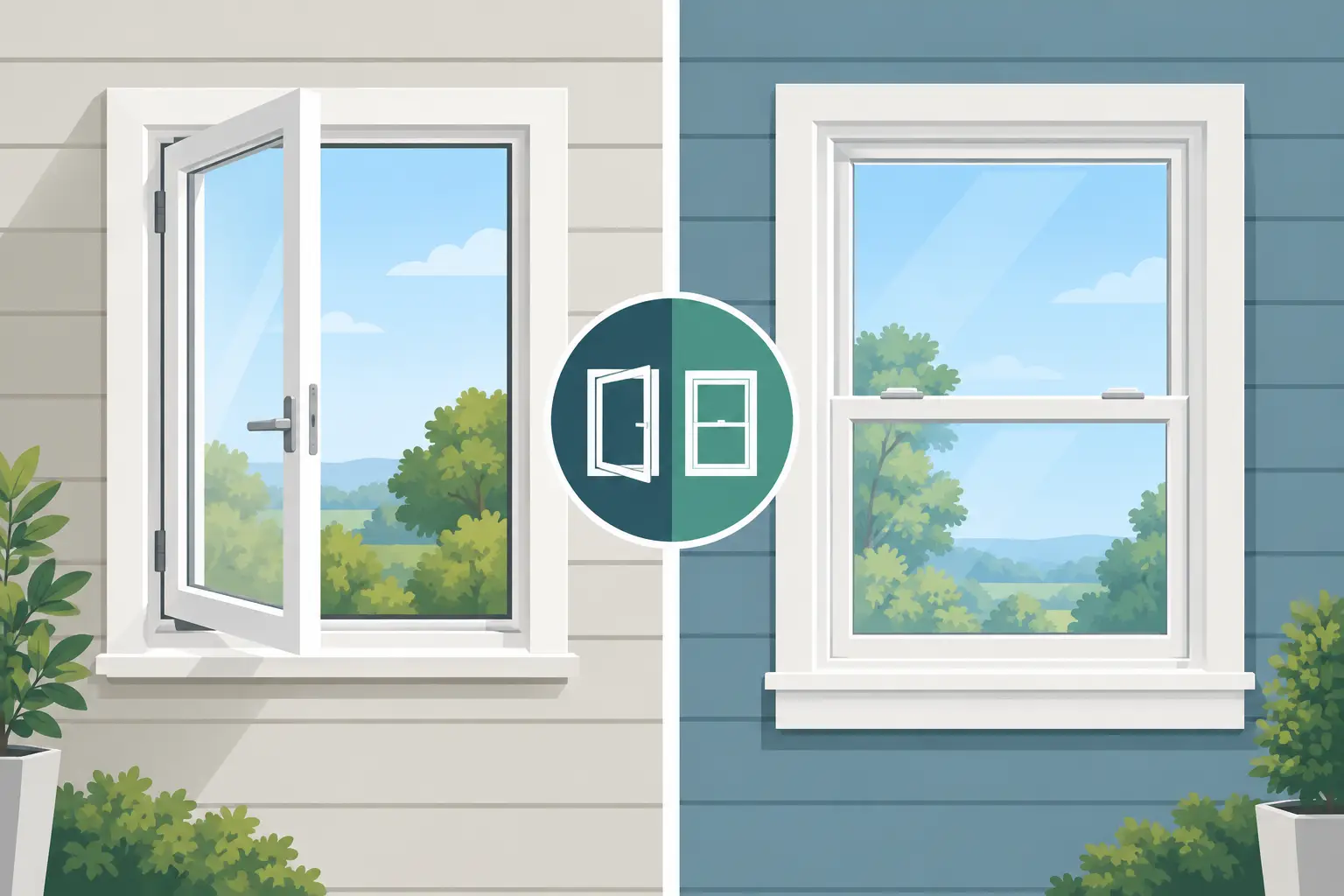
A window replacement can look simple from the driveway, but the way a window opens affects how a room feels every day. In the casement versus double hung decision, the better choice usually comes down to ventilation, placement, architecture, and how you use each room - not a one-size-fits-all answer.
For homeowners across the North Shore and greater Boston, window performance also matters through humid summers, coastal winds, driving rain, and cold New England winters. A well-made window only delivers its expected comfort and efficiency when it is correctly sized, installed, insulated, and finished. Start with the style that serves your home, then make sure the installation receives the same level of care.
Casement Versus Double Hung: The Core Difference
A casement window is hinged along one side and swings outward with a crank handle. It opens like a door, creating a large, unobstructed opening. A double hung window has two operable sashes that slide vertically within the frame. Most modern double hung models allow both sashes to tilt inward for cleaning.
That basic difference changes the experience of the window. Casements are known for a tight, compression-style seal when locked and for catching a breeze when opened. Double hung windows offer familiar operation, flexible ventilation, and a traditional look that works especially well on many Colonial, Cape, and Victorian-inspired Massachusetts homes.
Neither style is automatically better. The right answer depends on where the window is going and what the room needs from it.
When Casement Windows Make the Most Sense
Casement windows are a strong choice when you want maximum airflow from a relatively narrow opening. Because the entire sash swings out, there is no center rail dividing the view. That can bring more daylight into a kitchen, living room, stairwell, or room facing a yard, garden, or water view.
They are particularly useful above countertops and sinks. Reaching over a kitchen sink to raise a double hung sash can be awkward. A casement crank is often easier to operate from that position, provided the window is not too large or difficult to reach.
Ventilation is another advantage. An open casement can be angled to catch side breezes and direct air indoors. On a warm day, that can make a noticeable difference in rooms that tend to feel still or stuffy.
Energy-conscious homeowners often appreciate how casement windows close. The sash presses against weatherstripping as it locks, rather than sliding past it. A quality casement window can provide excellent air control. Still, glass package, frame construction, installation details, and the condition of the opening all affect real-world performance. A premium window installed poorly will not perform like one that has been carefully fitted, insulated, and sealed.
Casements do have practical limits. They need clear space outside to swing open, so they are not always ideal beside a walkway, patio, deck, or driveway. Screens are generally mounted on the interior side, which is different from the exterior screens commonly found on double hung windows. The crank and hardware also deserve occasional attention to keep operation smooth.
Why Double Hung Windows Remain a New England Favorite
Double hung windows have been a familiar part of local homes for generations, and for good reason. Their vertical proportions suit a wide range of traditional architecture. Replacing old double hungs with quality modern versions can preserve the character of a home while improving comfort, operation, and maintenance.
Their biggest everyday benefit is ventilation control. Open the lower sash to bring air in, open the upper sash to let warm air escape, or use both at once to encourage circulation. This is especially helpful in bedrooms, upstairs rooms, and homes that rely on natural ventilation during milder spring and fall weather.
They also work well where an outward-swinging sash would get in the way. A double hung window does not project over a porch, sidewalk, flower bed, or deck. That makes it a practical choice on front elevations, near high-traffic outdoor areas, and in tighter side yards.
Modern tilt-in sashes simplify cleaning from indoors, which is a genuine advantage for second-floor windows. Homeowners should still follow the manufacturer's instructions and use care with larger sashes, but the feature reduces the need to reach out over a ladder for routine glass cleaning.
The trade-off is that only part of a double hung window is open at one time when one sash is raised or lowered. Even with both sashes opened, the center meeting rail remains in the view. Air sealing can still be very good with a quality product and professional installation, but casement designs typically have an edge in this category because of their compression seal.
Compare the Details That Matter in Your Rooms
The best way to choose between window styles is to stand in each room and think through normal use. A beautiful window that is inconvenient to open or difficult to clean becomes frustrating quickly.
Ventilation and airflow
Choose casement windows when you want the largest possible opening and a window that can catch crosswinds. Choose double hungs when adjustable top-and-bottom ventilation matters more. In a bedroom, for example, a double hung can offer useful airflow without opening the lower sash as far. In a kitchen or sunroom, a casement may provide the broad opening you want.
Views and daylight
Casements offer a cleaner sightline because they do not have a horizontal meeting rail through the middle. They are often a good fit for scenic rear elevations or rooms where daylight is a priority. Double hungs create a more classic, balanced appearance and may better match existing windows on a historic or traditional home.
Operation and accessibility
A crank-operated casement is convenient over a counter, but it may not be ideal if the handle is hard to reach or if a homeowner has limited hand strength. Double hungs require lifting and lowering, although well-built models should move smoothly and stay where positioned. There is no substitute for operating a full-size sample during a consultation.
Exterior clearance
Look outside before selecting a casement. Shrubs, railings, walkways, outdoor furniture, and neighboring structures can interfere with the sash. Double hungs stay within their frame, making them the safer choice in constrained spaces.
Cleaning and upkeep
Tilt-in double hungs are usually easier to clean from the interior, especially upstairs. Casement glass is generally easy to reach from inside when the sash is open, but exterior cleaning can be less convenient depending on the window's location. Both styles benefit from keeping tracks, hinges, and weep paths clear of dirt and debris.
Style Should Support the House, Not Fight It
Window replacement is one of the most visible exterior upgrades a homeowner can make. The goal is not to make every opening identical. It is to create a consistent look while choosing practical operation room by room.
Many homeowners use double hungs on the front of the home to maintain a traditional facade, then choose casements in a kitchen, family room, or rear addition where wider views and ventilation are more valuable. That approach can work well when grille patterns, frame colors, and proportions are coordinated.
A bay or bow window may also combine styles. Fixed picture windows can provide a central view, with casements or double hungs on the sides for airflow. This is where an on-site evaluation helps: the right configuration should account for the home's framing, siding details, interior trim, and how the room is actually lived in.
Do Not Overlook Installation Quality
Windows are not simply dropped into a hole and covered with trim. The crew must evaluate the existing opening, address any hidden rot or water damage, properly flash and insulate the window, and finish the exterior and interior cleanly. These details protect the investment and help prevent drafts, water intrusion, and premature problems.
Older homes in Peabody and surrounding communities can have uneven openings, aging trim, or past water issues concealed behind the existing window. A detailed quote should explain what is included, what conditions may require repair, and how the finished work will be handled. Clear expectations are worth more than a vague low bid.
At US Home Improvement, the goal is to help homeowners compare good, better, and best options without pressure or confusion. The best window package is the one that suits the home, the room, and the long-term plan for the property.
A Practical Way to Decide
If you are torn between the two, begin with function. Choose a casement where you need wide airflow, an uninterrupted view, or easy operation over a counter. Choose a double hung where traditional appearance, inward cleaning, controlled ventilation, or exterior clearance is the priority.
Then consider the complete project: frame material, glass performance, grids, screens, trim, installation approach, and warranty support. A thoughtful choice should feel right when the window is closed on a cold January morning and when it is open to a summer breeze. Take the first step by having the openings measured and the options explained in plain language before you decide.