
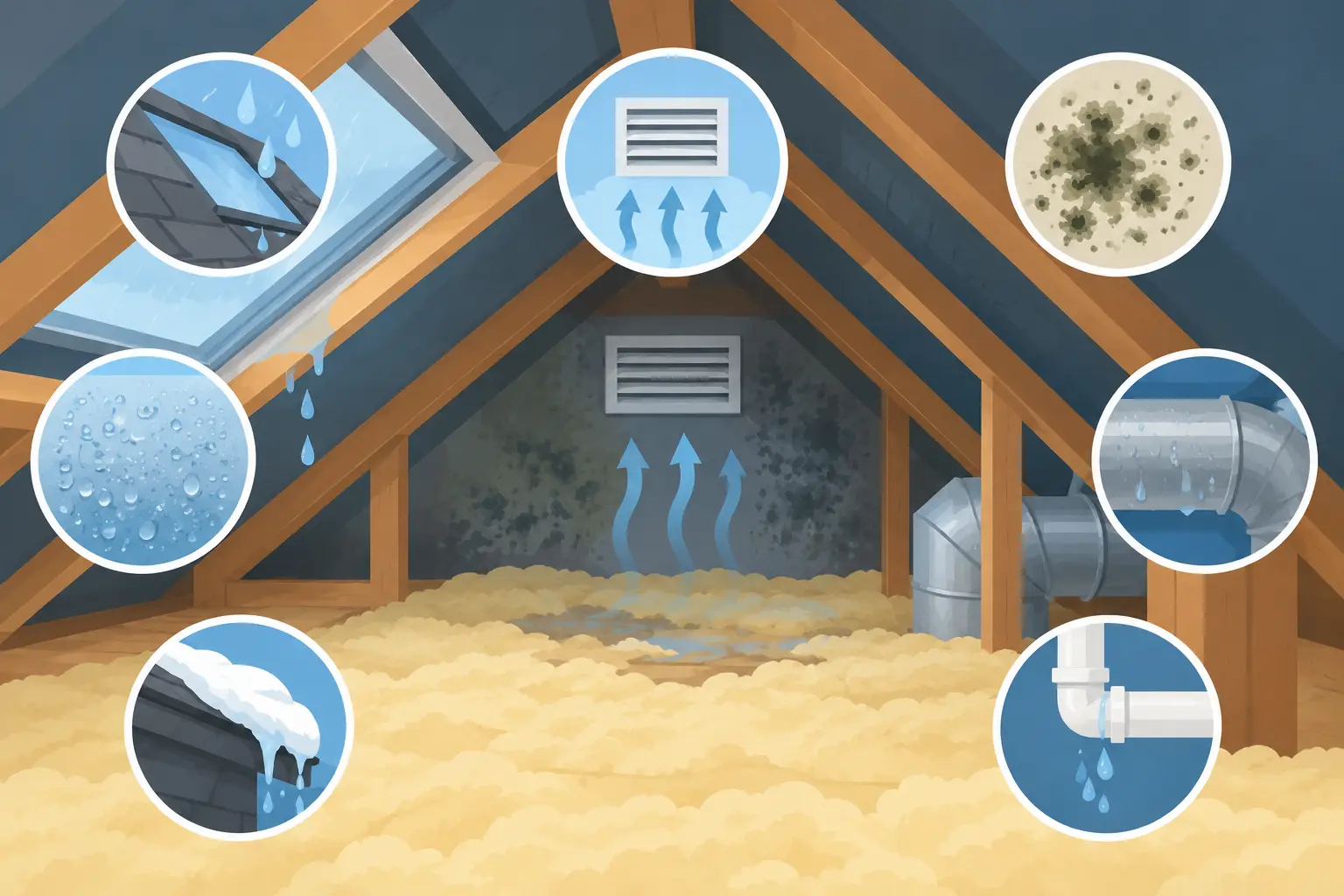
A damp attic rarely starts as a dramatic problem. More often, a homeowner finds rusty nail tips, dark roof sheathing, wet insulation, or a musty smell while storing holiday boxes. The question is what causes attic moisture, because the visible dampness may be coming from inside the house, outside weather, or a combination of both.
In Massachusetts, cold winters and humid summers put attic systems to work. A healthy attic needs a clear boundary between conditioned living space and the unconditioned roof space above it. When air sealing, insulation, ventilation, roofing, or drainage falls short, moisture can collect where it does not belong.
What Causes Attic Moisture in Most Homes?
Moisture needs a source, a path, and a cold surface where it can condense. Finding the source is the key to making a lasting repair. Replacing stained plywood or adding a vent without addressing the actual cause can leave the problem waiting for the next cold snap or heavy rain.
1. Warm, humid air leaking from the living space
This is one of the most common causes of attic condensation. Warm household air holds moisture from showers, cooking, laundry, and everyday living. When that air escapes through gaps around light fixtures, plumbing stacks, attic hatches, wiring holes, and wall openings, it reaches the colder attic.
On a winter day, the underside of roof sheathing can be cold enough to turn that moisture into water droplets. Those droplets may freeze, then thaw and drip onto insulation. Homeowners sometimes assume they have a roof leak, but the wet area may appear across wide sections of the attic rather than directly beneath one damaged roof area.
Air sealing comes before adding more insulation. Insulation slows heat loss, but it does not stop moist air from moving through open gaps.
2. Bathroom, kitchen, or dryer vents that end in the attic
A fan that vents into an attic does not remove moisture from the home. It simply moves it to a colder, more vulnerable space. Steam from a shower can add a surprising amount of water vapor, especially during winter when windows stay closed and the roof deck is cold.
Vent ducts should terminate outdoors through an appropriate wall or roof cap, not near a soffit where moist air can be drawn back into the attic. The duct should also be properly connected, insulated where needed, and sloped to avoid collecting condensation. A disconnected bath fan duct can soak insulation and create staining that looks much worse than the source of the problem.
3. Inadequate or blocked attic ventilation
Attic ventilation helps remove heat and moisture, but it is not a substitute for air sealing. A balanced system typically brings air in through soffit vents and releases it through ridge vents or another properly designed exhaust location. That airflow can help keep roof sheathing drier and reduce excessive summer heat buildup.
Problems arise when soffit vents are covered by insulation, baffles are missing, a ridge vent is blocked, or exhaust ventilation is too limited for the attic layout. Adding more roof vents is not always the answer. Poorly placed vents can interfere with airflow, and powered attic fans can sometimes pull conditioned air from the home through ceiling leaks. The right approach depends on the roof design and the condition of the existing ventilation system.
4. A roof leak or failed flashing
Rainwater entering through the roof is a different issue from condensation, although both can damage sheathing and insulation. Missing shingles, cracked pipe boots, worn flashing around chimneys and skylights, damaged valleys, and loose roof penetrations are common entry points.
A roof leak often leaves more localized clues: staining below a penetration, wet framing after rain, or damage that follows a specific path downhill. However, water can travel along rafters or roof decking before it drips, so the stain is not always directly under the opening.
Inspect the roof after wind-driven rain or a thaw. If moisture appears only after weather events, roofing or flashing deserves close attention. If it appears during prolonged cold weather without rain, indoor humidity and air leakage are stronger suspects.
5. Ice dams and poor roof-edge drainage
Ice dams are common across the Northshore and greater Boston area after snow followed by freezing temperatures. Heat escaping into the attic warms the upper roof, melting snow. The water runs down to the colder eaves, refreezes, and can form a ridge of ice that traps additional meltwater behind it.
That trapped water may work its way beneath shingles and into the roof assembly. Clogged gutters, damaged gutters, and poor roof-edge details can make drainage problems worse, but ice dams usually begin with an attic insulation and air-sealing issue. Removing the ice may stop immediate damage, yet the lasting solution is to control heat loss and confirm the roof system is properly protected.
6. Wet or compressed insulation
Insulation that has absorbed water loses performance. Fiberglass can dry under the right conditions, but heavy saturation, mold growth, or contamination may require removal and replacement. Cellulose insulation can mat down and retain moisture, reducing its ability to resist heat flow.
Compressed insulation also leaves thin spots where heat can escape into the attic. That extra heat can contribute to condensation and ice dams. A proper attic review looks beyond insulation depth. It checks for wet areas, gaps at the perimeter, missing baffles, uneven coverage, and signs that air from the home is bypassing the insulation layer.
7. High indoor humidity
Even an attic with decent insulation and ventilation can struggle if indoor humidity stays too high during cold weather. Signs inside the home may include persistent window condensation, moisture on cold pipes, or peeling paint near exterior walls and ceilings.
The best indoor humidity level depends on outdoor temperature, home construction, and ventilation. When temperatures drop sharply, humidity often needs to come down as well to prevent condensation on cold surfaces. Consistent use of properly vented bath fans, kitchen exhaust, and a dehumidifier where appropriate can help. If the home is tightly sealed, whole-house ventilation may be worth discussing with a qualified professional.
How to Tell Condensation From a Roof Leak
The difference matters because the repair path is not the same. Condensation often affects broad areas of roof sheathing and may show as rusty nails, frost, or a thin film of moisture. It is especially noticeable during cold weather and may improve when conditions warm.
Roof leaks are more likely to create concentrated stains, soft wood, or wet insulation near roof penetrations, valleys, chimneys, skylights, and exterior walls. They typically worsen after rain, snowmelt, or wind-driven storms.
There can be overlap. A roof leak can wet insulation and make attic humidity worse, while poor ventilation can slow drying after a leak. That is why a careful inspection should consider the roof exterior, attic ventilation, insulation, ductwork, and air-sealing details together.
What to Do When You Find Moisture in Your Attic
Start by documenting what you see. Note whether the problem follows rain, snowmelt, or freezing weather. Take photos of staining, wet insulation, frost, mold-like growth, disconnected ducts, and damaged roof areas. Avoid stepping between ceiling joists, and do not disturb suspected mold without proper protection.
Then address active water entry first. A roof leak, damaged flashing, or backed-up roof drainage should not wait. Next, identify moisture being introduced from inside the home, particularly bath fan ducts and air leaks around ceiling penetrations. Finally, review insulation and ventilation as a complete system rather than treating each item as an isolated upgrade.
Do not assume an attic needs more ventilation simply because it feels damp. More openings in the roof will not fix a bathroom fan dumping steam into the attic, and a powered fan may worsen air leakage in some homes. Good repairs are specific to the cause.
When Professional Help Makes Sense
Call for an evaluation if you see recurring wet sheathing, active drips, sagging ceiling drywall, widespread staining, mold growth, or ice dams that return each winter. These signs can point to roof damage, trapped moisture, or a building-envelope issue that needs more than a quick patch.
For homeowners, the goal is not just a dry attic this week. It is a roof, ventilation, insulation, and drainage system that works together through New England weather. A careful inspection and a clearly defined repair plan can protect the structure, improve comfort, and prevent a small moisture clue from becoming a costly renovation.