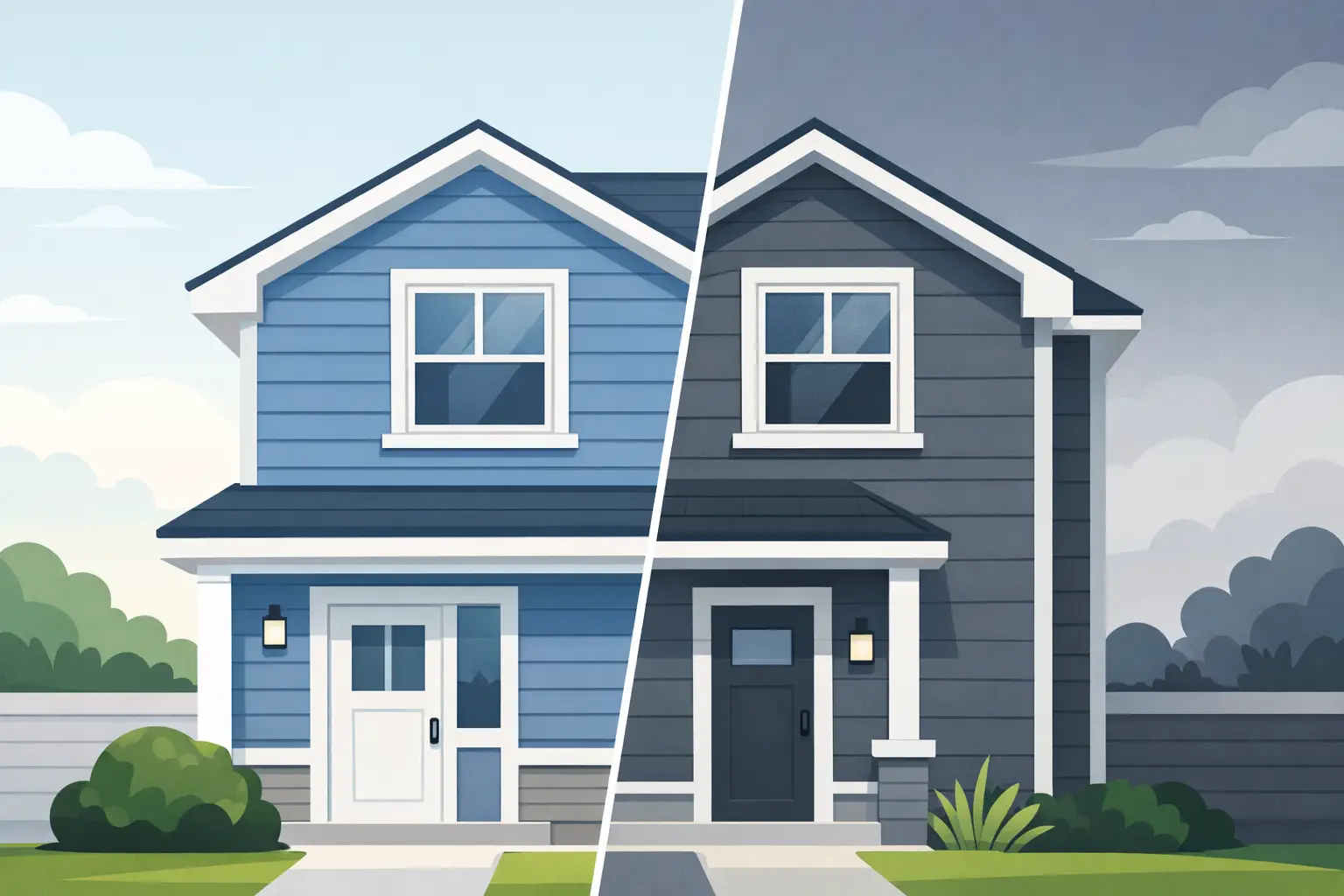
If your siding is faded, cracked, or simply making the whole house look tired, the material choice matters more than most homeowners expect. In the vinyl siding vs fiber cement decision, the right answer usually comes down to your budget, the age and style of your home, and how much maintenance you want to deal with over the next 20 years.
Around Essex County and the greater Boston area, siding has to do more than look good on day one. It has to handle freeze-thaw cycles, wind-driven rain, salt air in some locations, summer sun, and the everyday wear that comes with New England weather. That is why this comparison is worth getting right before you sign off on a project.
Vinyl Siding vs Fiber Cement: What Changes Most
At a glance, both materials can improve curb appeal and protect your home. The bigger differences show up over time.
Vinyl siding is usually the more budget-friendly option upfront. It is lighter, faster to install, and available in a wide range of colors and profiles. For many homeowners, that makes it the practical choice when they want a clean exterior upgrade without pushing the project cost too high.
Fiber cement tends to win on heft, texture, and a more traditional painted-wood look. It is often chosen for homes where architectural detail matters, or where the owner wants a sturdier, more premium-feeling exterior. It generally costs more to install and it asks more of the installer, but it can deliver a strong visual payoff.
Neither material is automatically better for every house. The smart decision is usually based on priorities, not hype.
Cost: The First Question for Most Homeowners
For most projects, vinyl siding comes in lower on both material and labor cost. It is lighter to handle, easier to cut, and faster for a crew to install. That often makes it attractive for homeowners balancing several exterior improvements at once, such as roofing, trim, gutters, or replacement windows.
Fiber cement is heavier and more labor-intensive. Installation requires more cutting, more handling, and more attention to moisture management details. That added labor is a real part of the price, not just a line item. If a quote for fiber cement comes in noticeably higher, that is usually because the work itself is more demanding.
The more useful question is not just, "Which is cheaper?" It is, "What am I paying for?" With vinyl, you are often paying for efficiency, low maintenance, and solid curb appeal. With fiber cement, you are usually paying for a different look, added rigidity, and a product many homeowners see as a premium finish.
Appearance and Curb Appeal
This is where personal preference starts to carry real weight.
Modern vinyl siding has come a long way. Better products offer deeper grain patterns, stronger color retention, and cleaner profiles than the builder-grade vinyl many people picture from years ago. On the right home, especially a colonial, ranch, or cape, vinyl can look sharp and finished without trying too hard.
Fiber cement has a more substantial appearance. It often does a better job mimicking painted wood clapboards, and it tends to appeal to homeowners who want a classic New England look. If your home has trim details, strong street presence, or an older style that benefits from a more traditional finish, fiber cement may fit the architecture better.
That said, great results depend on installation as much as material. Poor layout, sloppy trim work, and uneven lines will hurt the look of either product. Good siding work should feel clean, balanced, and intentional from the curb.
Maintenance and Long-Term Ownership
This is one of the clearest differences between the two.
Vinyl siding is known for low maintenance. It does not need painting, and in most cases a periodic wash is enough to keep it looking respectable. For busy homeowners, that matters. If your goal is to finish the project and not think much about it for years, vinyl has a real advantage.
Fiber cement is durable, but it is not maintenance-free. It usually comes prefinished or primed, and depending on the product and exposure, repainting may become part of the long-term plan. Caulking joints and maintaining the finish are part of protecting the system. That does not make fiber cement a bad choice. It just means you should go into the project with open eyes.
For some homeowners, repainting every so often is no big deal. For others, it is exactly the kind of future expense and hassle they are trying to avoid.
Durability in Massachusetts Weather
Homes in this region ask a lot from exterior materials. Snow, ice, humidity, sun exposure, and coastal conditions can all show up in one year.
Vinyl siding performs well when it is properly installed and matched to the house. It resists moisture, does not attract pests, and holds up well in everyday conditions. Lower-quality vinyl can become brittle over time or show more movement with temperature swings, which is why product selection matters. Thicker, better-grade vinyl tends to perform and look better over the long haul.
Fiber cement is valued for its strength and resistance to rot, insects, and fire. It handles weather well, but it is still only as good as the installation behind it. Flashing details, clearances, fastening, and moisture control all matter. A heavy-duty material installed carelessly can still become a problem.
For New England homes, the contractor matters as much as the siding brand. Weather resistance is built in the field, not just in the factory.
Vinyl Siding vs Fiber Cement for Resale Value
Both materials can support resale value if the job is done well and the house looks properly maintained.
Vinyl often appeals to buyers because it signals low upkeep. If the color is timeless and the trim package looks finished, it can make a house feel move-in ready. That matters in competitive markets where buyers are already watching their future maintenance costs.
Fiber cement can carry a more upscale impression. On certain homes, especially higher-value properties or houses with strong architectural character, it may strengthen curb appeal in a way that helps the home stand out. The key phrase there is "on certain homes." Not every house gets the same return from a more expensive siding package.
A practical way to think about resale is this: choose the siding that fits your home, your neighborhood, and the level of finish buyers will expect. Overspending on material that does not match the house is just as unhelpful as underinvesting in visible exterior work.
Which Option Makes More Sense for Your Home?
If you want dependable performance, lower maintenance, and a more manageable project cost, vinyl siding is often the better fit. It works especially well for homeowners who want a straightforward exterior upgrade with strong value and less long-term upkeep.
If you care most about a traditional painted-wood appearance, want a more substantial material, and are comfortable with a higher initial investment and some future maintenance, fiber cement may be the better choice.
There are also in-between situations. A homeowner may prefer fiber cement on a front elevation for visual impact but decide vinyl makes more sense overall once the full project budget is laid out. Others start out focused on price and then decide the look of fiber cement is worth the jump. This is where a detailed quote with real options helps. Good, better, best only works when the differences are explained clearly.
The Installation Question Matters More Than Homeowners Think
Homeowners often spend weeks comparing materials and only minutes thinking about installation quality. That is backwards.
With siding, the finished result depends on layout, trim integration, moisture management, fastening, flashing, and cleanup discipline. A good crew makes the house look sharper and helps the system perform the way it should. A rushed crew can turn even premium materials into an expensive disappointment.
That is one reason experienced local contractors bring real value to the table. A team that understands how homes in Peabody, the North Shore, and the Boston area handle weather exposure can guide the material choice in a way that feels practical, not sales-driven. At US Home Improvement, that kind of decision support is part of the job. Homeowners should know what they are buying, why it costs what it costs, and what to expect after the work is done.
The best siding choice is the one that fits your house and your life. If you are weighing vinyl siding vs fiber cement, focus on the trade-offs that will still matter five and ten years from now - not just the sample board in your hand today.