
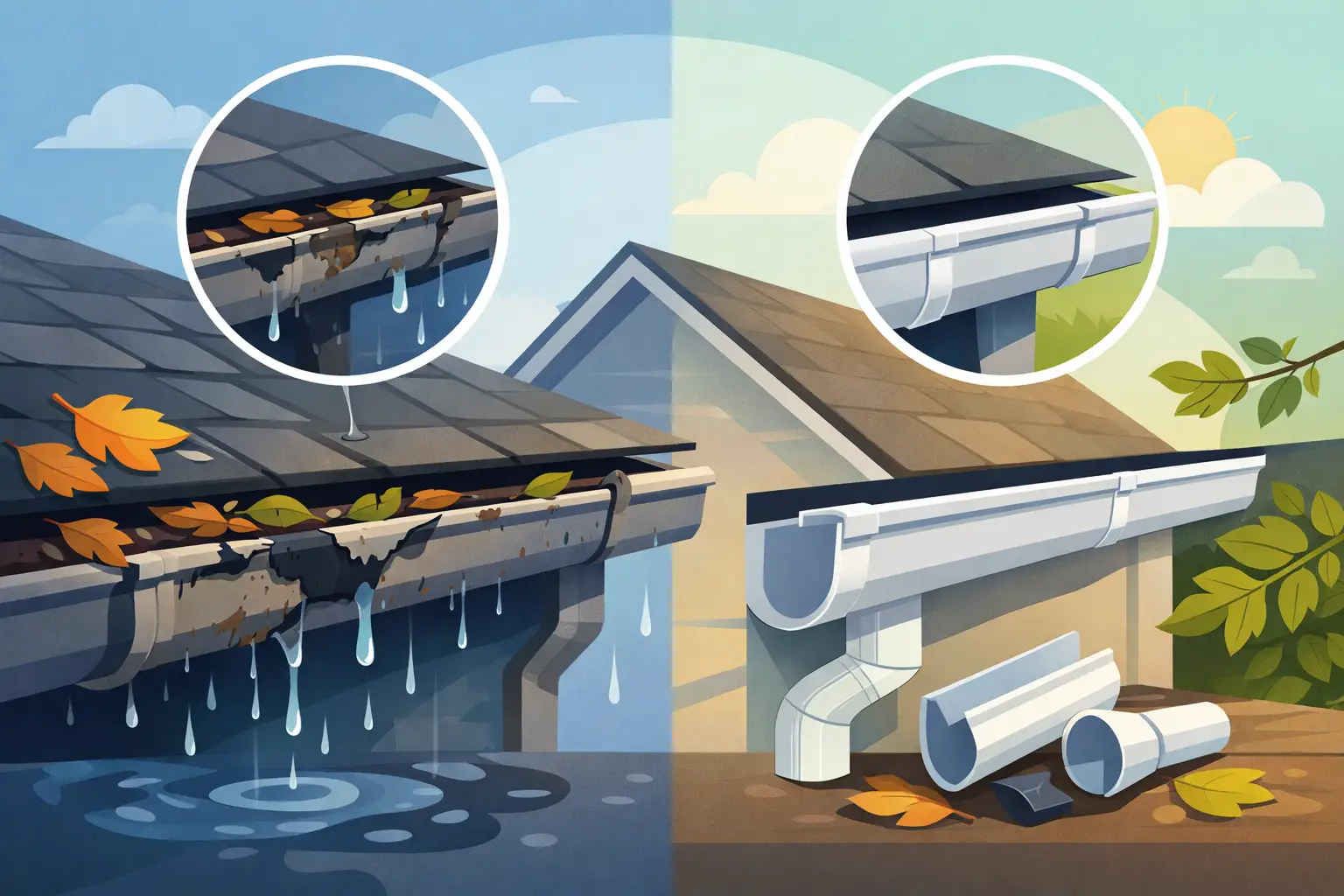
A gutter problem rarely starts with a dramatic collapse. More often, it starts with a small line of overflow during a storm, a section pulling away from the fascia, or mulch washing out of a flower bed after heavy rain. If you are asking when should you replace gutters, the honest answer is this: replace them when they stop protecting your home reliably, not just when they start looking rough.
For homeowners in Massachusetts, that decision often comes down to more than age alone. Snow load, ice, wind, tree debris, roof runoff, and older fasteners all take a toll. A gutter system can appear serviceable from the ground while quietly letting water reach fascia boards, siding, trim, and the foundation. That is where a small exterior issue turns into a bigger repair.
When should you replace gutters instead of repairing them?
Repairs make sense when the problem is isolated. A single loose hanger, a short separated joint, or one dented section after a branch strike usually does not justify a full replacement. Good repair work can extend the life of a system that is otherwise sound.
Replacement becomes the better move when the issues are repeated, widespread, or tied to the age and design of the whole system. If you keep patching leaks every season, rehanging sagging sections, or cleaning up overflow near the same corners, you are likely spending money to hold together a system that is already at the end of its useful life.
A good rule is to look at performance first and appearance second. Faded gutters are not necessarily failed gutters. But gutters that overflow, pull loose, or dump water against the house during normal rain are not doing their job, even if they still look acceptable from the street.
The clearest signs your gutters need replacement
The most obvious warning sign is sagging. Gutters should maintain a clean, consistent pitch so water moves toward the downspouts. When sections dip or bow, water sits in the trough, adds weight, and makes the problem worse. Standing water also speeds corrosion and can become a freezing issue in winter.
Cracks, holes, and split seams are another sign. Small seam leaks can sometimes be sealed, but multiple failing joints often point to an aging system. Older sectional gutters naturally have more connection points, and each one is a place where failure can start.
Peeling paint, rust stains, or dark streaks on fascia boards are signs that water is escaping where it should not. That does not always mean the gutter itself is ruined. Sometimes the pitch is wrong or the fasteners are failing. But if water has been getting behind the gutter for a while, replacement is often the cleaner, more reliable fix.
You should also pay attention to what is happening below the gutter line. Soil erosion, basement moisture, puddling near the foundation, and damage to landscaping can all trace back to a system that no longer controls roof runoff properly. Gutters are not just trim pieces. They are part of your home’s drainage system, and when that system fails, the damage often shows up somewhere else first.
How long do gutters usually last?
The lifespan depends on material, installation quality, and maintenance. Aluminum gutters, which are common on homes across the North Shore and greater Boston area, often last around 20 years or more when properly installed and kept clear. Copper can last much longer. Vinyl tends to be more vulnerable to temperature swings and physical damage.
That said, age is only one part of the picture. A 12-year-old gutter system installed with poor pitch or too few hangers may already be failing. A 25-year-old system that was well built and maintained may still have some life left. This is why homeowners get frustrated when they hear simple timeline answers. The real question is not just how old the gutters are. It is whether they are still moving water away from the house dependably.
In New England, winter matters. Ice and snow can stress fasteners, pull sections out of alignment, and expose weak points that were not obvious in warmer months. If your gutters look worse every spring, that is worth taking seriously.
What replacement becomes necessary after storm or winter damage?
Not all storm damage calls for a full new system. If a ladder, branch, or ice slide dents one area, a sectional repair may be possible. But if the impact twists the run, loosens the fascia connection, or damages multiple brackets and downspout connections, replacing the affected elevation may be smarter than trying to patch several linked issues.
Winter damage can be less visible but more expensive over time. Repeated freeze-thaw cycles can widen seams, loosen spikes or hidden hangers, and shift pitch enough to create chronic standing water. Once that cycle starts, repairs may only buy you limited time.
This is also where roof and gutter condition overlap. If you are replacing the roof soon, it is often worth evaluating the gutters at the same time. Coordinating both can improve the finish work, reduce labor duplication, and make sure the drainage system is matched to the new roof runoff pattern.
Repair or replace? What homeowners should weigh
Cost matters, but so does how often you want to revisit the same problem. A lower repair bill can be appealing until you have paid for several service calls in two years and still have overflow near the front entry.
If the gutter system has one or two isolated trouble spots, repair is usually reasonable. If the gutters are older, pulling away in several places, leaking at multiple seams, or undersized for the roof area, replacement often delivers better value. New seamless gutters reduce the number of failure points and typically provide a cleaner look along the roofline.
There is also the matter of surrounding materials. Gutters that leak behind the fascia can contribute to wood rot, peeling trim paint, and siding staining. Waiting too long can turn a gutter project into a fascia, soffit, trim, or siding repair. That is where replacing sooner can save money overall.
Why installation quality matters as much as the gutter itself
A gutter system is only as good as its pitch, fastening, downspout placement, and runoff planning. Even premium materials can underperform if the system is installed without enough support or if the downspouts do not carry water far enough from the house.
This is why experienced homeowners often focus less on the cheapest price and more on the quality of the quote and the quality of the crew. A proper evaluation should look at roofline length, drainage load, fascia condition, and whether the current layout is actually working for the house. Sometimes the right answer is not just new gutters. It is better downspout placement, improved discharge, or replacing damaged trim behind the old system before the new one goes up.
For many homes, seamless aluminum gutters are the practical choice because they balance durability, appearance, and value. But even the best material will not perform well if the layout is wrong.
A practical way to decide when should you replace gutters
If you are unsure, think in seasons. Have the gutters failed repeatedly through more than one weather cycle? Do you see overflow during ordinary rain, not just extreme storms? Are there visible signs of sagging, separation, corrosion, or water damage on nearby woodwork? If the answer is yes to several of those questions, replacement is likely the smarter long-term decision.
It also helps to consider your plans for the home. If you are investing in new roofing, siding, trim, or exterior paint, old failing gutters can undercut that work fast. On the other hand, if your gutters are structurally sound and only need cleaning, minor resealing, or a bracket adjustment, a repair may be the responsible call.
At US Home Improvement, this is the kind of decision we believe should be made with a clear, detailed assessment, not pressure. Homeowners deserve to know whether a repair will truly hold up or whether replacement is the better path for protecting the home.
Gutters do not need to be perfect to stay in service. They do need to move water where it belongs every time it rains. When they stop doing that consistently, it is time to stop thinking of them as a minor nuisance and start treating them like what they are - a front-line defense for your home’s exterior. That is usually the moment the right decision becomes much easier.