A roof can look fine from the street and still be trapping heat, holding moisture, and shortening its own lifespan from the inside out. That is why any solid roofing and ventilation guide has to start in the attic, not just on top of the shingles. Homeowners often focus on color, style, and material, but ventilation is what helps the whole roofing system perform the way it should.
When ventilation is overlooked, the problems usually show up slowly. Upstairs rooms run hot in summer. Ice dams form in winter. Shingles age faster than expected. In the attic, you may see damp sheathing, rusted nails, or insulation that never seems to stay dry. None of that is just bad luck. It is often a sign that the roof system is out of balance.
Why roofing and ventilation work together
Your roof is not just a layer of shingles. It is a system made up of decking, underlayment, flashing, insulation, intake vents, exhaust vents, and the attic space itself. Each part affects the others. A well-installed roof with poor ventilation can still fail early. Good ventilation with a poorly sealed roof deck can still leave you with leaks and energy loss.
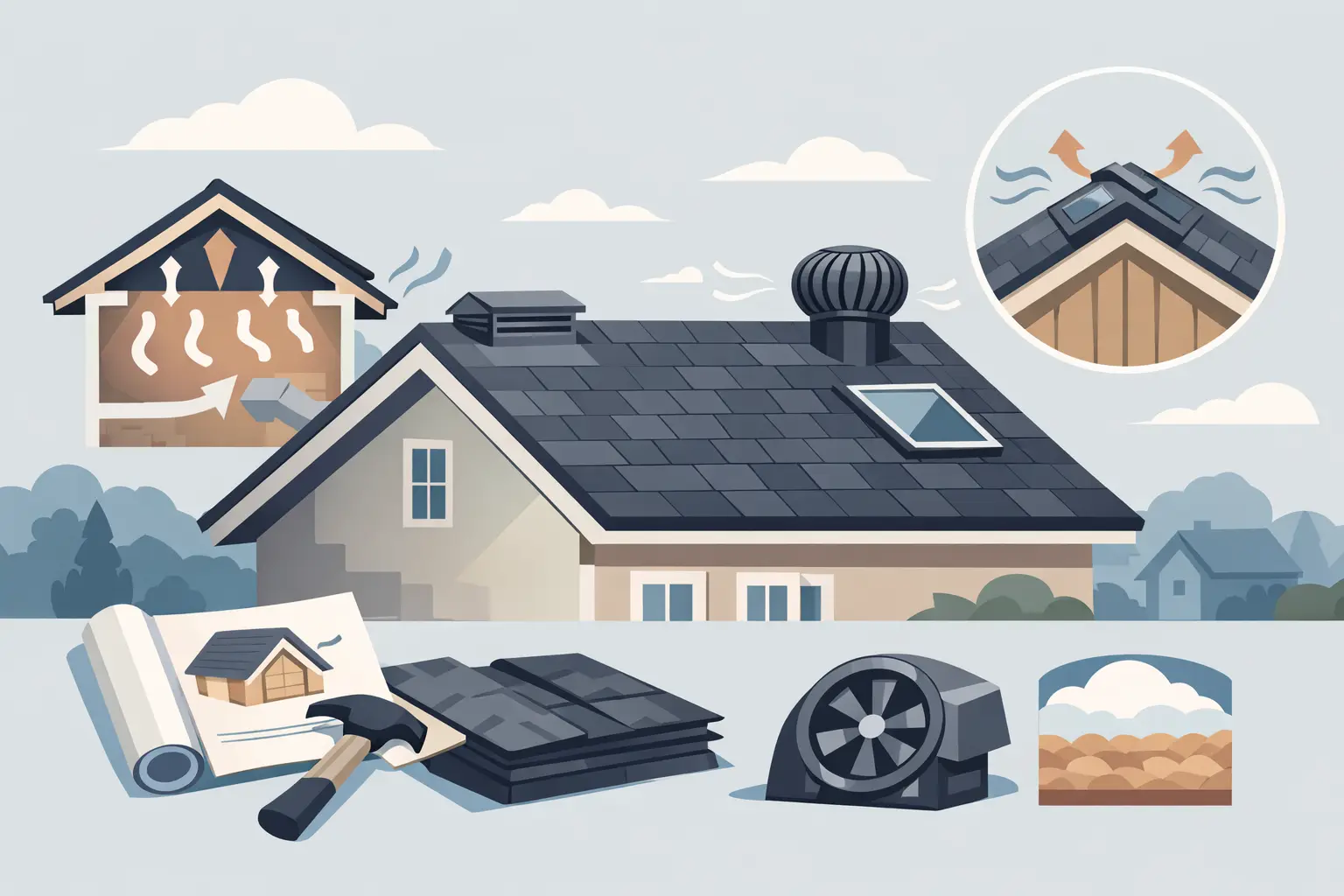
The goal is simple. Fresh air should enter low, usually at the soffits, and exit high, usually near the ridge. That steady airflow helps remove excess heat and moisture before they cause damage. It sounds straightforward, but the right setup depends on your roof shape, attic design, insulation levels, and even how the house was built.
In older homes across Massachusetts, especially where additions were done over time, attic spaces are not always simple or consistent. You may have one section with decent airflow and another section that is almost closed off. That is where a careful inspection matters more than a one-size-fits-all answer.
What proper roof ventilation actually does
In summer, a poorly ventilated attic can get extremely hot. That heat builds under the roof deck and radiates into living spaces, making the upper floor less comfortable and pushing cooling systems to work harder. Ventilation helps move that heat out instead of letting it sit there day after day.
In winter, the bigger issue is usually moisture. Warm indoor air rises. If it escapes into the attic through gaps around light fixtures, plumbing chases, or access hatches, it carries moisture with it. When that warm air meets cold roof surfaces, condensation forms. Over time, that can lead to mold, wood rot, and insulation that loses effectiveness.
Ventilation also plays a role in preventing ice dams, though it is not the only factor. Ice dams form when roof temperatures are uneven. Snow melts higher up on the roof, then refreezes at the colder eaves. Good attic ventilation, along with proper insulation and air sealing, helps keep the roof temperature more consistent.
Signs your roof ventilation may be off
Some warning signs are obvious, and others are easy to miss. If your second floor is always hotter than the rest of the house, that can point to attic heat buildup. If you notice frost in the attic during cold weather, that is a moisture issue. If shingles curl, blister, or wear out sooner than expected, excess attic heat may be part of the problem.
You may also notice peeling paint near roof overhangs, musty attic odors, damp insulation, or nails that appear rusty from the inside. None of these signs should be ignored. They do not always mean a full roof replacement is needed, but they do mean the system deserves a closer look.
The main parts of a balanced system
A good roofing and ventilation guide should make one point clear: ventilation only works well when intake and exhaust are balanced. Too much exhaust without enough intake can pull air from the house instead of from outside. Too much intake without proper exhaust does not move air effectively.
Intake ventilation
Intake vents are usually installed at the soffits or eaves. Their job is to bring cooler outdoor air into the attic. This is the part homeowners rarely see, and it is often the part that gets blocked by insulation or overlooked during older renovations.
If soffit vents are present but packed tight behind insulation, they cannot do their job. Baffles may be needed to keep an open path for air. This small detail makes a big difference.
Exhaust ventilation
Exhaust vents let hot, moist air escape from the highest part of the roof. Ridge vents are a common and effective option when the roof design allows for them. In some homes, box vents, gable vents, or powered vents may be used, but mixing systems without a plan can create dead zones or short-circuit airflow.
This is where experience matters. More vents do not automatically mean better ventilation. The layout has to make sense for the roof.
Insulation and air sealing
Ventilation is only one part of attic performance. If warm air from the house is leaking into the attic, ventilation alone will not solve the problem. Air sealing around penetrations and making sure insulation is installed correctly are just as important.
That is why roofing decisions should not be made in isolation. A roof replacement is often the right time to correct ventilation problems, but the attic should be evaluated as a whole.
Ventilation choices during a roof replacement
If you are replacing a roof, this is the time to ask detailed questions. Not just what shingles are being installed, but how the system will breathe once the job is done. A contractor should be able to explain what intake and exhaust currently exist, what is missing, and whether the proposed setup fits the home.
For some homeowners, the best path is a straightforward ridge vent and soffit vent system. For others, especially in homes with complex roof lines, finished attic areas, or multiple additions, the answer may be more customized. There is no single formula that fits every house.
This is also where material choices matter. Higher-end roofing products can offer better durability and appearance, but if the attic below is holding moisture, even premium materials can underperform. A better roof should come with a better plan, not just better shingles.
Common mistakes homeowners should watch for
One common issue is replacing the visible roof materials without addressing the hidden ventilation problems that damaged the old roof in the first place. Another is assuming that an attic fan will fix everything. Powered fans can help in some cases, but they are not a cure-all and can create new problems if the intake side is weak.
Another mistake is covering over soffit openings during trim work or insulation upgrades. It happens more often than people think. The result is a roof that looks improved from outside but performs worse inside.
Homeowners should also be cautious about patchwork solutions. If one area of the attic has moisture staining and another has none, that does not always mean the issue is isolated. Airflow patterns can be uneven, and symptoms do not always show up where the root problem starts.
What to ask before work begins
You do not need to be a roofing expert to ask smart questions. Ask whether the current ventilation is balanced. Ask whether soffit intake is clear and sufficient. Ask how the proposed vent system matches the roof design. Ask whether attic moisture signs were found during inspection.
A good contractor should welcome those questions and answer them plainly. You should not have to guess what is included or why a certain vent type is being recommended. Clear quoting and clear reasoning go together.
For homeowners who want options, a Good, Better, Best approach can be helpful here. One level may address the immediate roofing need, while another may include more complete ventilation corrections and upgraded system components. That gives you room to make an informed choice without losing sight of quality.
Why local climate changes the conversation
In New England, roofing and ventilation are not abstract building science topics. They affect how a home handles humid summers, freezing winters, wind-driven storms, and snow load. A roof system that works well in a mild climate may not perform the same way here.
That is especially true in older homes around the North Shore and greater Boston area, where roof framing, insulation, and attic conditions can vary widely from one house to the next. A dependable plan has to reflect the actual house, not a generic diagram.
US Home Improvement has worked on enough homes in this region to know that the details matter. A clean installation matters. Daily communication matters. But just as important is diagnosing the system correctly before the shingles go on.
A better roof is not only about what keeps rain out. It is about how the whole home breathes through every season. If you are planning roofing work, take the extra step and look at ventilation with the same care. It is one of those decisions that homeowners rarely see once the job is done, but they feel the results for years.