A few loose boards or faded panels do not always mean your whole exterior is failing. But when siding starts trapping moisture, letting drafts in, or breaking down in multiple areas, patchwork repairs can turn into money spent in the wrong place. This homeowner guide to siding replacement is meant to help you sort out that decision with less stress and more confidence.
For many homeowners, the hard part is not picking a color. It is knowing when replacement makes more sense than repair, what materials hold up best, and how to judge a proposal without getting buried in sales language. A good siding project should improve protection, appearance, and peace of mind all at once.
When siding replacement is the right call
Siding does more than make the house look finished. It helps shed water, reduces exposure to wind, and protects the wall assembly underneath. Once that outer layer starts failing, the damage is often bigger than what you can see from the driveway.
Some warning signs are obvious, like cracked boards, warping, rot, storm damage, or color that has broken down beyond simple wear. Others are easier to miss. Higher energy bills, peeling paint indoors near exterior walls, moldy smells, or recurring leaks around windows can all point to trouble behind the siding.
Replacement usually makes more sense when damage is widespread or repeated repairs keep showing up in the same areas. If one section took a hit in a storm and the rest of the house is sound, a repair may be enough. But if age, moisture, and installation problems are all in play, replacing the system can be the smarter long-term move.
A homeowner guide to siding replacement materials
Material choice affects appearance, maintenance, budget, and lifespan. There is no single best fit for every home. The right answer depends on your goals, your neighborhood, and how much upkeep you want to take on.
Vinyl siding remains a common choice because it offers solid value, low maintenance, and a wide range of profiles and colors. For many households, it hits the balance between cost and performance. The quality range matters, though. Thin, bargain-grade panels can look uneven and may not hold up the same way premium products do.
Fiber cement is popular with homeowners who want a more substantial look and strong durability. It can mimic wood well and performs nicely in many settings, but it is heavier, usually costs more to install, and requires a crew that understands the details. Installation quality matters as much as the material itself.
Engineered wood appeals to homeowners who want warmth and character without as much maintenance as traditional wood. It can be a strong option, but moisture management and proper installation are critical. Natural wood still has a place, especially on certain historic or high-character homes, but it demands more upkeep and is not the right fit for everyone.
In coastal Massachusetts communities, weather exposure can be a real factor. Salt air, wind-driven rain, and freeze-thaw cycles make product selection and flashing details especially important. That is where local experience helps. A material that looks good in a brochure still needs to perform through New England winters.
What actually drives the cost
Homeowners often ask for a square-foot price, but siding replacement is rarely that simple. The real cost depends on the house, not just the material.
The size of the home matters, of course, but so do wall height, gables, dormers, trim details, and access around the property. A straightforward colonial is different from a house with complex rooflines and many architectural features. Tear-off conditions also affect pricing. If the old siding comes off cleanly, the job moves one way. If hidden water damage, rotten sheathing, or framing issues appear, the scope can change.
That is why a detailed quote matters. Homeowners deserve to know what is included, what happens if hidden damage is found, and what options exist across different budget levels. A good proposal should not leave you guessing about trim, insulation, flashing, cleanup, or debris removal.
The lowest number on paper is not always the best value. If one estimate leaves out critical prep work or uses weaker materials, the savings can disappear fast.
What happens before the new siding goes on
The best siding jobs are won before installation starts. Planning is where the project gets cleaner, smoother, and more predictable.
First comes a close look at the existing condition of the home. That means checking not only the siding but also trim, housewrap or weather barrier, flashing, soffits, fascia, and the areas around windows and doors. Siding is part of a system. If one part is weak, the whole exterior can suffer.
Color and style decisions also deserve more attention than people expect. A panel profile that looks good on a sample board can feel very different once it covers the full house. The same goes for contrast trim, shutters, and corner boards. Most homeowners are happiest when they step back and think about the whole exterior rather than choosing siding in isolation.
Scheduling matters too. Ask how long the work should take, whether the crew will be there consistently, and how communication will work once the project starts. A well-run exterior job should not leave homeowners wondering who is showing up or what happens next.
What to expect during installation
A siding replacement project can feel disruptive, but it should not feel chaotic. Clear communication and steady site management make a big difference.
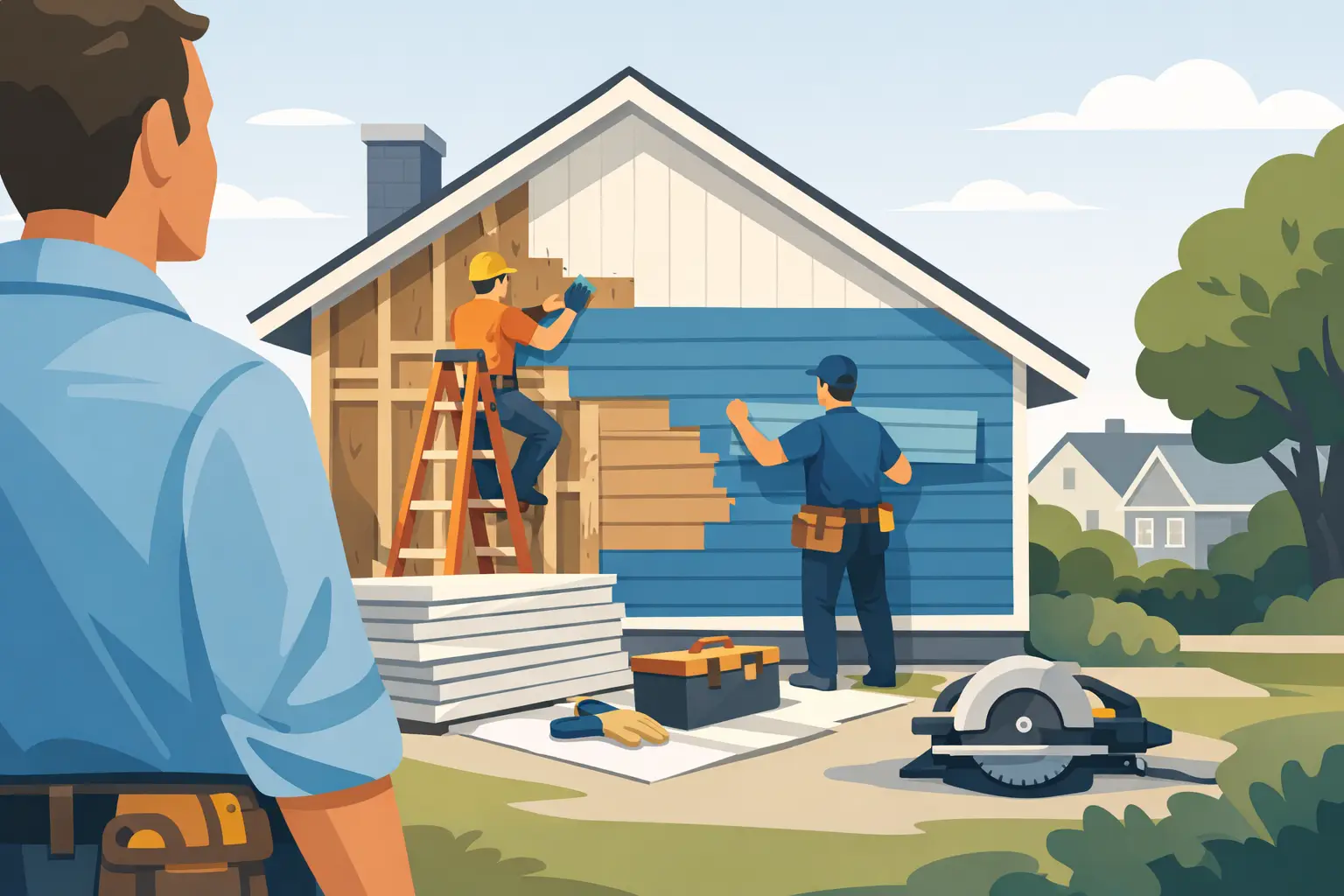
The crew will typically remove the old siding, inspect the wall beneath it, make any needed repairs, and prepare the surface for new installation. This is the stage where hidden problems can show up. Finding damaged sheathing or signs of long-term moisture is not unusual, especially on older homes. It is better to address those issues now than cover them and deal with larger repairs later.
From there, the weather barrier, flashing, trim details, and siding itself are installed in sequence. This is where craftsmanship shows. Straight lines, clean transitions, neat caulking, and proper clearances all matter. So do the details around windows, doors, rooflines, and penetrations. A house can look good from the street and still have weak spots if those areas are rushed.
Daily cleanup is another sign of a professional job. Homeowners should not have to live around scattered debris for the length of the project. The site should be organized, safe, and cleaned up as work progresses.
Questions worth asking before you sign
A siding contractor does not need to overwhelm you with jargon, but they should be able to explain the process clearly. Ask what product line is being proposed and why. Ask what prep work is included. Ask how water management is handled around windows, doors, and trim. Ask who will actually perform the work and how changes are communicated if hidden damage is uncovered.
It is also fair to ask about workmanship standards, scheduling expectations, and cleanup. Homeowners are not just buying materials. They are hiring a team to manage the project properly.
If a company gives you only a vague number and pushes for a fast signature, that is a red flag. A strong contractor should be comfortable walking you through options, including a good, better, best range when appropriate, so you can match the project to your budget without sacrificing the basics.
How to think about return on investment
New siding can improve curb appeal quickly, but the real value is broader than appearance. It can reduce maintenance, help protect the structure, improve energy performance in some cases, and make the home feel more solid and cared for.
That return is not identical for every homeowner. If you plan to stay for many years, durability and low upkeep may matter most. If you may sell in the near future, visual impact and overall exterior condition may carry more weight. Either way, quality installation is what protects the investment.
For homeowners in Peabody and across the North Shore, siding replacement is often part of a bigger exterior plan. Windows, trim, roofing, gutters, and entry details all work together. When the project is approached with that full-picture mindset, the results usually look better and last longer.
The right siding project should leave you with fewer worries every time the weather turns. That is the standard worth aiming for.