A roof problem rarely shows up at a convenient time. It starts with a ceiling stain after a hard rain, a few shingles in the yard, or a draft you can’t quite place. When that happens, most homeowners ask the same question: is this a roof repair vs replacement situation, or can a smaller fix still do the job?
The honest answer is that it depends on more than the leak itself. The age of the roof, the extent of the damage, the condition of the decking and ventilation, and your long-term plans for the home all matter. A good contractor should walk you through those factors clearly, not push you toward the biggest job in the room.
Roof repair vs replacement: what changes the decision?
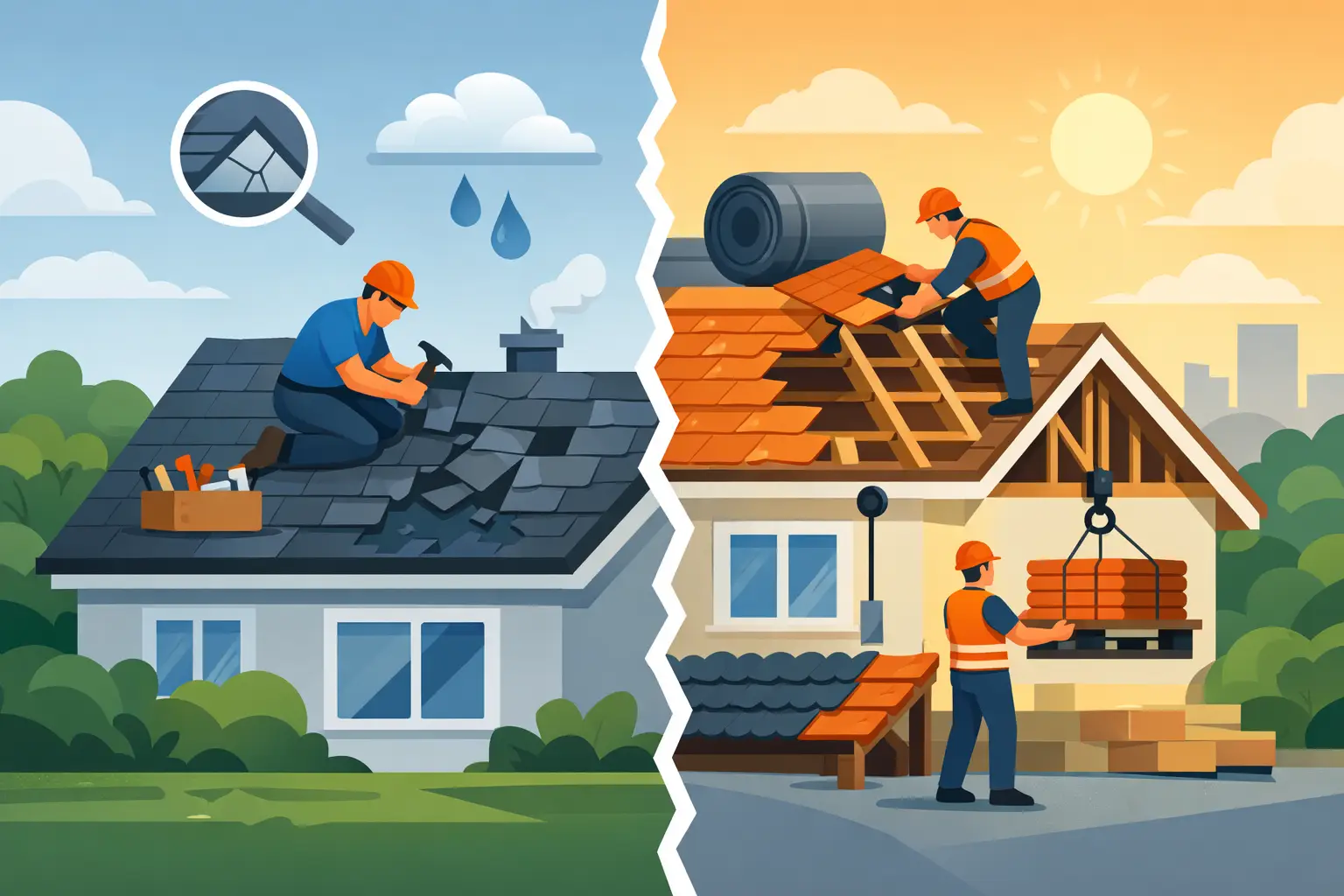
The biggest difference is scope. A repair addresses a specific issue in one area of the roof. A replacement removes the existing roofing system and installs a new one across the full roof surface. One is targeted. The other resets the clock.
Repairs make sense when the problem is limited and the rest of the roof is still in good shape. That could mean a small section of wind damage, a handful of missing shingles, flashing failure around a chimney, or a leak caused by one worn penetration boot. In those cases, a focused repair can restore protection without forcing you into a full project before it’s necessary.
Replacement becomes the smarter choice when the roof is showing widespread wear or repeated failure. If one leak turns into another, if repairs keep stacking up, or if the shingles are brittle, curling, balding, or nearing the end of their service life, patching can start to feel cheaper only in the short term. Eventually, you spend money preserving a roof that is already on its way out.
When a roof repair is usually the right move
A repair is often the better value when the roof still has solid years left in it. If the surrounding materials are healthy and the issue is isolated, replacing the whole roof may be more work and cost than the house actually needs right now.
This often happens after weather events. On the North Shore and around greater Boston, strong wind, ice, and freeze-thaw cycles can damage one section of a roof while leaving the rest intact. A repair may be enough if the shingles can still be matched reasonably well, the underlayment is sound, and moisture has not spread into the roof deck.
Age matters here. A roof that is five to ten years old with a localized issue is a very different decision than a roof that is twenty-five years old with the same leak. Newer roofs usually deserve a closer look before anyone starts talking replacement.
There is also a timing factor. Sometimes a homeowner knows a larger renovation is coming in a few years, maybe siding, windows, or an addition. In that case, a well-executed repair can be a practical bridge if it solves the problem reliably and buys useful time.
Signs repair may be enough
If damage is limited to a small area, if the roof is relatively young, and if you have not had a pattern of recurring leaks, repair is worth serious consideration. The same goes for flashing issues around skylights, vents, and chimneys, since those details often fail before the field shingles do.
The key is whether the problem is truly isolated. That is where a thorough inspection matters. Surface symptoms can be misleading.
When replacement is the better investment
There is a point where repair stops being responsible advice. If your roof has widespread granule loss, cracked or curling shingles, soft decking, repeated leak history, or visible sagging, a replacement is typically the more dependable path.
A full replacement also makes sense when hidden issues are likely. Water does not always travel straight down. What looks like one leak can trace along decking, rafters, or insulation before it shows up indoors. By the time staining appears on a ceiling, the roof system may have more going on than a patch from the top can solve.
Ventilation is another factor that gets missed. Poor attic ventilation can shorten roof life by trapping heat and moisture. If the roof is aging early because the system was not installed or ventilated correctly, replacing shingles alone without addressing the cause will not give you the result you are paying for. A good replacement corrects the full assembly, not just the visible layer.
For many homeowners, replacement is also about predictability. You may spend less today on another repair, but if the roof is near the end, you are still living with uncertainty through the next storm season. A new roof costs more upfront, but it can remove years of guessing, emergency calls, and interior risk.
Cost is important, but value matters more
Most homeowners start with budget, and that is reasonable. Repair is almost always less expensive upfront than replacement. But the better question is what your money is buying.
If a repair gives you five to eight more dependable years, that can be excellent value. If it gives you one season before the next problem shows up, it was not really the cheaper option. On the other hand, replacing a roof too early can also be wasteful if the underlying system is still performing well.
This is where detailed quoting matters. You should be able to see what is being repaired, what materials are being used, what related components are included, and what risks remain if you choose the smaller fix. Homeowners make better decisions when the trade-offs are laid out plainly.
Some contractors offer tiered options, which can help. A straightforward repair, a more extensive partial scope, and a full replacement each serve different situations. The right choice depends on how long you plan to stay in the home, how risk-tolerant you are, and whether you want the lowest immediate cost or the strongest long-term result.
A few issues that push the answer one way or the other
Leaks around chimneys, plumbing vents, and skylights often lean toward repair if caught early. Those areas involve flashing and seal details that can fail before the rest of the roof does.
Shingle damage across multiple slopes usually leans toward replacement, especially if the materials are fading unevenly or have become hard to match. A patch may stop the leak, but it may also leave you with a roof that looks pieced together and performs inconsistently.
Storm damage is its own category. Sometimes the damage is obvious. Sometimes it is more subtle, like lifted shingles that may not fail immediately but are now vulnerable to the next wind event. In those cases, an inspection should look beyond what is missing and check what has been weakened.
Then there is decking. If the wood beneath the shingles has softened from moisture, a repair may only expose how far the issue has spread. Once structural substrate is involved, replacement often becomes the cleaner and safer fix.
How to evaluate your roof without guessing
Start with symptoms, but do not stop there. Water stains in an upstairs room, shingle granules in gutters, visible dips in the roofline, moss growth, and drafty attic conditions all tell part of the story. None of them, by themselves, give the full answer.
The better approach is a full exterior and attic review. A contractor should look at shingle condition, flashing, penetrations, valleys, ventilation, gutter function, and signs of moisture from below. Photos help. Clear explanations help more.
If you are comparing roof repair vs replacement, ask direct questions. Is the issue isolated or widespread? How many years of service are realistically left? Will the repair match well enough? Are there signs of trapped moisture, deck damage, or ventilation problems? What would make replacement the more responsible choice, even if it is not the cheaper one today?
Those questions matter because roofing decisions are rarely just about roofing. They affect insulation, interior finishes, resale confidence, and how much stress you carry every time the forecast turns bad.
What good guidance should feel like
You should not feel rushed into a major project, and you should not be talked into a patch that only delays the real problem. Good guidance is steady, specific, and honest about trade-offs.
That is especially important in older New England housing stock, where layers of past work can hide surprises. A 100-year-old home in Salem or a mid-century house in Peabody may each have very different roofing conditions even if the same leak appears inside. Experience matters because the right answer comes from reading the full structure, not just replacing what looks worn from the driveway.
A contractor with a disciplined process should be able to explain what they found, what they recommend, what can wait, and what should not. If they can offer options without watering down quality, even better. That gives you room to choose based on your goals instead of reacting under pressure.
If your roof is asking for attention, the best next step is not to assume the worst or hope for the best. It is to get a clear inspection, understand the condition of the whole system, and make a decision that fits both your home and your timeline. A roof should give you confidence when the weather turns, not one more thing to worry about.