
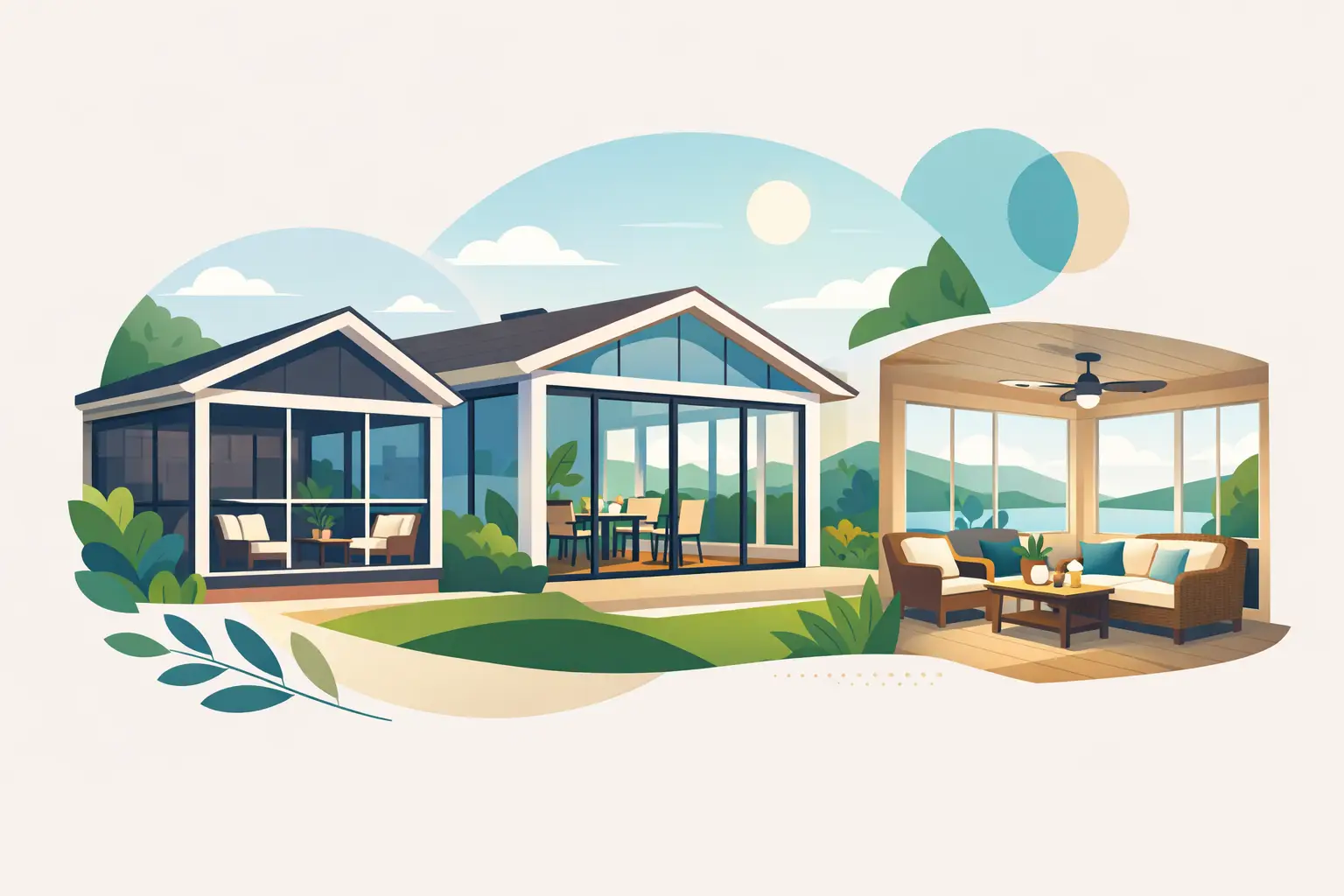
A porch that sits empty for half the year usually has one problem - it is exposed to too much weather, too many bugs, or not enough comfort to make it part of daily life. The best porch enclosure design ideas solve that problem by turning an underused outdoor space into a room that works harder for your home.
For many homeowners, the goal is not to create something flashy. It is to make the porch more usable in spring, summer, and fall, and in some cases even through winter. That means balancing light, airflow, privacy, maintenance, and budget. The right design depends on how you actually live, not just what looks good in a photo.
What makes the best porch enclosure design ideas work
A good enclosure should feel like a natural extension of the house. It needs to match the architecture, hold up to the local climate, and support the way your family uses the space. A front porch used for curb appeal and casual seating has very different needs than a back porch meant for dining, watching the kids in the yard, or creating a quiet retreat.
In Massachusetts, weather is usually the deciding factor. Wind, rain, humidity, and big temperature swings can expose weak design choices fast. That is why the strongest porch plans start with function first. Once that is clear, style gets much easier.
Screened-in enclosure for simple seasonal use
If you want fresh air without mosquitoes and flying debris, a screened-in porch is still one of the smartest options. It keeps the porch open and breezy while making it much more comfortable for meals, reading, or evening use.
This design works especially well for back porches and covered decks. The trade-off is that screens do not give you much protection from cold temperatures or wind-driven rain. If your main goal is three-season comfort, screening alone may not go far enough. But if you love airflow and want a lower-cost enclosure, it is a strong place to start.
Three-season glass enclosure for more comfort
A three-season porch enclosure adds framed glass panels or large window sections so the space feels brighter and more protected. This is often the sweet spot for homeowners who want more use out of their porch without turning it into a fully conditioned room.
With the right windows, you can open the space up on mild days and close it off when temperatures drop. It gives you better protection from pollen, rain, and chilly evenings than screens alone. The main limitation is winter performance. Without dedicated heating and full insulation, it will still feel cold during the harshest months.
Four-season enclosure for year-round living
If you want the porch to function like a true room, a four-season enclosure is the most complete option. This design typically includes insulated framing, energy-efficient windows, and a stronger connection to the home’s heating and cooling plan.
It costs more upfront, but it changes how the space can be used. A porch can become a breakfast room, home office, playroom, or sitting room that stays comfortable all year. The key is making sure the structure, windows, and insulation package are designed as a system. If one piece is underbuilt, the room may look finished but never feel fully comfortable.
Floor-to-ceiling windows for light and views
Some of the best porch enclosure design ideas are less about square footage and more about what the room feels like. Floor-to-ceiling glass can make a modest porch feel open, calm, and connected to the yard.
This design works well on homes with scenic backyards, gardens, or water views. It also helps bring natural light deeper into the house. The trade-off is privacy and solar gain. If the porch faces strong afternoon sun or close neighbors, you may need tinted glass, shades, or strategic trim details to keep the space comfortable.
Knee walls with windows above for a balanced look
For homeowners who want a more grounded, traditional design, knee walls with window panels above are often a better fit than full glass. The solid lower wall gives the porch a finished, substantial look while still bringing in light through the upper half.
This style is practical too. Furniture placement is easier when not every wall is glass, and the lower wall helps protect against dirt, splashback, and wear. It often suits Colonial, Cape, and other classic New England home styles better than a fully glazed enclosure.
Sliding window systems for flexible ventilation
A porch can feel stuffy if it is sealed too tightly during mild weather. Sliding or stackable window systems fix that by giving you more control over airflow. Open a few panels for a breeze, or close everything up when the weather turns.
This is a smart choice for families who want adaptability. It offers more comfort than a screened porch, but can still feel open when conditions are good. The best results come from careful planning around window size, traffic flow, and furniture layout. Large openings are great, but not if they interfere with how you move through the space.
Best porch enclosure design ideas for privacy
Not every porch needs to be wide open. In many neighborhoods, privacy matters just as much as weather protection. If your porch faces the street or sits close to another home, adding privacy elements can make the space much more usable.
That might mean partial wall sections, frosted or textured glass, wider trim details, or a screened lower panel paired with clear upper glass. You can also use ceiling height and orientation to your advantage. A porch that feels sheltered tends to get used more often than one that leaves you feeling on display.
Natural wood finishes for warmth
Even a well-built enclosure can feel cold if the materials are too stark. Natural wood ceilings, posts, or trim details add warmth fast. They help bridge the gap between indoor comfort and outdoor character.
Wood also works across a wide range of home styles, from traditional to coastal to modern farmhouse. The practical side is maintenance. Real wood may need more upkeep depending on exposure, so many homeowners mix wood accents with lower-maintenance exterior materials to get the look without taking on too much future work.
Low-maintenance composite and PVC detailing
For homeowners who want clean lines and less upkeep, composite trim and PVC-based finishes are worth serious consideration. These materials resist moisture and insect damage better than many traditional options, which matters on porches that see changing temperatures and humidity.
They are especially useful in enclosure projects where long-term durability matters more than rustic character. The design can still look sharp and tailored, but with less scraping, repainting, and repair down the road.
Vaulted ceilings to make small porches feel bigger
If the porch footprint is limited, look up. A vaulted or cathedral ceiling can dramatically change the feel of the space without adding square footage. It makes the enclosure feel less boxed in and gives room for better light, larger windows, or even exposed beams.
This approach works best when the existing roofline allows it or when the porch is being substantially rebuilt. It is not always the most budget-friendly upgrade, but when the structure supports it, the payoff in visual space is hard to ignore.
Lighting and ceiling fans that extend daily use
A porch enclosure design is not just walls and windows. Comfort depends heavily on what happens after sunset and during humid weather. Recessed lights, sconces, and ceiling fans can turn a nice-looking room into one that people actually use every day.
Warm lighting helps the porch feel like part of the home instead of an afterthought. Fans improve air movement and reduce stuffiness in shoulder seasons. These details are often overlooked early in planning, then missed later when the room feels incomplete.
Durable flooring that matches the enclosure
Flooring has to match the job. If the porch may still see wet shoes, temperature swings, or heavy traffic, the material should be chosen with that in mind. Composite decking, tile rated for the space, and certain finished concrete surfaces can all work well, depending on the structure below.
The main mistake is choosing flooring for looks alone. A beautiful surface that gets slippery, stains easily, or cannot handle seasonal movement can become a long-term headache. Good design should look right and wear well.
How to choose the right porch enclosure concept
The best choice usually comes down to three questions. First, how many months of the year do you want to use the porch? Second, how closely should it feel connected to the rest of the house? Third, how much maintenance are you willing to take on?
If you mainly want bug protection and casual seasonal use, screens may be enough. If you want a brighter, more weather-protected room for most of the year, a three-season enclosure often makes sense. If you are investing for long-term daily use, a four-season approach may be the better value.
For homeowners on the North Shore and around greater Boston, getting these decisions right early matters. Weather exposure, material performance, and finish quality all show up over time. That is why detailed planning, clear options, and experienced installation matter just as much as the design itself.
The right porch enclosure should not feel like a compromise between indoors and outdoors. It should feel like one of the smartest rooms in the house - comfortable, durable, and built to be used.