
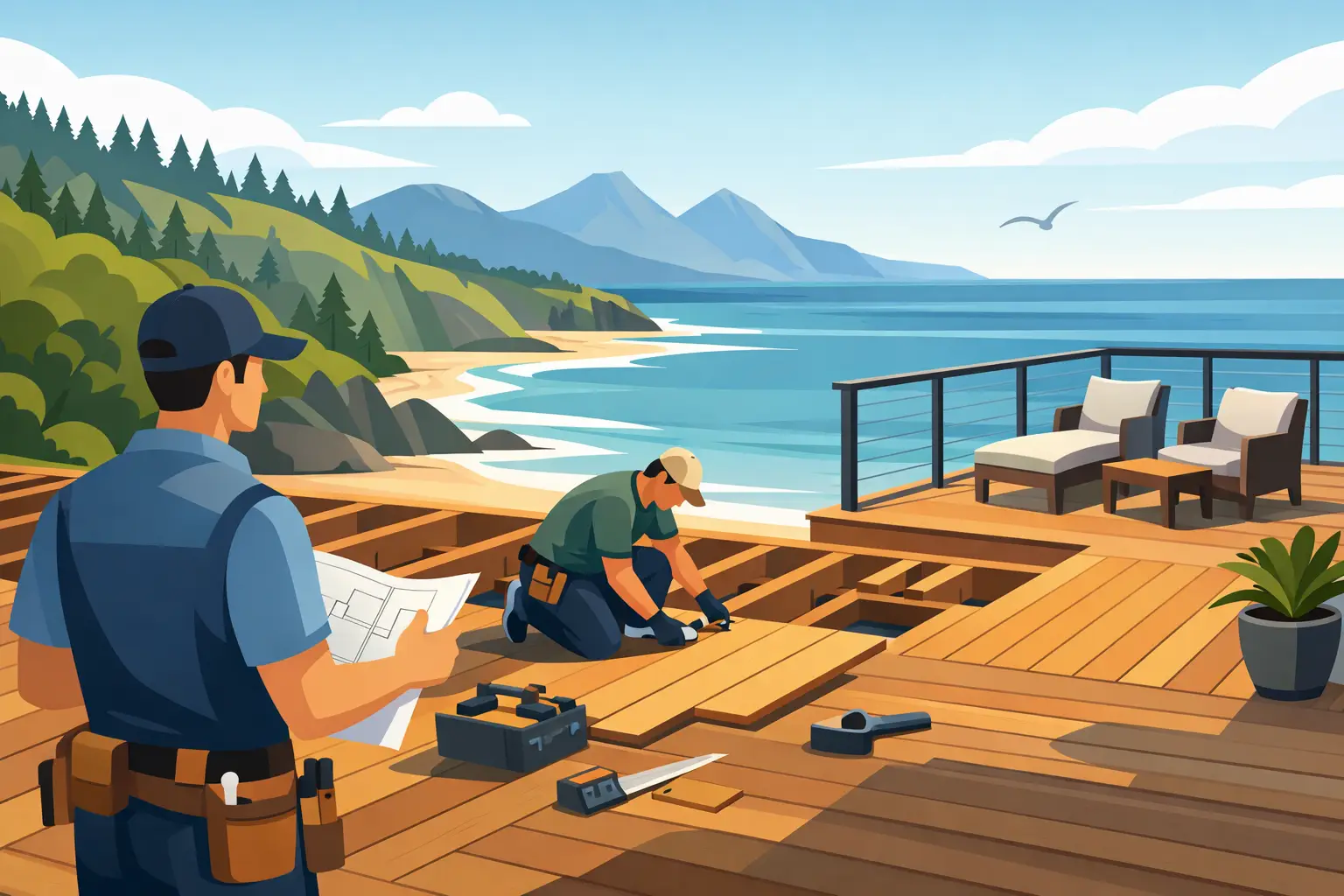
A new deck should make your home easier to enjoy, not create another project to worry about. The right North Shore deck builder will help you make sound decisions before construction starts, then manage the work with the same care they bring to the finished details.
That matters here. From humid summer gatherings to heavy snow, ice, and coastal exposure in many communities, a deck on the North Shore has to do more than look good on installation day. It needs the right structure, materials, drainage, and connection to the home to hold up over time.
Start With How You Want to Use the Deck
A good deck project begins with the questions that are easy to overlook when you are focused on size and color. Will the deck be a quiet place for morning coffee, an outdoor dining space, or the center of family gatherings? Do you need room for a grill, a table, lounge seating, or stairs to the yard? Is privacy from neighbors important?
Your answers shape the design. A small platform may be enough for a simple rear entry, while an elevated deck may need multiple zones, wider stairs, lighting, and a railing style that preserves a view. A builder should talk through traffic flow and furniture placement before drawing a final layout. There is little value in gaining square footage if the finished deck feels cramped once a table and chairs are in place.
It also helps to look beyond the deck itself. A new deck often changes how you use nearby doors, landscaping, patio space, and drainage. If the home needs a replacement sliding door, siding repairs, or exterior painting, coordinating those items can prevent rework later.
What a North Shore Deck Builder Should Review On Site
An on-site consultation is more useful than a quick price based on a rough measurement. The builder should inspect the proposed location, the condition of the house where the deck will attach, ground slope, access for the crew, and the practical path for materials and debris.
The existing structure deserves close attention. Older homes can have concealed rot, outdated flashing, or framing that requires reinforcement before a deck ledger is attached. The right approach is not to ignore these findings to keep a bid low. It is to explain what was found, why it matters, and how it will be handled.
Local permitting and code requirements should be part of the discussion as well. Rail height, stair geometry, footing depth, structural connections, and guardrail spacing are not decorative details. They are safety requirements, and they affect both design and cost. An experienced local contractor should be prepared to guide the permitting process and build to the applicable standards.
Ask for a Clear Scope, Not a One-Line Number
A deck estimate should make it easy to understand what you are buying. It should identify the planned dimensions, framing approach, decking and railing materials, stair configuration, foundation or footing work, demolition, cleanup, and permit responsibilities.
Be cautious with a vague quote that simply says “build deck” followed by one total. It can be hard to compare that number with another proposal, and it leaves room for disagreements once work begins. Detailed quoting protects the homeowner and the contractor because expectations are established before the first board is removed.
At US Home Improvement, homeowners can review Good, Better, Best options when appropriate. That is not about making a project more complicated. It gives you a practical way to compare material choices, design features, and long-term maintenance needs while keeping the scope clear.
Choose Materials for the Way You Live
Pressure-treated wood, cedar, and composite decking can all be good choices. The best material depends on your budget, the amount of maintenance you are willing to take on, the deck’s sun exposure, and the look you want.
Pressure-treated lumber is often the most budget-friendly option and remains a dependable structural material. For deck surfaces, it can provide a traditional wood appearance, but it requires regular cleaning and refinishing to stay in good condition. It can also check, crack, and weather over time.
Composite decking costs more upfront, but many homeowners choose it for its lower-maintenance appeal. It does not eliminate care completely - dirt, pollen, and spills still need attention - but it avoids the routine staining and sealing associated with wood. Product quality varies, so the conversation should include board thickness, protective capping, color retention, traction, and warranty coverage rather than treating every composite board as the same.
Railing is another major decision. Wood railings can complement a classic home and may cost less initially. Composite, vinyl, aluminum, cable, and glass systems each offer different benefits in appearance, upkeep, and view preservation. For example, a slim aluminum railing may make sense for an elevated deck overlooking a yard, while a more traditional rail profile may better suit a historic-style home.
A dependable builder will explain the trade-offs honestly. The lowest initial price is not always the best value, but the most expensive material is not automatically the right fit either.
Pay Attention to What Is Under the Deck Boards
Homeowners naturally focus on the visible finish work. The unseen framing, fasteners, flashing, and footings are what allow a deck to perform safely through New England weather.
Proper flashing where the deck meets the house is especially important. Without it, water can work behind siding and create hidden damage to the home’s structure. Joist spacing, beam sizing, hardware, and the footing system should match the deck design, load requirements, and selected decking material.
If you are considering a hot tub, outdoor kitchen, pergola, or a future screened enclosure, mention it early. These features can require additional structural planning. Building with a future upgrade in mind is usually more sensible than tearing apart new work a few years later.
Look for Process, Communication, and Accountability
The quality of a deck is not measured only by the final photograph. It is also reflected in how the contractor runs the job. You should know who to contact, when work is expected to begin, what happens if weather interrupts the schedule, and how change requests will be handled.
Ask how the crew protects the property and manages daily cleanup. Deck construction involves deliveries, cutting, demolition, and fasteners. A professional team keeps the work area organized, removes debris consistently, and treats your yard and driveway with respect.
It is also reasonable to ask whether the company uses its own experienced crews or relies entirely on changing subcontractors. Either model can work, but accountability must be clear. A contractor with dedicated carpentry crews generally has more direct control over workmanship, scheduling, and jobsite standards.
Review Past Work With a Practical Eye
Photos can show style, but they do not reveal everything. When reviewing completed projects, look closely at stair proportions, railing alignment, transitions at the house, picture-frame borders, and how decking boards meet around posts. These details separate careful finish work from a rushed installation.
Customer feedback can also tell you what the working experience is likely to be. Look beyond broad praise and notice whether homeowners mention punctuality, communication, cleanliness, follow-through, and how the contractor addressed questions during construction. Those are the habits that make a renovation feel manageable.
Plan the Budget Around Long-Term Value
Deck costs vary widely because the scope varies widely. Size is only one factor. Elevation, stairs, railing type, demolition, site access, structural repairs, custom features, permits, and material selection all affect the final number.
A lower bid may reflect a simpler design or less expensive material, which may be perfectly reasonable. It may also omit necessary work or leave important details undefined. Compare proposals line by line, and ask direct questions when something is unclear. The goal is not to find the cheapest number. It is to understand the scope well enough to choose confidently.
For many homeowners, it makes sense to prioritize structural quality and weather protection first, then adjust visible features to meet the budget. You can often add furniture, planters, or some lighting later. Correcting poor framing or water damage after the deck is finished is far more disruptive.
Build a Deck You Will Still Appreciate Years From Now
A well-planned deck adds useful living space and gives your home a natural place for everyday life: dinner outside, a place to watch children play, or a comfortable spot to welcome friends. The right North Shore deck builder brings that vision into focus with clear recommendations, detailed planning, skilled crews, and respect for your home throughout the process.
Take the first step with a site visit and a conversation about how you want the space to work. A careful plan today is what turns a deck project into a lasting part of your home.