
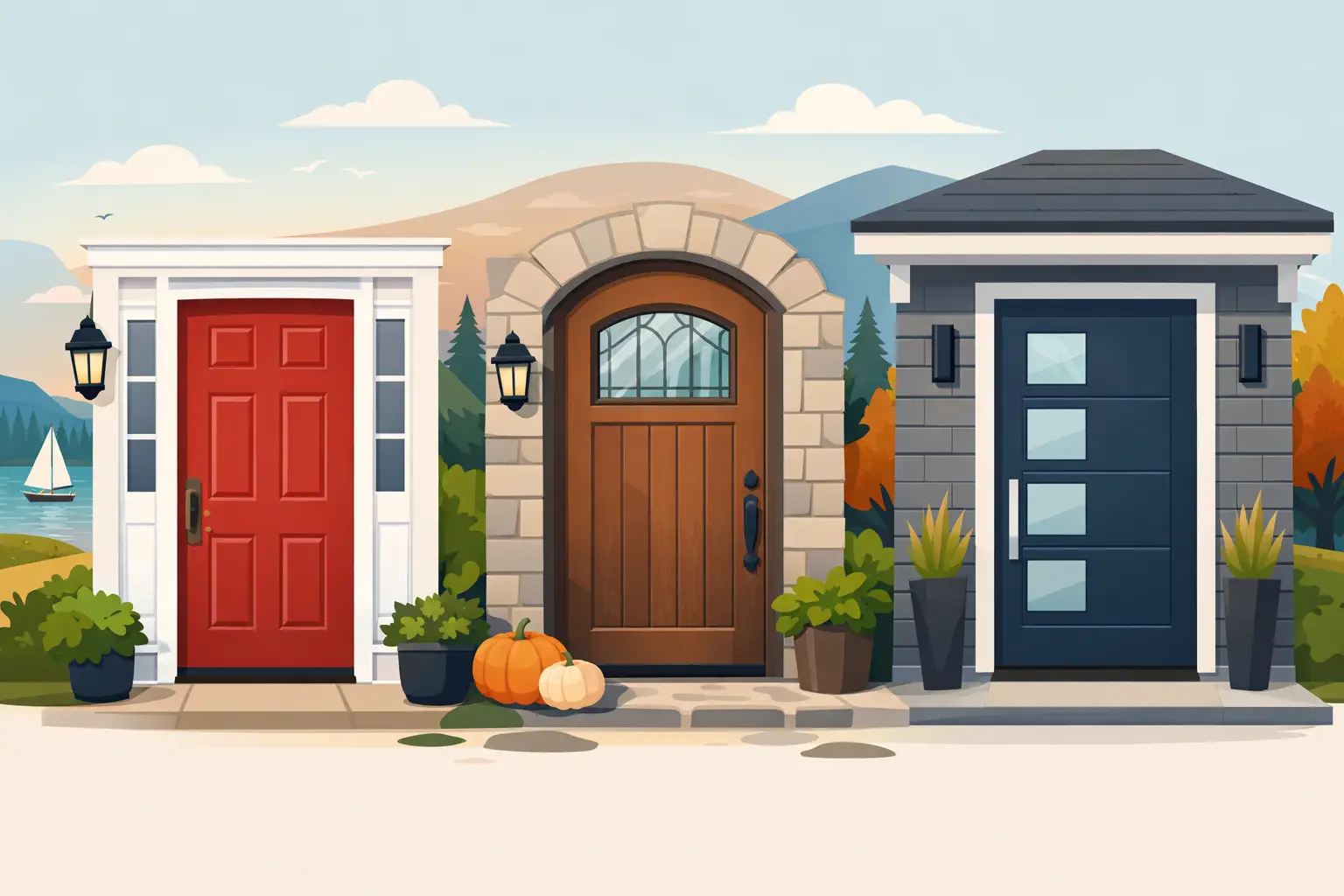
A front door has a demanding job in Massachusetts. It needs to make a strong first impression, stand up to wind-driven rain and winter cold, and work with the character of the home rather than against it. The best front entry door styles do all three. The right choice is not simply the trendiest door in a showroom. It is the one that suits your architecture, brings in the right amount of light, and performs reliably year after year.
For homeowners in Peabody, the Northshore, and greater Boston, style and durability should be considered together. A beautiful entry door that feels drafty in January or requires constant refinishing is not a long-term value. Start with the home itself, then narrow the choices based on exposure, privacy, material, and the look you want to create.
Start With Your Home's Architecture
Your entry door should look intentional. That does not mean every home needs a historically exact reproduction, but the door should relate to the roofline, windows, trim, siding, and porch. A formal brick Colonial calls for a different approach than a cedar-shingle coastal home or a clean-lined mid-century ranch.
Look at the entry from across the street as well as from the front steps. The door, surrounding trim, sidelights, lighting, and house numbers read as one composition. If the door is oversized, overly ornate, or a completely different era from the home, it can pull attention in the wrong direction.
Traditional Colonial Doors
For Colonial, Federal, and many Cape-style homes, a six-panel or raised-panel door remains a dependable choice. These doors have a balanced, formal look that works especially well with symmetrical facades, divided-light windows, and painted wood trim.
A solid door offers privacy and a substantial appearance. Homeowners who want more daylight can choose a door with a small top window, often called a fanlight or half-lite, or add narrow sidelights. Clear glass can make an entry feel more open, but patterned, frosted, or divided-light glass often fits traditional homes better while protecting privacy.
Color matters here. Black, deep navy, rich red, dark green, and classic white all work well depending on the siding and trim. The goal is contrast with the home, not a color that competes with every other exterior detail.
Craftsman Doors
Craftsman doors are one of the most versatile front entry door styles because they bring detail without becoming fussy. The typical design has a broad lower section, simple recessed panels, and a window or set of small panes across the upper portion. It feels warm, grounded, and welcoming.
This style is a natural fit for bungalows and Arts and Crafts homes, but it can also update a ranch or a newer home with stone accents, natural wood tones, or a covered porch. A Craftsman door with divided glass pairs well with square porch columns and substantial trim.
The trade-off is that a highly detailed Craftsman door may look too busy on a very formal Colonial or a sharply contemporary home. Keep the glass grid simple and match the finish to the home’s overall level of detail.
Farmhouse Doors
Farmhouse-style entry doors have a simple, practical character. Many feature vertical planks, a single large window opening, or a three-quarter-lite design. They work well on homes with board-and-batten siding, wide porches, black window accents, or a clean white exterior.
This style can be traditional or modern depending on the door color, glass, and hardware. A painted door with divided panes and a classic handle has a softer, more traditional feel. A smooth black door with one large pane of clear glass and simple hardware reads more contemporary.
Be careful not to force the farmhouse look onto a home that has no connection to it. On a formal home in an established neighborhood, a simplified plank door may provide the same warmth without looking like a trend was added after the fact.
Modern and Contemporary Doors
Modern entry doors rely on clean lines, smooth surfaces, and carefully placed glass. They often feature flush panels, narrow vertical windows, horizontal grooves, or a large uninterrupted glass section. These designs are a strong choice for contemporary homes, renovated ranches, split-levels, and newer construction with minimal trim.
A modern door can make a dated facade feel current, particularly when paired with updated house numbers, exterior lights, and simple trim. Dark charcoal, black, warm wood-grain finishes, and muted blue-gray colors are common choices.
Glass placement deserves extra thought. A tall vertical glass insert can bring welcome natural light into a dark foyer while keeping the door visually streamlined. For an entry facing a busy sidewalk or close neighbor, obscure glass is often the better choice. It lets light in without putting the interior on display.
Coastal and Cottage Doors
Northshore homes near the water often look best with doors that feel relaxed rather than overly formal. Cottage and coastal styles may include beadboard panels, divided-light glass, gentle arches, or painted finishes in blue, green, gray, or soft black. They pair naturally with shingle siding, white trim, and porch architecture.
Because salt air, moisture, and weather can be hard on exterior finishes, material selection is particularly important in coastal settings. The style may be light and casual, but the construction needs to be built for the conditions.
The Best Front Entry Door Styles Also Need the Right Material
Style gets attention, but the door material determines much of its performance and maintenance. Fiberglass, steel, and wood can all be good choices when matched to the home and homeowner’s priorities.
Fiberglass is often the practical choice for New England homes. It can mimic wood grain, resists dents and moisture better than wood, and provides strong energy performance when properly installed. It is available in traditional, Craftsman, farmhouse, and contemporary designs, so choosing fiberglass does not mean settling for a generic look.
Steel doors offer security, durability, and good value. They are a sensible option for homeowners who want a clean painted finish and a solid feel without the cost of a premium wood door. The main concern is damage to the finish. Scratches should be addressed promptly so exposed metal does not become a rust issue.
Wood remains hard to beat for natural character, especially on historic homes or high-end custom entries. It can be stained, painted, and detailed in ways other materials cannot fully duplicate. However, wood requires more regular maintenance, particularly on doors exposed to direct sun, rain, or coastal air. A protective overhang helps, but it does not eliminate upkeep.
Glass, Hardware, and Trim Make the Door Feel Complete
A new door can look unfinished if the surrounding details are ignored. Sidelights can make a narrow entry feel wider and brighter, while a transom window adds height and brings light into a foyer. These additions are especially useful when the front door is set beneath a deep porch or faces north.
More glass is not always better. If your entry opens directly into a living room, stairway, or frequently used hall, privacy glass may be worth the investment. Decorative glass can suit traditional homes, but simpler patterns usually age better than heavily ornate designs.
Hardware should match the home’s personality and be comfortable to use every day. A traditional handleset in satin nickel, bronze, or black works well on Colonial and Craftsman doors. Contemporary doors often benefit from a straight pull handle and a simple deadbolt. Choose a finish that relates to exterior lights and other visible metal details, but do not worry about making every finish identical.
Trim is the final frame around the door. Wider, more detailed casing can support a traditional style. Clean, flat trim works well for contemporary homes. Replacing worn trim, repairing the sill, and properly sealing the opening are just as important as selecting the door slab itself.
Choose for Exposure, Not Just Curb Appeal
Before deciding on a style, consider what the entry experiences through the year. A covered porch gives you more flexibility with wood finishes and darker colors. A door exposed to afternoon sun may become very hot, and a dark finish can show fading sooner. An entry exposed to heavy rain and wind needs careful flashing, weatherstripping, and installation detail.
Energy efficiency also depends on the complete system. A high-quality door will not perform as intended if the frame is out of square, the threshold is poorly sealed, or the weatherstripping is not adjusted correctly. This is one reason a front door replacement should be treated as a finish carpentry and exterior weatherproofing project, not a simple swap.
Ask for clear options that show the differences in door material, glass package, hardware, trim work, and installation scope. A Good, Better, Best comparison can make the decision easier without reducing it to price alone. The best value is usually the door that meets your needs now and avoids premature repairs later.
A front entry door is one of the first things guests see and one of the most-used parts of your home. Take the first step by choosing a style that belongs on your house, then make sure the materials and installation are built to handle New England weather. With experienced planning and careful finish work, a new entry can make coming home feel better every day.