
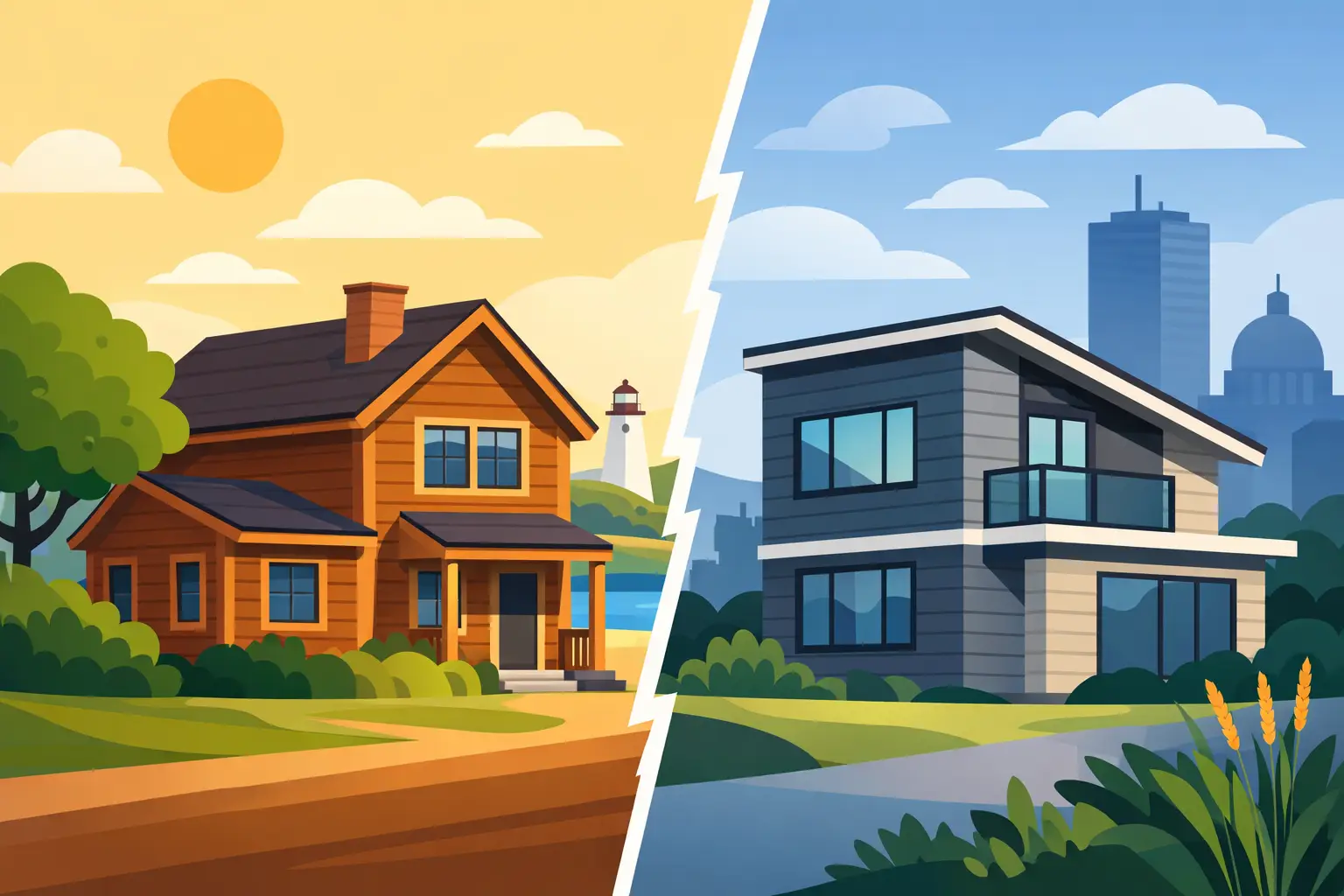
A home near the North Shore has to handle more than a few good-looking summers. It has to stand up to wind-driven rain, snow, freeze-thaw cycles, humid stretches, and strong coastal exposure in many neighborhoods. That is why the wood siding vs composite decision should start with how you want your home to perform year after year, not just which sample looks best in a showroom.
Both materials can create a sharp, welcoming exterior. The better choice depends on your home's style, your tolerance for maintenance, the condition of the existing walls, and how long you expect to stay in the home. A detailed siding quote should account for all of it - including trim, flashing, water management, and the repair work behind the old siding.
What “Composite Siding” Can Mean
Before comparing materials, make sure everyone is talking about the same product. Composite siding is a broad term. It often refers to engineered wood siding made from wood fibers, binders, and protective coatings. Some homeowners also use the term for other manufactured cladding products, though fiber cement is its own category with different installation requirements.
For a fair wood siding vs composite comparison, ask for the exact product name, profile, finish, warranty, and installation method. A contractor should be clear about what the boards are made of and what ongoing care they require. “Composite” alone does not tell you enough.
The Case for Real Wood Siding
Wood has an appearance that manufactured materials work hard to imitate. Its grain, depth, and natural variation can give a traditional Colonial, Victorian, Cape, or coastal home real character. Cedar shingles, clapboards, board-and-batten panels, and other wood profiles can be painted or stained in ways that make the exterior feel distinctly yours.
Wood is also versatile during repairs. A skilled carpenter can often replace localized damaged boards, adjust trim details, and match custom profiles on older homes. That matters in communities where original architectural character is part of the home's appeal.
The trade-off is maintenance. Wood needs a disciplined paint or stain schedule, especially on elevations exposed to afternoon sun, prevailing weather, or salt air. If coatings fail, moisture can reach the wood and lead to peeling paint, cracking, rot, insect damage, or cupping. The material itself is not the problem. Neglected maintenance is.
Wood can be an excellent long-term choice for homeowners who want an authentic look and are willing to protect it. It is usually a better fit when architectural detail is the priority, not when the goal is the lowest possible upkeep.
Where wood earns its keep
A well-maintained wood exterior can be repaired, repainted, and refreshed over time rather than replaced all at once. For a homeowner restoring a period home or matching existing cedar details, that flexibility may justify the ongoing work. Quality installation still matters: proper clearances, flashing, ventilation, and paint preparation are what help wood perform as intended.
Why Homeowners Choose Composite Siding
Composite or engineered wood siding is designed to deliver a wood-like appearance with greater resistance to moisture-related damage. Factory-applied finishes and engineered construction can create a more uniform product, while reducing the frequent maintenance associated with traditional wood.
For busy homeowners, this is often the main advantage. Composite siding generally needs less attention than wood, though it is not maintenance-free. It should still be inspected, kept clean, and repaired promptly if a board or finish is damaged. Gutters, roof edges, and landscaping also need to direct water away from the siding.
Composite products can offer consistent board dimensions and cleaner installation for certain profiles. They are available in lap siding, shakes, panels, and trim, making them a practical option for homeowners who want a traditional exterior without committing to the care routine of natural wood.
The trade-off is authenticity. High-quality composite products can look convincing from the curb, but they may not have the same depth, variation, or feel as real cedar when viewed up close. Product quality also varies, so this is not a category where the lowest bid necessarily represents the best value.
Wood Siding vs Composite: Cost Beyond the First Quote
Upfront material and installation costs can overlap depending on the wood species, profile, site conditions, trim package, and amount of repair work needed. Premium natural wood can cost more than many composite options, particularly when custom milling or detailed finish work is involved. But no siding material can be priced accurately by square footage alone.
The larger financial difference often appears after installation. Wood typically carries higher lifetime maintenance costs because it needs repainting or restaining more often. Composite may reduce those recurring expenses, which can make it the more predictable budget choice over many years.
That does not automatically make composite the better investment. If your home has historic details that call for wood, choosing a material that fits the architecture can support curb appeal and resale value. The right question is not simply, “Which siding is cheaper?” It is, “What will this exterior cost to own, maintain, and enjoy over the next 10 to 20 years?”
New England Weather Changes the Calculation
Massachusetts weather puts siding systems to work. Repeated freezing and thawing can exploit small gaps. Heavy rain tests flashing and trim details. Humidity can hold moisture against shaded walls, while direct sun can stress paint finishes on exposed elevations.
Composite siding is often appealing because it is engineered for dimensional stability and moisture resistance. Still, its performance depends on the complete wall system. Incorrect fasteners, inadequate clearance from roofing or grade, missing flashing, and poor window integration can create problems with any siding material.
Wood needs more regular protection from the same weather, but it can perform beautifully when installed and maintained correctly. Cedar, in particular, has a long history on New England homes. The key is being realistic about the maintenance commitment and addressing paint failure before water gets behind the boards.
For homes close to the coast, salt, wind, and moisture deserve extra attention. In these locations, material selection, finishing products, and installation details should be considered together rather than treated as separate decisions.
Appearance, Repairs, and Project Scope
Choose wood when the natural material is central to the look you want. This may be true for a historic home, a cedar-shingle design, or an exterior with intricate trim that deserves a custom carpentry approach. Wood also gives you broad freedom to repaint or restain as styles change.
Choose composite when you want a polished, wood-inspired exterior with less routine upkeep and more consistent finish performance. It can be especially sensible for homeowners planning a whole-house siding project who want durable curb appeal without scheduling frequent exterior painting.
In either case, look beyond the face of the siding. If old boards are coming off, that is the right time to inspect sheathing, housewrap, window flashing, corner boards, soffits, and trim. Hidden water damage should be repaired correctly before new siding covers it. Skipping that work may lower the initial number, but it rarely lowers the true cost of the project.
Questions to Settle Before You Choose
A productive siding consultation should leave you with clear answers. Ask how often the chosen material needs cleaning, painting, or refinishing. Ask what happens if an individual board is damaged, whether the finish can be color-matched later, and what the manufacturer requires for warranty coverage.
Also ask what is included in the installation scope. Does the quote cover removal and disposal of existing siding? Are rotten sheathing and trim repairs priced as allowances or separate work? How will windows, doors, rooflines, and penetrations be flashed? These details protect the home long after the crew has cleaned up and left.
At US Home Improvement, homeowners can compare Good, Better, and Best siding options with a detailed scope instead of trying to make a major exterior decision from a small sample board. That approach helps separate a low initial price from a project that is properly planned for the home.
The best siding choice is the one that fits your house, your maintenance expectations, and your plans for the years ahead. Start with an honest look at the exterior you have now, then choose the material and workmanship that will let you feel confident every time you pull into the driveway.