
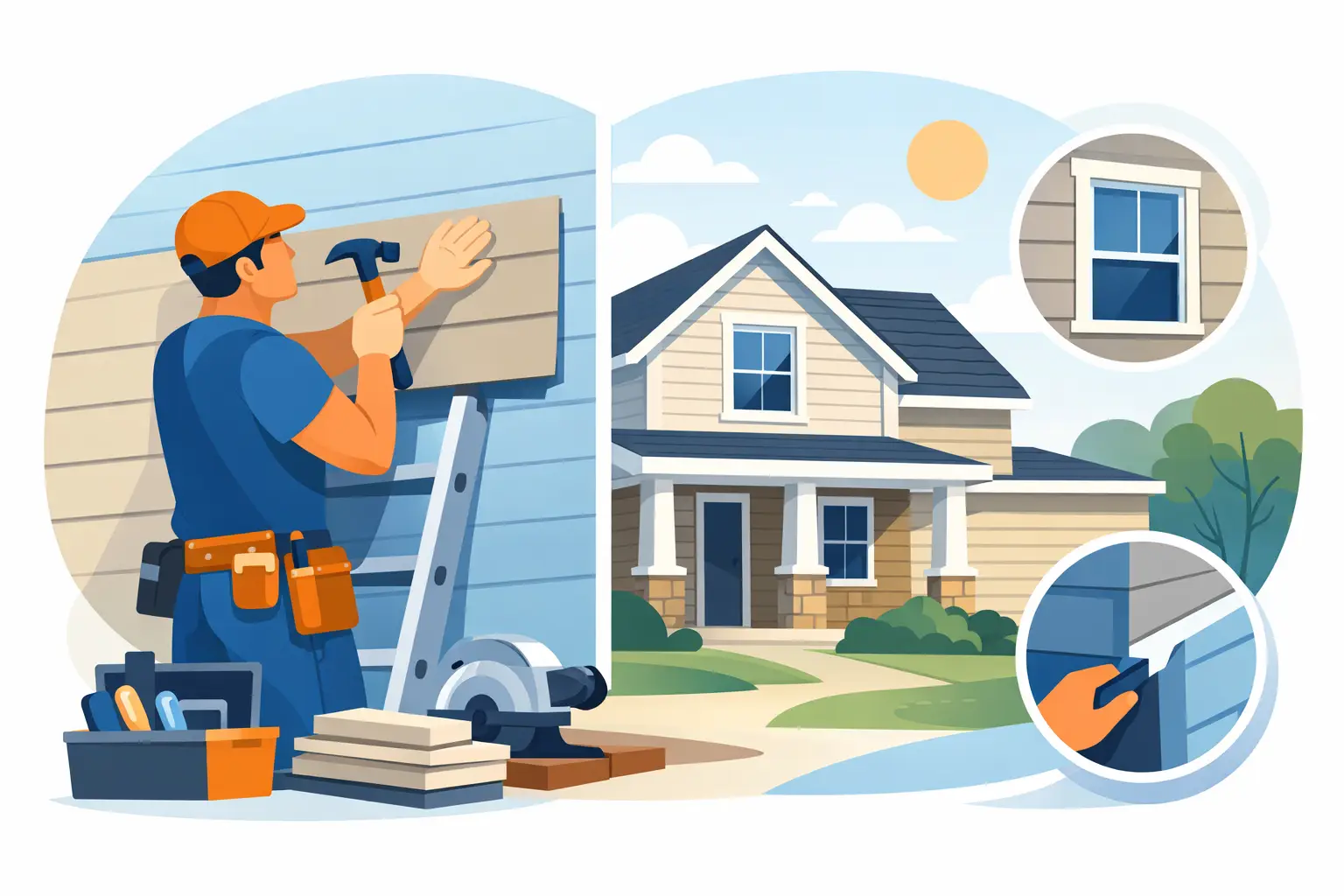
A siding project is not just about changing the color or freshening up curb appeal. The siding is one of your home’s main defenses against rain, wind, moisture, insects, and New England temperature swings. So, what does a siding contractor do? A qualified contractor evaluates the condition of the exterior, identifies problems beneath the surface, recommends appropriate materials, and installs a complete system designed to protect the home for years.
For homeowners, the difference matters. A low bid may cover removing old panels and hanging new ones. A professional siding scope addresses the details that keep water out, allow walls to dry properly, and give the finished home a clean, lasting appearance.
What Does a Siding Contractor Do During a Project?
A siding contractor manages the exterior wall work from assessment through final cleanup. That begins with an on-site inspection, not a guess based on a few photos or a quick measurement. The contractor looks for cracked or loose siding, fading, rot around trim, gaps at windows and doors, soft spots, peeling paint, and signs that water has reached the wall sheathing.
The inspection also helps determine whether siding is the only issue. Sometimes a homeowner calls about worn clapboards and discovers failing window trim, damaged fascia, a gutter problem, or moisture entering near a roofline. Those conditions should be addressed as part of a coordinated plan when possible. Installing new siding over an unresolved leak only hides the damage for a while.
Once the condition of the home is clear, the contractor prepares a detailed proposal. A useful quote explains the work involved, the material options, the trim details, and what is included in removal, protection, cleanup, and disposal. Good, Better, Best options can be especially helpful when comparing vinyl, fiber cement, engineered wood, insulation upgrades, or premium trim packages without losing sight of the budget.
Removing Old Siding and Checking What Is Behind It
When replacement is needed, the crew removes the existing siding carefully and checks the wall beneath it. This is where workmanship shows its value. Old siding can conceal rotted sheathing, insect damage, missing flashing, or poorly installed housewrap.
Not every home needs extensive carpentry repairs. But when damage is present, it should be documented and repaired before the new exterior is installed. The right approach depends on what the crew finds. Small areas of deterioration may need targeted replacement, while widespread moisture damage may call for a broader repair plan.
A responsible contractor communicates these findings clearly. Homeowners should not be left wondering why an additional repair is recommended or how it affects the schedule and cost.
Building a Weather-Resistant Wall System
The visible siding is only one layer of protection. Behind it, a siding contractor may install or repair housewrap, flashing, tapes, and other water-management components. These materials help direct water back to the exterior rather than allowing it to reach framing and insulation.
Special attention goes around windows, doors, corners, roof-to-wall intersections, vents, and exterior penetrations. These are common places for water to enter. Proper flashing is not flashy work, but it is among the most important parts of the job.
Depending on the siding material and the existing wall assembly, the contractor may also discuss insulation. Insulated vinyl siding, foam-backed systems, or rigid insulation can improve comfort and reduce thermal bridging. Still, insulation choices need to fit the home. More insulation is not automatically the best answer if it complicates trim details, affects moisture management, or pushes the exterior too far beyond window frames.
Installing Siding, Trim, and Finishing Details
After the wall is prepared, the crew installs the selected siding according to the manufacturer’s specifications and local building requirements. That means correct fastening, proper clearances, straight courses, expansion allowances where needed, and thoughtful transitions between materials.
The contractor also installs or replaces the pieces that give the project a finished look: corner boards, window and door trim, soffits, fascia, rake boards, skirt boards, and exterior accessories. These details affect both appearance and performance. For example, trim must be properly flashed and sealed so it does not become a path for water behind the siding.
If the project includes painted siding or trim, preparation is just as important as the final coat. Surfaces need to be repaired, cleaned, primed where appropriate, and protected from overspray or drips. A clean finish should look intentional from the street and hold up under close inspection.
A Siding Contractor Also Handles Project Coordination
Homeowners often think of siding as a single trade, but exterior work can involve several connected systems. A siding contractor may coordinate carpentry repairs, gutter removal and reinstallation, exterior painting, light fixture removal, shutters, vents, and trim around replacement windows or doors.
That coordination is valuable because exterior components overlap. If gutters are installed before fascia repairs are complete, or new siding is installed without accounting for a planned window replacement, the work may need to be disturbed later. Planning the order of operations helps avoid duplicate labor and protects the finished result.
For larger projects, permits may also be part of the process. Requirements vary by town and by scope. Straightforward siding replacement may be handled differently than a project involving structural repairs, insulation changes, window work, or significant exterior alterations. A local contractor should be able to explain what applies to your home rather than making broad promises.
What a Homeowner Should Expect From the Crew
A quality siding project should feel organized from the first day. Crews should protect landscaping, walkways, windows, and outdoor items before work begins. They should keep the site reasonably orderly, remove debris daily, and secure materials safely.
There will be noise, dust, and activity around the home. Siding replacement is construction, especially when old materials are removed and repairs are needed. But clear scheduling and daily communication make a major difference. You should know who is arriving, what work is planned, and when decisions need your input.
At the end of the project, the contractor should inspect the work, address punch-list items, clean the property, and explain any basic care requirements for the material you chose. Vinyl siding, fiber cement, wood, and composite products each have different maintenance expectations. A contractor should be honest about those differences before the contract is signed, not after installation.
Repair or Replacement: Which Does Your Home Need?
Siding repair can make sense when the damage is limited. A few cracked panels, localized wood rot, loose trim, or storm damage may be repairable if the surrounding siding is in good condition and a close material match is available.
Replacement becomes more practical when repairs are recurring, color fading is widespread, multiple elevations are failing, or moisture has affected the wall system. It can also be the better long-term value when homeowners want to improve insulation, update dated trim, or coordinate siding with new windows, roofing, or gutters.
Material choice matters, too. Vinyl siding is a popular lower-maintenance option with a wide range of colors and profiles. Fiber cement offers a substantial appearance and strong durability, but installation and painting requirements can add cost. Wood delivers traditional character but demands regular maintenance. There is no single best material for every house. The best fit balances your home’s style, your maintenance expectations, and your budget.
Choosing the Right Siding Contractor
Look beyond the number at the bottom of the estimate. Ask how the contractor handles hidden rot, flashing, cleanup, scheduling, material warranties, and workmanship issues. Make sure the scope identifies the siding product, trim materials, removal process, and any carpentry allowances clearly.
Experience with local homes also matters. Houses across Peabody, the North Shore, and greater Boston range from older wood-frame properties with original details to newer homes with modern exterior systems. A contractor needs the skill to respect the home’s character while correcting the practical issues that weather and time create.
US Home Improvement has served local homeowners since 1978 with in-house siding, painting, roofing, and carpentry crews. That kind of coordinated experience helps keep exterior projects moving and gives homeowners one accountable team from the first conversation through final cleanup.
Your siding should do more than look good on the day the crew leaves. Choose a contractor who takes the time to protect what is behind it, explain what is in front of you, and leave your home ready for the seasons ahead.