
A front door that needs a hard shoulder to close is more than an everyday annoyance. It can signal moisture damage, shifting framing, failing weatherstripping, or a worn-out door slab. Knowing when to replace exterior doors helps you address those problems before cold air, rain, and security concerns turn a manageable project into a larger repair.
For homeowners on the North Shore and around greater Boston, exterior doors take a beating. Winter temperature swings, wind-driven rain, summer humidity, and years of use can all affect how a door operates. Age matters, but the condition of the door, frame, sill, and hardware matters more.
When to Replace Exterior Doors Instead of Repairing
A good exterior door should close smoothly, lock securely, block drafts, and keep water outside. Small issues are often repairable. A loose handle, worn sweep, damaged weatherstripping, or minor paint failure does not automatically mean you need a new door.
Replacement becomes the smarter investment when several issues show up at once or when the structural parts of the opening are failing. If the door is warped, the frame is rotted, the sill is soft, or the door no longer provides dependable security, repairs may only postpone the problem.
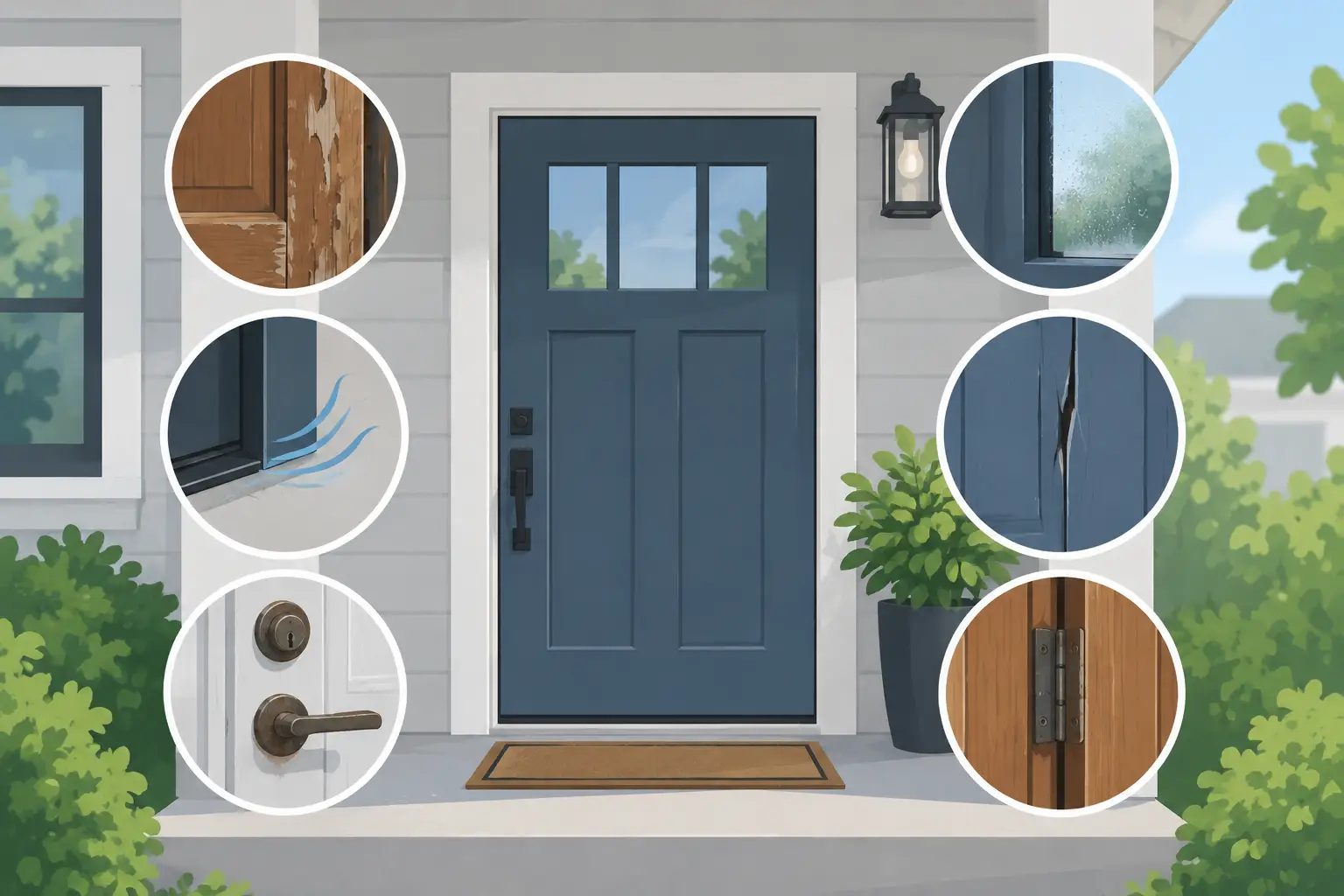
1. The door sticks, binds, or will not latch
A door that rubs the jamb or needs to be lifted to lock may have a simple hinge issue. But if adjustments no longer hold, the problem may be a warped slab, a shifting frame, or water damage around the opening.
Pay attention to when the issue happens. A wood door that swells slightly during a humid week may only need maintenance. A door that is difficult to operate in every season, or one with widening gaps around one edge, deserves a closer look.
2. You can feel drafts or see daylight around the door
A little air movement near an older entry door is common, especially at the bottom sweep. New weatherstripping can solve that if the door and frame are still straight and sound.
However, visible gaps around the jamb, persistent cold spots, or wind that rattles the door point to a larger performance problem. Replacing the entire unit can improve comfort because the door, frame, threshold, weatherstripping, and installation are designed to work together.
3. There is rot, soft wood, or repeated water damage
Peeling paint near the bottom rail is one warning sign. Soft spots in the sill, dark staining at the jamb, swollen wood, or crumbling trim are more serious. Water does not stay politely on the surface. It can travel behind trim and affect the framing around the opening.
This is where a careful inspection matters. Replacing only the door slab when the sill or jamb is deteriorated can hide the real issue. The damaged material should be removed, the opening repaired, and the new unit properly flashed and sealed.
4. The lock no longer feels secure
Exterior doors are a key part of your home’s security. If a deadbolt is hard to engage, the strike plate has pulled loose, the door can be pushed or rattled in the frame, or the lock area is cracked, do not ignore it.
Sometimes stronger screws and hardware adjustments are enough. If the door or frame is split, warped, or weakened by rot, replacement provides a more reliable fix. A properly installed new door should close firmly and allow the lock to engage without forcing it.
5. The glass is fogged, cracked, or poorly insulated
Many entry and patio doors include insulated glass panels. When the seal between panes fails, you may see persistent fogging or moisture inside the glass. That cannot be cleaned from either side.
On some doors, the glass insert can be replaced. If the surrounding door is in good condition, that may be worthwhile. But when the door is also drafty, damaged, or outdated, a new unit usually delivers better long-term value and a cleaner finished result.
6. Your energy bills rise and the entry feels uncomfortable
Doors are not usually the only reason for high heating or cooling costs, but a poorly sealed exterior door can contribute. Feel around the edges on a cold, windy day. Check for cold air at the threshold and around the latch side, where gaps can open as a door moves out of square.
A replacement door will not solve every comfort issue if the surrounding insulation or framing is compromised. That is why a contractor should evaluate the full opening rather than simply measure the old slab and order a replacement.
7. The door has become difficult to maintain
Wood doors can be beautiful and durable, but they need consistent protection from the elements. If paint or stain fails repeatedly, panels split, or the door requires frequent repairs to remain usable, it may be time to consider a lower-maintenance material.
Fiberglass doors offer the appearance of wood with strong resistance to dents, moisture, and temperature changes. Steel doors are durable and often cost-effective, though they can dent and need touch-up if the finish is damaged. The right choice depends on exposure, style, budget, and how much maintenance you want to take on.
8. The door no longer fits the way you live
Replacement is not always driven by damage. A narrow entry, poor sightlines, an outdated sliding patio door, or a door swing that conflicts with furniture can make daily life less convenient.
A new exterior door can improve access, bring in more natural light, and strengthen curb appeal. Homeowners often coordinate a door replacement with new siding, trim, windows, or a porch update so the exterior looks intentional rather than pieced together over time.
How Long Should Exterior Doors Last?
There is no single expiration date. A protected, well-maintained fiberglass or steel entry door can last for decades. A wood door may last just as long with diligent maintenance, but exposure to sun and moisture can shorten that timeline. Patio and storm doors have their own wear points, including rollers, screens, tracks, glass seals, and hardware.
The better question is whether the door still performs its job. If it is secure, weather-tight, easy to operate, and in sound condition, there is no reason to replace it just because it reaches a certain age. If it is failing in several of those areas, waiting can lead to more extensive repairs around the opening.
The Best Time of Year for Door Replacement
Exterior doors can be replaced year-round when the work is planned correctly. The opening is exposed for a limited time, and an experienced crew protects the interior while the new unit is installed and sealed.
Spring and fall are popular because temperatures are moderate, but they are also busy seasons for exterior work. Scheduling before the first hard cold arrives can be wise if your current door is letting in drafts or water. On the other hand, there is no benefit to rushing into a purchase during a mild weather week if you have not had the opening inspected or reviewed your material options.
For a door that is actively leaking, unsafe, or unable to lock, treat the issue as a prompt repair or replacement project regardless of the calendar.
What a Proper Exterior Door Replacement Should Include
A door is only as good as the opening around it. Quality installation starts with accurate measurements and an inspection for rot, out-of-square framing, and moisture damage. The old door and failing materials need to come out carefully so any hidden issues can be addressed before the new unit goes in.
The new door should be set plumb, level, and square, then secured according to the manufacturer’s requirements. The sill, jambs, and exterior trim need weather protection that directs water away from the home. Inside, the gap around the frame should be insulated without bowing the jamb. Finally, the door should be tested for smooth operation, even reveals, secure locking, and a clean finish.
This process is one reason a low price can become expensive later. A door that is poorly flashed or forced into an uneven opening may look fine on installation day but develop drafts, leaks, or operating problems over time.
Choosing the Right Replacement Door for Your Home
Start with performance and layout before focusing on decorative details. Consider the direction the opening faces, how much direct weather it receives, whether privacy is a concern, and whether the door needs to stand up to heavy daily use. Then consider glass, color, hardware, sidelites, and trim style.
A clear quote should explain what is included beyond the door itself: removal, disposal, frame repairs if needed, insulation, trim, sealing, and finish work. It also helps to compare Good, Better, Best options. The least expensive option may suit a sheltered side entry, while a highly exposed front entry may justify a stronger door system and upgraded glass.
For homes in Peabody and throughout the North Shore, US Home Improvement approaches the work as a complete exterior opening, not a quick door swap. That means homeowners can make a decision with a realistic view of materials, labor, schedule, and the condition behind the trim.
A dependable exterior door should feel solid every time you come home. If yours is drafty, damaged, difficult to lock, or simply no longer works for your household, an on-site evaluation can turn uncertainty into a practical plan - and help protect the home you have worked hard to maintain.