
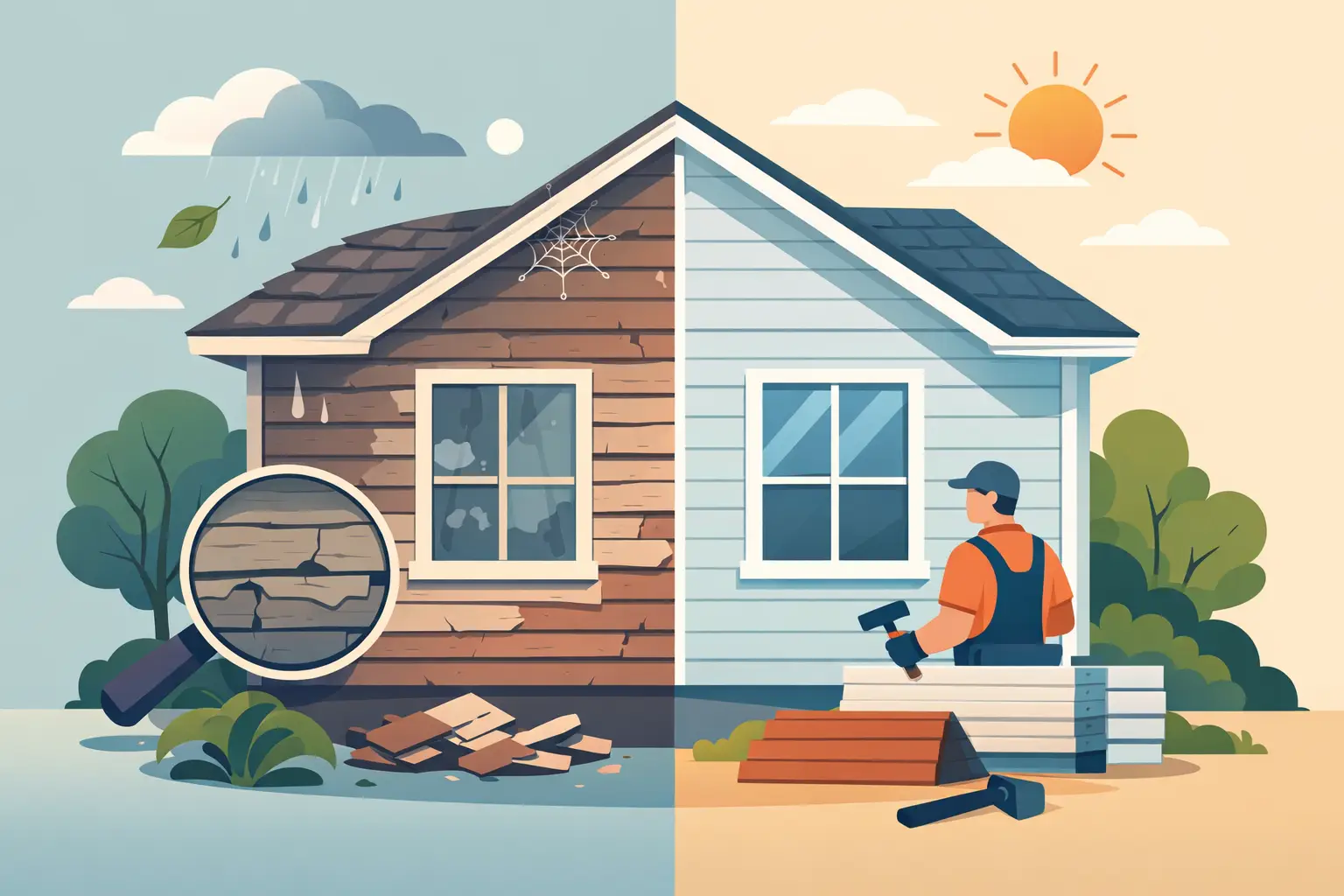
A lot of homeowners start asking when should siding be replaced after they notice one small issue - a loose panel after a storm, paint that will not hold, or a wall inside the house that suddenly feels colder in winter. Siding problems rarely stay cosmetic for long. What looks minor from the driveway can turn into moisture damage, higher energy bills, and repairs that spread beyond the exterior.
The right time to replace siding is not always tied to age alone. Material matters. Installation quality matters. New England weather definitely matters. The real question is whether your siding is still doing its job: protecting the structure, managing moisture, and keeping your home looking cared for.
When should siding be replaced instead of repaired?
Repair makes sense when damage is isolated. If one section came loose in wind, a few boards cracked, or a small area was hit by moisture but the rest of the wall system is in solid shape, a targeted repair can be the smart move.
Replacement becomes the better investment when problems show up in multiple areas or keep returning. If boards are warping on one side of the house, paint is failing on another, and you are seeing signs of moisture near trim or windows, that usually points to a larger breakdown. At that stage, patching the same exterior over and over can cost more than solving the problem properly.
There is also a matching issue. Older siding can fade, become discontinued, or weather unevenly. Even if a repair is technically possible, the final result may look patched together. For homeowners who care about curb appeal and long-term value, that matters.
The clearest signs your siding may need replacement
Warping, buckling, or loose panels
Siding should lie flat and stay secure. When panels start bowing, rippling, or pulling away from the house, water may be getting behind them or the material may be breaking down from age and temperature swings. In coastal and inland Massachusetts communities alike, freeze-thaw cycles can speed that process up.
One loose piece does not always mean full replacement. Widespread movement usually does.
Rot, soft spots, or swollen areas
If you press on wood-based siding and it feels soft, that is a red flag. Rot often starts quietly and spreads beneath paint or surface finish. Swollen trim, crumbling edges, and dark staining near seams can all mean moisture has been sitting where it should not.
This is where siding stops being just a finish problem. Once water gets into the wall system, the repair scope can grow fast.
Frequent painting or constant maintenance
No siding is maintenance-free forever, but it should not demand constant attention. If you feel like you are scraping, painting, caulking, or touching up the same areas every year or two, the material may be at the end of its useful life.
Good siding should hold its finish and protect the house without becoming a recurring project on your calendar.
Cracks, holes, and storm damage in several areas
A single crack can often be repaired. Repeated cracking across multiple elevations is different. That can signal brittleness, impact vulnerability, or age-related failure. Hail, wind-driven debris, and winter conditions can expose weak siding fast.
When damage is spread out, replacement gives you a more dependable exterior than piecing together one repair after another.
Fading and a worn, tired appearance
Color fade alone is not always a structural problem. Sometimes it is mostly aesthetic. But heavy fading, chalking, and uneven wear often show that the siding has absorbed years of weather and UV exposure.
For many homeowners, this is the moment they start weighing whether to keep maintaining an aging exterior or upgrade to a product that improves appearance, durability, and resale value at the same time.
Rising energy bills or drafty walls
Siding works with the rest of your exterior envelope. If the siding is failing, gaps and moisture issues can reduce efficiency. You may notice rooms that feel draftier, walls that are colder in winter, or utility bills that keep creeping up without another clear cause.
Siding replacement will not solve every comfort issue by itself, but when old siding is part of the problem, replacing it can make a noticeable difference.
How long does siding usually last?
This is where the answer gets more specific. Different materials age in different ways.
Vinyl siding can last 20 to 40 years, sometimes longer with good installation and favorable conditions. But lifespan drops if it becomes brittle, cracks repeatedly, or was installed poorly to begin with.
Wood siding can last decades too, but only with consistent maintenance. If it has been exposed to moisture, neglected, or repeatedly repainted without addressing underlying issues, its true life may be much shorter.
Fiber cement is known for durability, but even strong materials depend on proper flashing, trim details, and installation. If those details were missed, problems can appear earlier than expected.
That is why age should be treated as one factor, not the deciding factor. A 15-year-old siding job done poorly may need replacement sooner than a 30-year-old one installed correctly and maintained well.
When should siding be replaced based on age?
If your siding is approaching the end of its expected lifespan and you are seeing visible wear, this is usually the right time to start planning. Waiting until water damage forces the issue can limit your options and raise the total project cost.
There is also a practical timing advantage to replacing siding before failure becomes severe. You can choose materials carefully, compare options, and coordinate related work like trim, gutters, or replacement windows if needed. Homeowners who plan ahead usually get a cleaner process than those reacting to active leaks or structural damage.
A lot of exterior projects are less stressful when they are scheduled by choice instead of by emergency.
Repair vs. replace: what gives you better value?
The answer depends on scope. If the damage is small and the rest of the siding is sound, repair is often the better value. There is no reason to replace an entire exterior when a localized fix will restore performance and appearance.
But if repairs are becoming routine, replacement often gives better long-term value even though the upfront cost is higher. You are not just paying for new siding. You are paying to reset the condition of the exterior, improve weather protection, reduce maintenance, and avoid repeated labor charges.
This is especially true when hidden damage may be involved. Once siding is removed, a contractor can inspect what is happening underneath. That can be uncomfortable news in the short term, but it is better than covering over a problem that keeps getting worse.
What homeowners in Massachusetts should watch for
Homes in this region deal with a little of everything: winter cold, humidity, wind, salt air in coastal areas, and fast weather swings in spring and fall. Those conditions are hard on exterior materials. Siding that looks acceptable from the street can still have weak spots around corners, butt joints, trim transitions, and penetrations.
If your home is in Peabody, along the North Shore, or in older neighborhoods around greater Boston, it is also worth considering the age of the original installation. Many homes have had partial updates over the years, which can leave mismatched materials or hidden trouble where old work meets newer sections.
That does not automatically mean replacement is necessary. It does mean a careful inspection matters.
What to expect before making the decision
A good siding evaluation should go beyond surface appearance. It should look at how the siding is attached, whether moisture is getting in, how the trim and flashing are performing, and whether the current material still makes sense for your maintenance expectations and budget.
This is also where clear pricing matters. Homeowners do best when they can compare a practical repair, a mid-range replacement option, and a more durable upgrade without feeling pushed. Sometimes the best decision is a focused repair to buy time. Sometimes the smarter move is full replacement now so you do the job once and do it right.
If you are noticing recurring issues, the goal is not to guess. The goal is to understand what your siding is telling you before the damage spreads.
A well-built exterior should give you confidence every time the weather turns. If your siding no longer does that, it may be time to stop patching and start planning.