
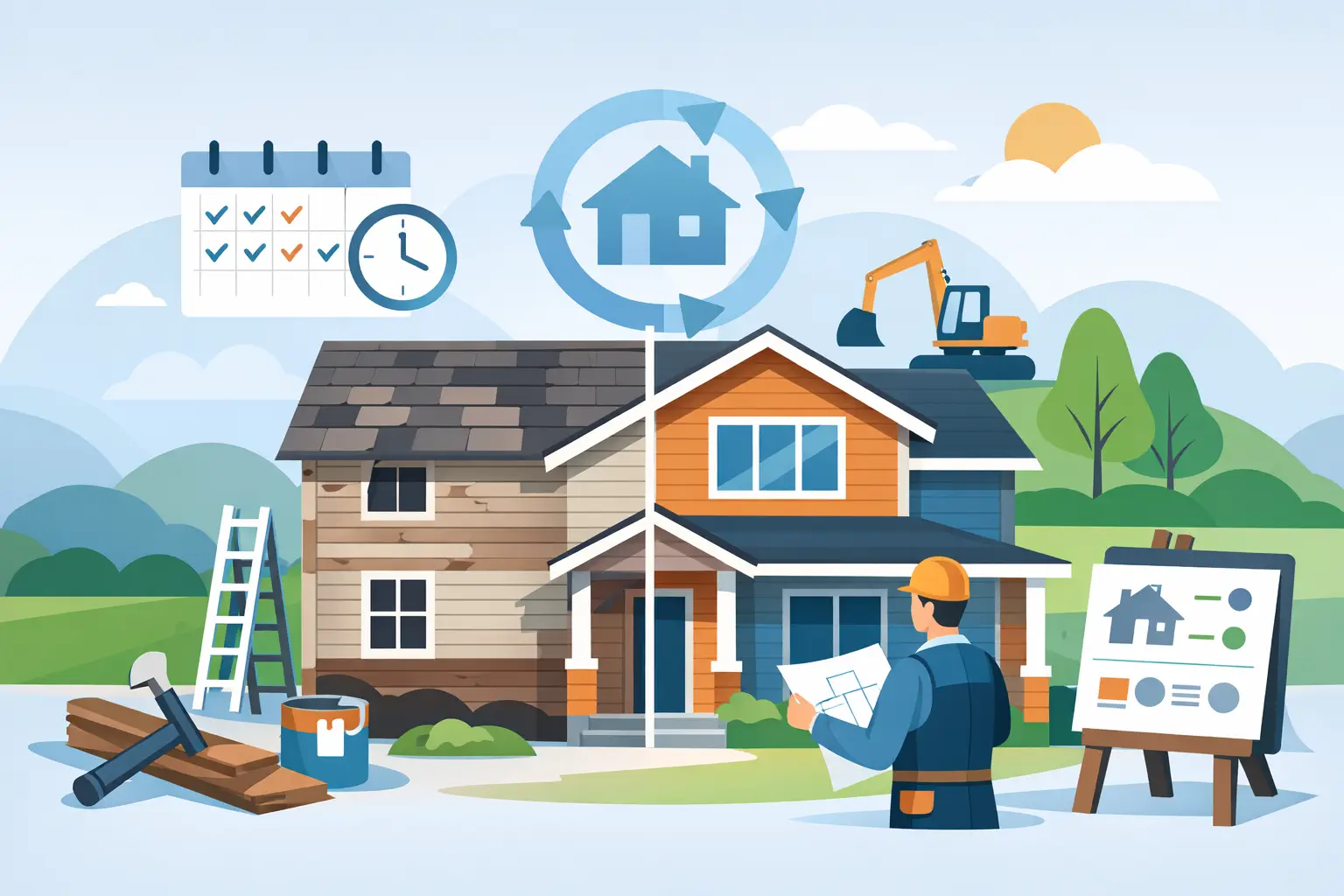
A roof replacement that starts too late in the fall, siding ordered after demo begins, a deck plan waiting on permits - this is how an exterior project that should feel exciting turns into a long season of stress. Good exterior remodeling timeline planning keeps that from happening. It gives homeowners a realistic path from estimate to final cleanup, with fewer surprises and better decisions along the way.
Most scheduling problems do not start on install day. They start weeks or months earlier, when scope is still fuzzy, materials have not been selected, or related work is being treated as separate jobs when it should be coordinated as one plan. If you want a smoother remodel, the timeline needs to be built before the first crew arrives.
Why exterior remodeling timeline planning matters
Exterior work is more exposed to variables than many interior projects. Weather matters. Product availability matters. Permit timing matters. Crew sequencing matters. If one step slips, the next step may have to move with it.
That does not mean every project is unpredictable. It means the best schedules are built around real conditions, not wishful thinking. A dependable contractor will set expectations based on the actual scope, the season, and the order the work needs to happen.
For homeowners, the biggest benefit is peace of mind. You know what decisions need to be made early, when materials should be finalized, and what kind of disruption to expect. You also protect your budget, because rushed decisions often lead to change orders, upgraded material choices made under pressure, or temporary fixes that were avoidable with better planning.
Start with scope, not dates
One of the most common mistakes is picking a target start date before the full project scope is clear. That sounds harmless, but it creates pressure to force scheduling around an incomplete plan.
A better approach is to define what is really being done. Are you replacing roofing only, or roofing and gutters together? Is new siding the right time to replace old windows and trim? If you are building a deck, does that affect door replacement, grading, or exterior lighting? The more connected the work is, the more important sequencing becomes.
This is where a detailed quote matters. A vague estimate may give you a price range, but it does not give you a schedule you can trust. Clear line items, material choices, and a realistic understanding of labor all feed into a timeline that holds up better once the work begins.
Know which projects should be bundled
Not every exterior upgrade belongs in the same contract, but many do. If a home needs roofing, siding, trim repair, and gutters, coordinating them can save time and reduce disruption. The site gets set up once, protection plans are coordinated, and crews can move through the work in a logical order.
There is a trade-off, of course. A larger bundled project takes more planning up front and may require a bigger investment at once. But when related work is split too far apart, homeowners sometimes pay more in the long run through duplicated labor, temporary patching, or finish details that need to be redone.
The stages of a realistic exterior project timeline
Every contractor has a slightly different process, but most exterior remodels move through the same broad stages.
First comes consultation and estimating. This is where measurements are taken, problem areas are identified, and options are discussed. On a straightforward project, this stage can move quickly. On a multi-part remodel with product decisions, structural concerns, or tiered pricing options, it may take more time.
Next comes design and selection. Windows, doors, siding colors, roofing products, decking materials, railing styles, and trim details should be selected before the schedule is locked in. Homeowners sometimes want to keep the calendar moving and decide later, but late selections are a common cause of delays.
After that, permits and ordering begin if required. Some jobs move forward without much municipal review. Others, especially structural deck work, porch enclosures, and certain larger exterior changes, may depend on local approvals. Material lead times also vary. Standard colors and common profiles usually move faster than custom products or premium lines.
Then comes production scheduling. This is where your contractor places the project on the calendar based on crew availability, material delivery, permit status, and season. Good companies do not treat this as guesswork. They schedule with enough discipline to keep quality high, rather than overbooking and hoping jobs sort themselves out.
Finally, installation and punch work take place. A roof may be completed in days, while siding, trim, decks, and multi-scope exterior renovations may stretch longer. The final phase should include cleanup, walkthroughs, and any remaining finish details.
Build around the season, not against it
In Massachusetts, timing matters. Spring and summer are busy for a reason. Homeowners want work done in milder weather, daylight lasts longer, and outdoor living projects naturally rise to the top. But that demand also means the best calendar slots often fill early.
Fall can be an excellent time for roofing, siding, and window work, especially when the project is planned ahead of time. The weather is often workable, and getting the exterior sealed up before winter has obvious value. The risk comes when homeowners wait too long to start planning and assume the work can begin immediately.
Winter is more mixed. Some exterior work can still be done, depending on temperatures, materials, and site conditions. Some cannot, or should not be rushed. This is where honest scheduling matters most. A good contractor will tell you when winter work is practical and when it is smarter to use the colder months for quoting, selections, and permit prep so installation can begin efficiently when conditions improve.
Weather delays are normal. Poor communication is not.
No exterior contractor can control rain, wind, or sudden cold snaps. What they can control is how they plan for them and how they communicate when conditions shift. Homeowners are usually understanding about weather if they know what is happening, why the schedule changed, and what the next step is.
That is one reason experienced, multi-crew operations often manage exterior work more effectively. When crews are coordinated in-house and sequencing is planned carefully, the project has a better chance of staying organized even if one part of the schedule needs to move.
Decisions that should happen early
If you want to protect the timeline, there are a few decisions worth making sooner rather than later.
Material selection is one. Product line, color, profile, and accessory details can affect both lead time and installation sequence. Budget level is another. If you are choosing between good, better, and best options, that conversation should happen before the ordering window, not during it.
You also want to decide how much repair risk you are prepared for once work opens up the exterior. On older homes, hidden rot, sheathing damage, or framing issues are possible. You may not know the exact extent in advance, but you can talk through the likely scenarios and how they would be handled. That kind of planning does not eliminate surprises, but it keeps them from becoming chaos.
How homeowners can keep the project moving
A contractor owns the schedule, but the homeowner still plays a real role in keeping the timeline on track.
Be available to approve selections and answer questions promptly. If your contractor needs a product choice, access decision, or confirmation on a change, waiting several days can ripple through the schedule. Clear communication helps everyone.
It also helps to prepare the property. Move vehicles, clear work areas, trim back landscaping if needed, and make sure crews can access the project safely. Small site delays add up more than people think.
Most of all, resist the urge to expand scope midstream unless there is a strong reason. Adding a new door, changing railing design, or shifting paint colors during active production may be possible, but it often affects ordering, labor, and sequencing. Sometimes the right answer is yes. Sometimes the smarter answer is to finish this phase well and plan the next one separately.
What a good timeline should feel like
A solid schedule should feel clear, not overly polished. If every date is presented as fixed months in advance, that is not always a sign of control. Sometimes it is a sign that real-world variables have not been accounted for.
A better timeline has structure. It shows the steps, explains dependencies, and gives you a reasonable sense of the window for each phase. It also leaves room for the realities of exterior work without making the whole project feel loose or uncertain.
That balance matters to homeowners who want reliability, not sales talk. After all, the goal is not just to get the work started. It is to get it completed with good craftsmanship, clean execution, and fewer headaches along the way.
When the planning is done right, the project feels different from the start. You are not guessing what comes next or chasing answers after the fact. You are making informed decisions, in the right order, with a team that respects your time, your home, and the investment you are making in both.