
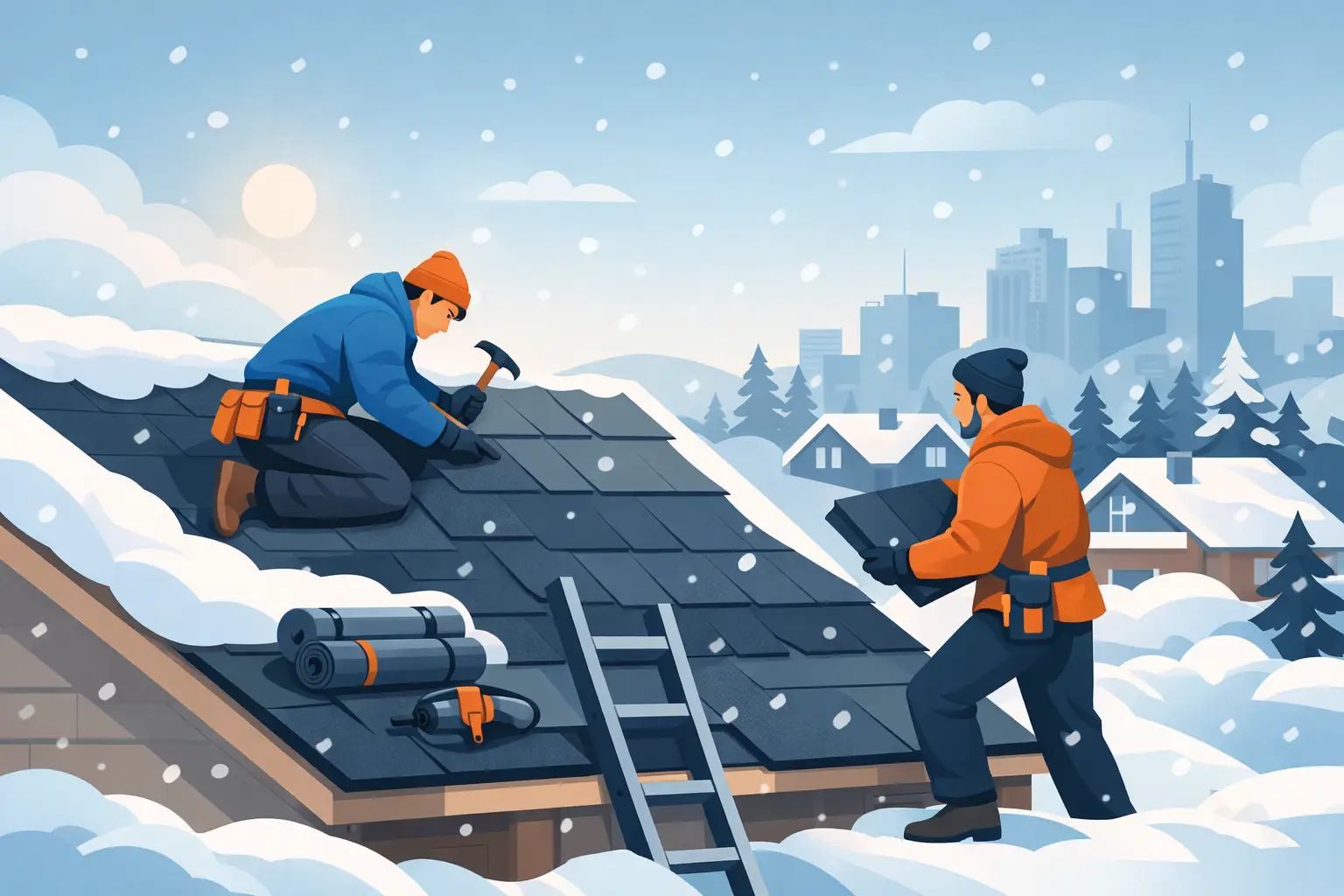
A roof leak rarely waits for a warm, convenient day. When water is staining a ceiling or shingles have blown off in a North Shore windstorm, homeowners often ask, “can you replace roof in winter?” In many cases, yes. A qualified roofing crew can complete a winter roof replacement safely and successfully when temperatures, moisture, wind, and manufacturer requirements are all working in the job’s favor.
The key is not simply whether there is snow on the ground. It is whether the roof deck is dry, materials can be installed correctly, and the crew has a safe window to protect your home from the elements. A careful contractor will not force a job through bad conditions just to keep a calendar date.
Can You Replace a Roof in Winter?
Yes, a roof can be replaced in winter, but winter installations require more planning and more day-to-day judgment than a typical spring or fall project. In Peabody and throughout greater Boston, winter weather can change quickly. A clear 40-degree morning can turn into freezing rain, high winds, or an early afternoon snow squall.
Asphalt shingles are the most common residential roofing material in this area, and cold weather affects how they handle. Shingles can become less flexible in low temperatures, making them more susceptible to cracking if they are handled roughly. Their adhesive sealant strips also need adequate warmth and sunlight to activate fully. That does not mean the roof will fail when installed in cold weather. It means the contractor must follow the shingle manufacturer’s cold-weather instructions and use proper installation methods.
A winter replacement may be the right choice when a roof is actively leaking, storm damage has compromised the system, or the existing roof is near the end of its useful life and cannot reasonably wait until spring. It can also be a practical time to schedule a planned project if the forecast offers a stable, dry stretch and the roofing team has a clear process for cold-weather work.
What Makes a Winter Roofing Job Possible
The calendar matters less than the conditions on the roof. An experienced crew evaluates the forecast, roof access, material requirements, and the home itself before confirming the work.
First, the roof deck must be dry. New underlayment and shingles should not be installed over wet sheathing, snow, or ice. Moisture trapped beneath a new roofing system can create problems that are difficult to see until later. If rain or snow arrives after tear-off begins, a prepared crew uses tarps and other protection to keep exposed areas covered until work can safely resume.
Temperature is also a factor. Manufacturers often provide guidance for installing their products below certain temperatures. Some shingles may need to be stored in a heated space before installation. In cold conditions, installers may use hand-sealing methods where approved by the manufacturer rather than relying only on the sun to activate factory adhesive strips.
Wind deserves equal attention. Roofing is physical work at height, and even a dry roof can become unsafe when gusts pick up. Strong winds can also make it difficult to manage underlayment, flashing, and protective tarps. A dependable contractor knows when to stop rather than putting workers, materials, or your property at risk.
Finally, a winter roof replacement needs solid logistics. That includes organizing material delivery, protecting landscaping and walkways where possible, managing snow and debris, and completing daily cleanup. Homeowners should expect a little more flexibility in the schedule during winter because weather delays are part of doing the work properly.
When Waiting Is the Better Decision
Not every winter day is suitable for roofing, and that is a good thing. If a contractor promises to replace any roof in any weather, that should raise questions.
Work should generally pause during active precipitation, icy roof conditions, dangerous winds, or periods when materials cannot be installed according to manufacturer standards. A roof covered in snow or ice must be cleared and allowed to dry before installation can continue. Trying to rush through these conditions can damage shingles, compromise flashing details, and create safety risks for the crew.
There is also a difference between a full replacement and an emergency repair. If your roof has a localized leak but the weather is not safe for a full tear-off, a professional may recommend a temporary repair or protective covering first. That can control water intrusion and give the home a better chance of staying dry until a proper installation window opens.
This approach is not a delay tactic. It is a way to protect the investment you are about to make. Roofing is a system, not just a layer of shingles. The deck, ice and water protection, underlayment, flashing, ventilation, and finish materials all need to work together.
Benefits of Replacing a Roof During Winter
For the right project, winter roofing has a few practical advantages. Homeowners may find greater scheduling availability than they would during the busy spring and fall seasons. Material lead times can also be more predictable outside peak demand, depending on the product selected.
More importantly, replacing a failing roof before a long stretch of snow and freeze-thaw cycles can prevent bigger damage. Small leaks become more serious when melting snow works its way beneath worn shingles. Water can affect insulation, ceilings, wall cavities, and framing before it becomes visible inside the house.
A new roofing system also gives you the opportunity to address ice-dam protection. In Massachusetts, ice dams can form when heat escaping from the home melts snow on the roof. The water then refreezes near colder eaves, creating a ridge of ice that can push water back under shingles. Proper ventilation, insulation improvements where appropriate, and correctly installed ice and water protection are all part of a thoughtful solution. A new roof alone cannot solve every ice-dam problem, but it is an ideal time to inspect the whole system.
Questions to Ask Before Scheduling Winter Roof Work
A clear conversation before work begins will make the project less stressful. Ask how the contractor monitors weather and what conditions would require postponement. Find out how exposed roof areas will be protected if the forecast changes during tear-off.
You should also ask which shingle manufacturer and installation instructions apply to your project. A good contractor can explain how cold temperatures affect the materials and whether any additional hand-sealing or storage procedures are needed. If the roof deck has damaged areas, confirm how replacement sheathing will be identified and priced so there are no surprises once the old roof comes off.
It is also wise to discuss access and cleanup. Winter conditions can make driveways, walkways, and yards more challenging. Ask where materials will be delivered, how debris will be contained, and how the crew will keep the work area orderly at the end of each day. The answers should be direct and specific, not vague promises.
How Homeowners Can Prepare
Before a winter roofing project, move vehicles out of the driveway and clear patio furniture, grills, and fragile outdoor items away from the house. Inside, remove wall decorations or valuables that could shift from vibration, particularly in finished attic spaces and rooms directly below the roofline.
Keep pets indoors and plan for the noise. Roof replacement is loud, and the sound can be more noticeable when everyone is spending more time inside during cold weather. If you have concerns about an older home, attic access, or a known leak, bring them up before the crew arrives. Clear information helps the team plan the job well.
Winter roofing is not about taking chances with your home. It is about working within the right weather window, using materials correctly, and having a crew that knows when to proceed and when to protect the roof and return another day. Since 1978, US Home Improvement has helped local homeowners make practical exterior decisions with detailed planning, straightforward communication, and workmanship that is built to last. If your roof is showing signs of failure, do not wait for a bigger leak to tell you the season has changed.