
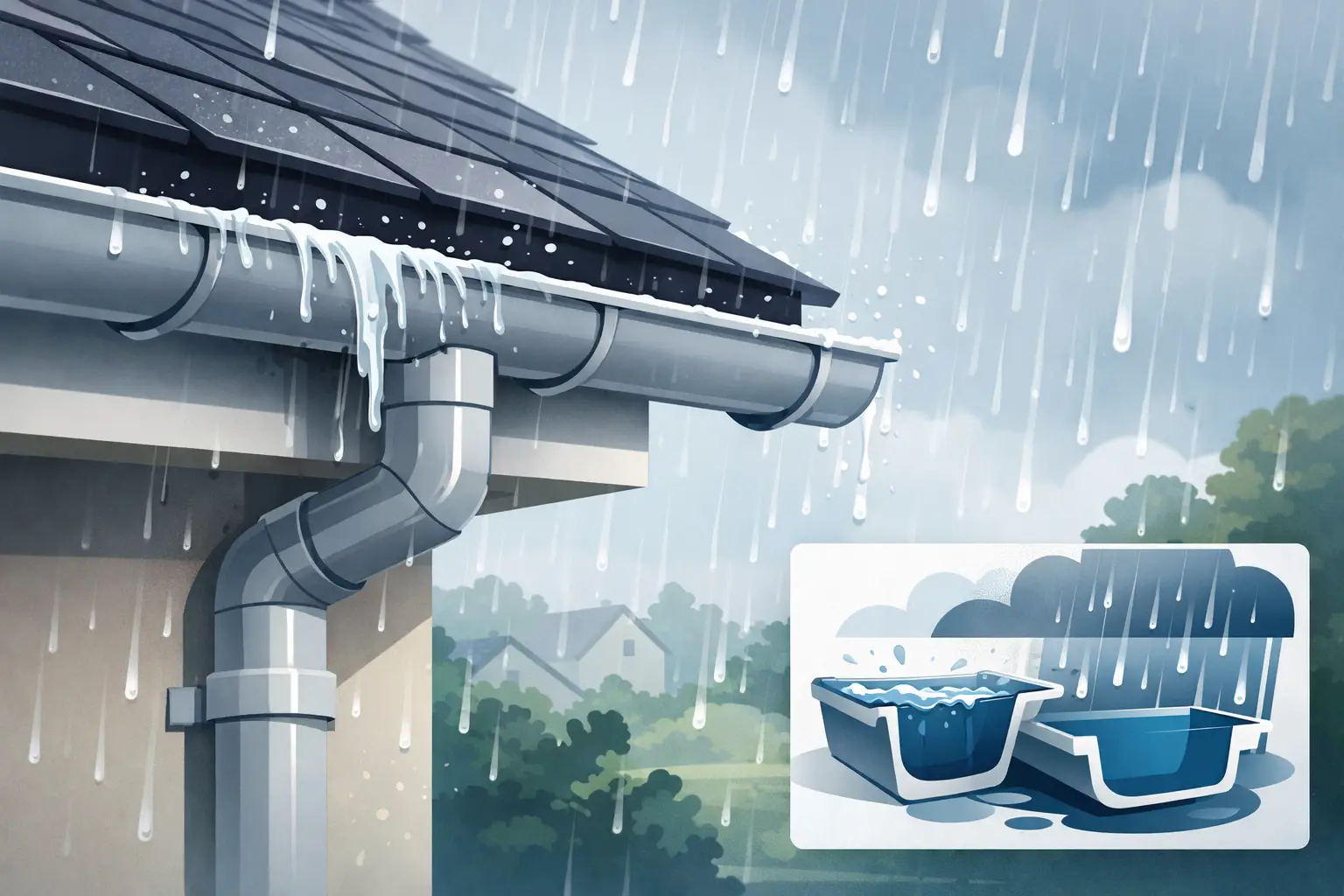
A gutter system usually gets attention only after it fails - water spilling over the edge, mulch washing out, siding streaking, or ice building up where it should not. That is why gutter sizing for heavy rain matters more than many homeowners realize. In New England, a quick summer downpour or a wind-driven coastal storm can push a small, underbuilt system past its limit in minutes.
The fix is not always as simple as installing the biggest gutter on the truck. Good sizing starts with how much roof area drains into each section, how fast water gets there, how many downspouts carry it away, and how the gutter is pitched. When those pieces work together, the system protects the roofline, foundation, landscaping, and exterior finishes. When they do not, even a newer gutter can perform poorly.
What gutter sizing for heavy rain really means
Most homeowners think about gutters in terms of shape and color. Contractors have to think about capacity. Gutter sizing for heavy rain is really the process of matching the gutter and downspout system to the volume of water your roof sheds during a strong storm.
A larger roof sends more water into the gutter. A steeper roof can move that water faster. Valleys and long roof runs concentrate flow in specific sections, which is why one corner of the house may overflow while another looks fine. The local rainfall pattern matters too. Homes in Essex County and the greater Boston area need systems that can handle intense rain events, not just light, steady showers.
That is also why a one-size-fits-all recommendation often misses the mark. Two homes with the same square footage may need different gutter layouts depending on roof design, fascia height, overhang depth, and where the downspouts can reasonably be placed.
The sizes most homes are choosing
For many homes, 5-inch K-style gutters are the standard starting point. They work well on modest roof sections and average rainfall conditions. But for heavier rain, complex rooflines, or larger roof planes, 6-inch gutters often make more sense. They carry more water and are less likely to overflow at corners, valleys, and long runs.
Downspout size matters just as much. A wider gutter connected to undersized downspouts still bottlenecks the system. Many overflow problems come from this mismatch. The gutter may be large enough to catch water, but not able to move it out quickly enough.
Half-round gutters can also perform well, but they usually need to be sized thoughtfully because their shape handles water differently than K-style systems. They may be the right fit for certain architectural styles, but appearance should not outweigh function.
Why some gutters overflow even when they are clean
Homeowners often assume overflow means clogging. Sometimes that is true. Leaves, roofing granules, and debris can choke off flow. But clean gutters can still fail in a heavy rain if the system is undersized or poorly configured.
A few common reasons stand out. The gutter may be too small for the roof section feeding it. The pitch may be too flat, which slows drainage and lets water pool. There may be too few downspouts, or they may be in the wrong locations. Splashing can also happen where a roof valley dumps a concentrated sheet of water into a short stretch of gutter.
Installation details matter here. Gutters should sit at the right height relative to the roof edge so water falls into them instead of shooting over the front lip. If that alignment is off, upsizing alone may not solve the problem.
How contractors determine the right size
A proper evaluation starts with the roof, not the gutter catalog. The first step is identifying the drainage area for each gutter run. That includes the roof surface feeding the section, plus any concentrated flow from valleys or intersecting roof planes.
From there, the contractor looks at pitch, run length, and downspout opportunities. A long run with one downspout at the end may not handle a strong storm as well as a similar run with two well-placed outlets. In some cases, adding downspouts does more than increasing gutter size. In others, both changes are worth making.
This is where experience matters. On paper, two options may both seem acceptable. In the field, one may give you better performance with fewer maintenance issues. A good installer will balance capacity, appearance, budget, and the practical limits of the house.
5-inch vs. 6-inch gutters in heavy rain
This is one of the most common questions homeowners ask, and the honest answer is that it depends on the house. A well-installed 5-inch system can perform very well on the right home. But if you have steep roof sections, large drainage areas, frequent overflow, or strong storm exposure, 6-inch gutters are often the safer choice.
The trade-off is straightforward. Larger gutters are more visible and typically cost more. They may also require larger accessories and thoughtful fascia integration. But they offer more capacity and more forgiveness during downpours.
For homeowners planning a roof replacement, siding work, or full exterior upgrade, this is a smart time to revisit the gutter system. Matching the gutter size to the updated roof and trim package often leads to a cleaner result and better long-term protection.
Downspouts are half the equation
If gutters collect water, downspouts are what prevent backup. Too few downspouts, undersized outlets, or awkward discharge locations can cause water to stack up fast during a storm. Once the water level rises, it will spill where the system is weakest.
That overflow can damage more than the gutter line. Water dumping near the foundation can contribute to settlement, basement moisture, and landscape erosion. It can also stain siding and trim, especially on lighter-colored homes.
A better design may include more downspouts, larger downspouts, or improved placement to shorten the travel distance inside the gutter. The goal is simple - catch water, move it efficiently, and send it away from the house.
Guards, maintenance, and realistic expectations
Gutter guards can help reduce debris buildup, but they are not a cure for undersized gutters. If a system lacks capacity, a guard will not create it. In some cases, the wrong guard product can even affect how water enters the gutter during a hard rain.
That does not mean guards are a bad idea. It means they should be part of the conversation after sizing and layout are handled correctly. The best-performing setup is one that matches the home first, then adds maintenance-friendly features where they make sense.
Regular inspection still matters, especially after major storms. Fasteners loosen, downspouts can clog, and roof runoff patterns can change over time. A system that worked well ten years ago may need adjustment today if the roof was replaced, the home was expanded, or surrounding trees have matured.
When it makes sense to upgrade
If your gutters overflow during every strong storm, pull away from the fascia, dump water at corners, or struggle below roof valleys, it is worth having the system reviewed. Repairs may solve the issue if the layout is fundamentally sound. But if the original system was undersized, patching the same design only delays the problem.
For many homeowners, the best time to make the change is during a larger exterior project. Roofing, fascia repairs, trim replacement, and siding work all affect how the gutter system attaches and performs. Coordinating the work often leads to a cleaner installation and better value.
That is the kind of decision that benefits from a detailed quote instead of a quick guess. An experienced exterior contractor should be able to explain what is happening, show where the current system falls short, and offer practical options rather than one blanket recommendation. At US Home Improvement, that kind of straight answer matters because homeowners need a system that holds up in real weather, not just one that looks fine on installation day.
The right gutter system should quietly do its job year after year. If you are seeing overflow now, the question is not just how to stop the mess. It is how to give rainwater a better path before it starts costing you money elsewhere.