
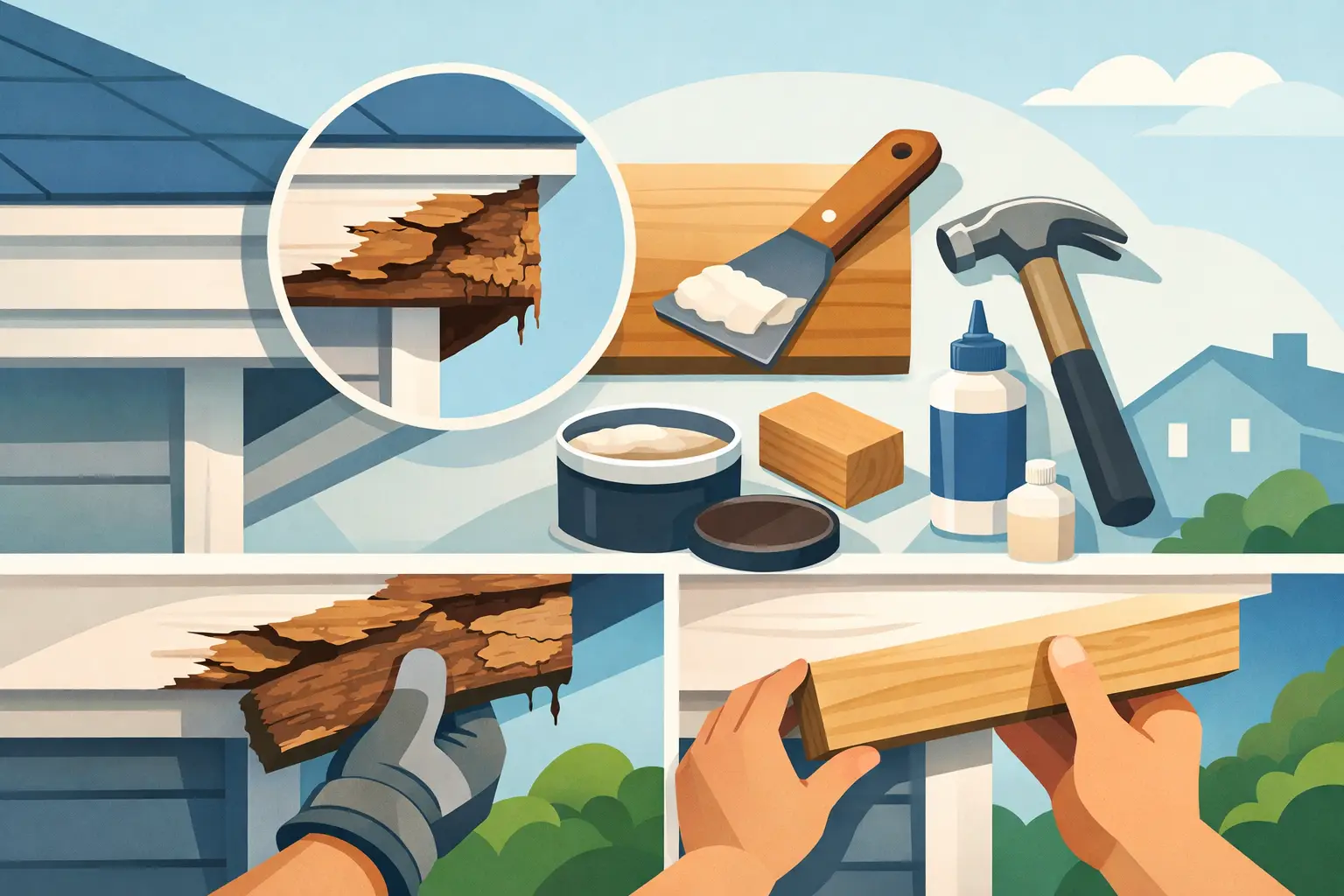
Rot usually shows up where homeowners least want to find it - window trim that feels soft, a porch column with bubbling paint, a rake board that looks fine until a screwdriver sinks in. When people start researching exterior carpentry rot repair options, they are usually trying to answer one practical question: can this be repaired, or does it need to be replaced?
The honest answer is that it depends on how far the damage has spread, what part of the home is affected, and why the wood stayed wet long enough to rot in the first place. A good repair is never just about patching the visible damage. It is about stopping the moisture problem, restoring structural integrity, and making sure the repair holds up through New England weather.
What causes exterior wood rot
Exterior trim and framing do not rot simply because they got wet once. Rot starts when wood stays damp over time. That usually happens around failed caulking, missing paint, roof or gutter leaks, splashback near decks and porches, or poor flashing around windows and doors.
In coastal Massachusetts communities and older Northshore neighborhoods, repeated freeze-thaw cycles and salty, damp air can speed up the breakdown of exposed trim. Homes with layered renovations are especially prone to hidden trouble. A newer siding job may cover older trim details, or a replacement window may have been installed years ago without correcting water entry around the opening.
That is why surface appearance can be misleading. A piece of trim may only show a few inches of visible damage while the moisture issue behind it extends much farther.
Exterior carpentry rot repair options depend on location
Not all rot carries the same level of risk. If the damage is limited to a small section of decorative trim, the repair path may be fairly simple. If the rot affects window framing, door bucks, deck framing, porch supports, or roof edge components, the stakes are higher.
This is where a careful inspection matters. Exterior carpentry rot repair options should be matched to the role that component plays. Cosmetic trim can sometimes be restored. Structural wood needs a more conservative approach.
When a localized wood repair makes sense
Small, isolated areas of rot can sometimes be repaired instead of replaced. This is most common on wood trim boards, window sills, corner boards, or decorative elements where the surrounding wood is solid and dry.
In these cases, the damaged wood is removed back to sound material. A contractor may use a wood hardener and exterior-grade epoxy filler to rebuild the missing section, then sand, prime, caulk, and paint it. Done correctly, this can be a cost-effective option for minor damage.
The trade-off is that epoxy repair is best for limited areas, not widespread deterioration. It also relies on solving the moisture source first. If water is still getting in, even a neat-looking patch will fail.
When partial replacement is the better move
A lot of exterior rot falls into the middle category. The damage is too extensive for filler, but it is still confined to one board, one trim assembly, or one section of framing. In that case, partial replacement often gives the best balance of durability and cost.
This could mean replacing a rotted fascia board while preserving the underlying roof edge framing, swapping out a damaged window sill and apron, or rebuilding the lower portion of a porch column wrap. The goal is to remove all compromised wood while keeping the surrounding assembly intact if it is still solid.
This approach works well when the rest of the area is in good shape and the replacement can be integrated cleanly. It also allows homeowners to avoid paying for a larger rebuild than the house actually needs.
When full replacement is the right call
Some situations call for full replacement, even if that is not what a homeowner hoped to hear. If the rot is widespread, if multiple connected components are affected, or if the wood plays a structural role, replacing the assembly is usually the smarter long-term decision.
Window and door surrounds are a common example. What looks like trim rot can turn out to include sheathing damage, failed flashing, and deterioration in the framing around the opening. Porch stairs, deck ledgers, railing posts, and support columns also fall into the category where piecemeal repair can create more risk than value.
Full replacement costs more upfront, but it often saves money over time because it addresses the whole problem at once. It also gives the contractor a chance to rebuild with better moisture management, updated flashing, and more durable material choices.
Material choices matter as much as the repair
Once damaged wood is removed, the next question is what should go back in its place. Many homeowners assume wood should always be replaced with wood. Sometimes that is the best fit, especially on older homes where preserving the original look matters. But it is not the only option.
Primed wood trim can work well when installed correctly and maintained on schedule. Cellular PVC trim offers strong rot resistance and is often a smart upgrade in high-exposure areas such as rake boards, fascia, corner boards, and some window and door surrounds. Composite options may also make sense in certain assemblies.
There is no one-size-fits-all answer. PVC can outperform wood in wet locations, but it may not be the right visual match everywhere. Wood can look excellent, but it requires more discipline around paint, caulk, and ongoing upkeep. A well-run project should include good, better, best material options so the homeowner can weigh appearance, longevity, and budget without guessing.
Hidden rot is where experience pays off
One of the hardest parts of rot repair is that the visible damage is not always the full story. Paint can bridge soft wood. Aluminum cladding can conceal moisture damage underneath. Siding may need to be opened to see whether water has traveled into sheathing or framing.
This is where experienced exterior carpenters earn their keep. They know where rot typically spreads, how to open an area without creating unnecessary damage, and when to stop a simple trim repair from turning into an under-scoped job. They also know how rot repair connects to roofing, siding, gutters, windows, and paint. Those trades are not separate on the house itself. Water moves across all of them.
For homeowners, that matters because the cheapest quote is often based on the narrowest view of the problem. If a contractor prices only the visible board and ignores flashing, caulking, drainage, or adjacent soft wood, the repair may look finished long before it is actually fixed.
How to decide between repair and replacement
A practical decision usually comes down to five questions. Is the damage isolated or spreading? Is the wood decorative or structural? Has the source of moisture been identified? Can the area be rebuilt to match the existing exterior cleanly? And will the repair still make sense five years from now?
If the answer to those questions points toward a small, contained issue, repair may be perfectly reasonable. If several answers are uncertain, replacement is often the safer investment.
That is why detailed quoting matters. Homeowners should be able to see what is included, what assumptions are being made, and what conditions could change the scope after the area is opened up. A vague price for rot repair is rarely a good sign.
What a solid rot repair process should include
A proper job starts with inspection, not patching. The damaged wood should be probed and traced to determine the full extent of decay. Then the moisture source should be identified, whether that means failed flashing, roof runoff, gutter issues, bad caulking, or ground contact.
After demolition, the repair should use sound carpentry methods, compatible materials, and proper sealing details. The finish work matters too. Clean cuts, aligned profiles, quality primer, correct caulk joints, and a thorough paint system are not cosmetic extras. They are part of what keeps water out.
For many homeowners, especially on older homes in places like Peabody, Salem, Beverly, and the surrounding Northshore, rot repair is also the moment to think a little bigger. If failing trim sits next to aging windows, worn siding, or a roof edge with drainage problems, combining the work may deliver better value and a cleaner result.
A rot repair should leave you with more than a patched spot. It should leave you with confidence that the problem was found, fixed properly, and rebuilt to last. If a contractor can explain the cause, walk you through the trade-offs, and give you clear options, you are already on the right track.