
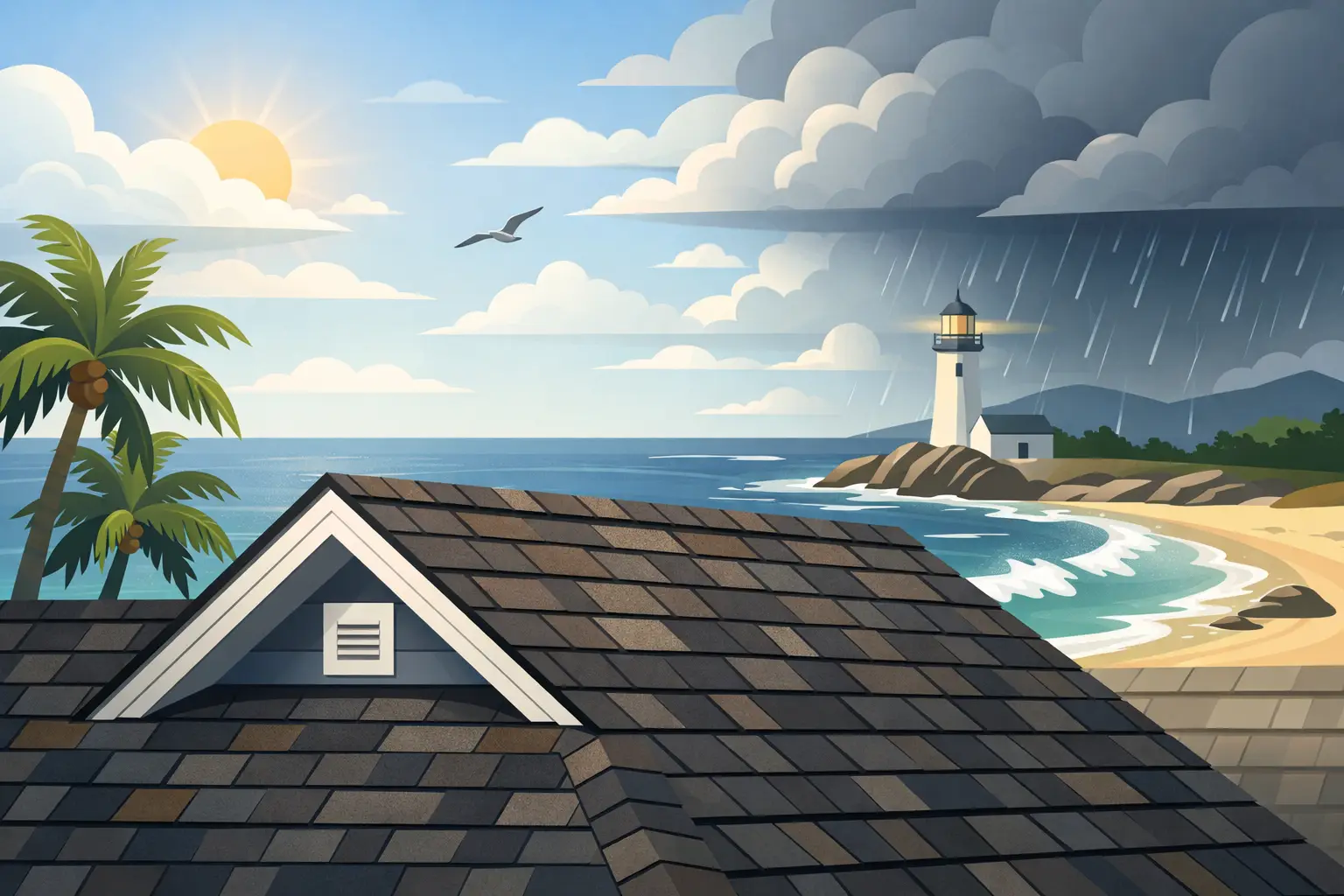
A roof that performs well inland can fail early a few miles from the water. Along the coast, shingles take a beating from wind uplift, salt air, driving rain, and long stretches of sun exposure. If you are comparing the best roofing shingles for coastal weather, the right answer is not just about brand or color. It is about how the whole roofing system is built and whether the shingle fits your home’s exposure.
For homeowners near the Massachusetts shoreline, that difference matters. A house in Marblehead, Gloucester, or Swampscott does not face the same conditions as a house tucked farther inland behind trees. The closer you are to open water, the more important it is to choose materials that can handle repeated wind events and moisture without cutting corners on installation.
What coastal weather does to a shingle roof
Coastal roofs age differently. Wind is the obvious issue, especially when gusts get under the shingle tabs and start lifting edges. Once that seal is compromised, water can work its way in, and small problems turn into leaks or blown-off sections after the next storm.
Salt air is slower but just as real. It does not usually destroy the shingle itself overnight, but it can shorten the life of metal accessories and exposed fasteners if the wrong materials are used. Flashings, drip edge, and ventilation components all need to hold up, not just the visible shingle surface.
Then there is wind-driven rain. Coastal storms do not always hit with dramatic damage on day one. Sometimes the issue is repeated exposure - rain pushed sideways, freeze-thaw cycles, and roof edges that never seem to fully dry. That is why the best-performing coastal roof is always a system, not a single product.
Best roofing shingles for coastal weather - what to look for
If you are narrowing down the best roofing shingles for coastal weather, start with performance ratings before style. A shingle may look great in a sample board, but appearance should come after wind resistance, proper sealing, and manufacturer support.
High wind ratings matter
Look for shingles designed and warranted for high-wind conditions. Many architectural asphalt shingles offer better wind performance than basic 3-tab shingles because they are heavier and built with a stronger laminated design. In exposed coastal areas, that added weight and improved seal can make a real difference.
Not all high-wind claims are equal, though. The stated rating depends on the full installation method, including the right number of nails, proper placement, and the correct starter products. A strong shingle installed carelessly is still a weak roof.
Architectural shingles are usually the better fit
For most coastal homes, architectural shingles are the practical sweet spot. They cost more than entry-level 3-tab shingles, but they generally offer better durability, better wind resistance, and a more substantial appearance on the roof.
That does not mean every homeowner needs the most expensive premium designer shingle. In many cases, a well-made architectural shingle in a better installation package gives more value than stretching the budget for appearance upgrades that do not improve storm performance much.
Algae resistance helps near the water
Moisture and humidity can lead to dark streaking from algae growth, especially on shaded roof sections. This is not always a structural issue, but it affects curb appeal and can make a newer roof look older than it is. Shingles with built-in algae resistance are worth considering in coastal New England, where damp conditions are common.
Manufacturer system compatibility matters
Homeowners often focus on the field shingle and overlook the parts around it. Starter strips, ridge caps, underlayment, ice and water protection, and ventilation products are not extras. They are part of what helps a roof stand up to coastal conditions.
When those components are matched properly, you usually get better long-term performance and stronger warranty coverage. That is often a smarter investment than buying a top-tier shingle and pairing it with bargain accessories.
The best shingle types for homes near the coast
For most homes, the conversation comes down to three categories.
Basic 3-tab asphalt shingles are usually the least expensive option, but they are rarely the best choice for coastal exposure. They are lighter, flatter, and generally more vulnerable to wind damage. For a detached garage or a very tight budget, they may still come up in conversation, but for a primary residence near the water, they are hard to recommend as the long-term play.
Architectural asphalt shingles are the strongest all-around choice for most homeowners. They balance cost, curb appeal, availability, and storm performance. If a homeowner wants a dependable roof without pushing into premium pricing, this is typically the category to start with.
Premium laminated or designer shingles can be a good fit for certain homes, especially higher-end properties where appearance matters and the roofline is a major visual feature. Some are thicker and more durable, but not every premium shingle is automatically better for harsh coastal exposure. Weight, wind rating, and installation details still matter more than branding alone.
What matters just as much as the shingle itself
A coastal roof fails at its weak points first. That usually means edges, valleys, flashing transitions, pipe penetrations, and ventilation openings. If those details are rushed, the shingle brand will not save the job.
Underlayment and ice and water protection
In Massachusetts, roof systems need to handle more than salt and wind. They also need to deal with snow, ice dams, and freeze-thaw cycles. A quality underlayment and properly placed ice and water barrier are critical, especially at eaves, valleys, and other leak-prone areas.
On a coastal home, this extra layer of defense is not where you want to economize. It helps protect the house when wind-driven rain gets where it should not.
Flashing and metal quality
Salt air is tough on metal. That is why flashing details and accessory materials deserve close attention during the estimate process. If metal components are low grade or installed sloppily, corrosion and water issues can show up well before the shingles wear out.
This is one of those places where a detailed quote matters. Homeowners should know what metals are being used and how roof transitions will be protected.
Ventilation
Poor attic ventilation shortens roof life. In summer, excess heat can age shingles faster. In winter, trapped moisture can create condensation issues and contribute to uneven roof performance. Coastal homes, especially older ones, often have ventilation setups that need updating when the roof is replaced.
A good roofing plan does not treat ventilation as an afterthought. It is part of building a roof that lasts.
Good, better, best - how to choose without overbuying
The right roof is not always the most expensive one. For many homeowners, the best value is a better-grade architectural shingle with upgraded underlayment, proper flashing, and careful installation. That gives meaningful protection where it counts.
A good option may work for a lower-exposure property farther from the shoreline, with decent tree cover and less direct wind. A better option usually makes sense for most family homes in coastal communities because it balances durability and budget. A best option may be worth it for homes with open exposure, steep roof planes, or a history of storm-related wear.
This is where an honest contractor earns their keep. The goal should be to match the roof system to the house, not push every homeowner into the same package.
Questions worth asking before you sign
When comparing proposals, ask which shingle line is being quoted, what wind rating applies with the full install method, what underlayment and ice and water protection are included, and what metal accessories are being used. Also ask how the crew handles cleanup and whether damaged roof decking is addressed if found during tear-off.
Those questions tell you more than a brand name alone. They also help you compare estimates on substance instead of just price.
For homeowners who want a roof that holds up over time, workmanship is not a side issue. It is the product. That has been true for decades, and it is especially true in coastal weather, where every shortcut gets tested sooner.
The best roofing shingles for coastal weather are the ones installed as part of a complete, well-planned system by a crew that pays attention to details. If you start there, you give your home a much better chance of staying dry, protected, and looking right for years to come.