
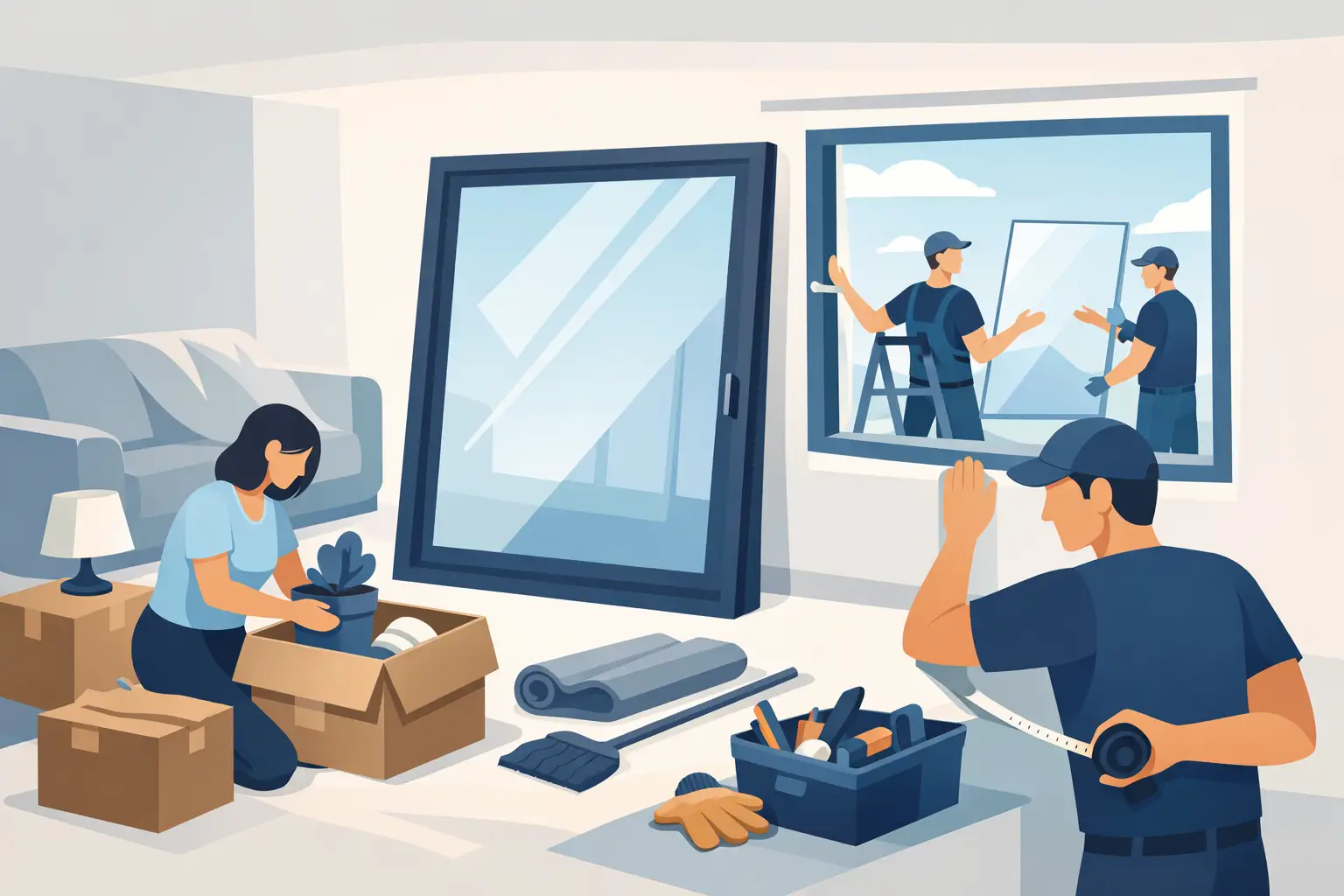
If your window installation date is on the calendar, the work has already started - at least from a homeowner’s point of view. A smooth project depends not just on the crew, but on what happens in your home the day before and the morning of the job. Knowing how to prepare for window installation can help protect your belongings, reduce stress, and keep the work moving on schedule.
Most homeowners are surprised by how much access installers need around each opening. Even when the job is straightforward, the crew still needs room to remove the old unit, set the new one, insulate, seal, and check the fit from both inside and outside. Good preparation makes that easier. It also lowers the chance of damage to furniture, window treatments, landscaping, or flooring.
How to prepare for window installation before the crew arrives
The first step is to clear the work area. Move furniture, lamps, plants, and decorative items away from every window being replaced. A few feet of space is usually enough, but more room helps if the opening is large or difficult to reach. If you have a dining table, bed, sofa, or desk directly under a window, it should be moved ahead of time rather than shifted in a rush when the crew is already at the door.
Take down curtains, blinds, shades, and any curtain hardware if your contractor asks you to. Some installers will handle simple removal, but you should never assume that is included. Fabric treatments collect dust easily, and hardware can get bent or scratched during the work. Removing them in advance is one of the easiest ways to protect them.
Wall hangings near the windows are worth attention too. Installing replacement windows creates vibration. In older homes, especially throughout the North Shore and greater Boston area, that vibration can be enough to shake loose framed pictures, mirrors, or shelves. If something is hanging close to the opening, take it down before installation day.
Floor protection matters as well. A professional crew should bring drop cloths and clean up daily, but homeowners can still help by picking up rugs, small mats, and fragile decor near the path to the work area. Think beyond the window itself. Installers need to carry materials, tools, and removed units in and out of the home, so hallways, stair landings, and entryways should stay open.
Plan for access, noise, and a little disruption
Window replacement is not usually a messy, long-term renovation, but it is active work. You will hear tools, movement, and communication between crew members throughout the day. If you work from home, have a baby who naps on a set schedule, or keep pets that are nervous around strangers, it helps to think through that in advance.
Dogs and cats should be secured away from the work zone. Open windows, unfamiliar people, and repeated trips through doors can make even calm pets anxious. A closed room, crate, or day away from the house can be the safest option depending on the scope of the project.
Children also need a little extra planning. Installers are focused on measurements, glass, trim, and safety. That is not the time for kids to be weaving through the work area. If possible, set up another part of the house as a clear no-work zone.
If your contractor needs access to every window from the inside, make sure an adult decision-maker is available at the start of the project. Questions do come up. Sometimes it is about trim details, small condition issues hidden behind old units, or confirming the final finish approach. Fast answers help keep the day on track.
Outside prep matters more than many homeowners expect
A lot of the work happens from the exterior, so yard access is just as important as interior access. Move patio furniture, grills, potted plants, hoses, and decorations away from the home where the crew will be working. If there are shrubs pressing tightly against the windows, ask your contractor in advance whether they need to be trimmed back.
Vehicles should be moved out of the driveway or away from the immediate work area if that is where materials will be unloaded. This is a simple step, but it can save time and make the setup safer for everyone.
It is also smart to look up. Low-hanging branches can get in the way of ladders and staging. In some cases, they are only a minor nuisance. In others, they can slow the job or make access harder than it needs to be. If tree growth is tight to the home, mention it before installation day so there are no surprises.
For homes with alarm contacts on windows, talk to your alarm company or contractor ahead of time. You may need sensors disconnected and reinstalled. The same goes for window-mounted air conditioning units. These need to be removed before installation day unless your contractor has specifically agreed to handle them.
What not to do the day before installation
One common mistake is leaving every decision for the last minute. If you are still unsure about interior trim, exterior casing details, grid patterns, or finish selections right before the crew arrives, the project can start with unnecessary confusion. Finalize the details ahead of time so installation day is about execution, not backtracking.
Another mistake is overpacking the schedule. If you have a plumber coming, a furniture delivery expected, and school pickup built tightly around the window crew’s arrival, the day can get hectic fast. Give yourself some margin. Good contractors work with a plan, but home projects still go more smoothly when the homeowner is not stretched in three directions.
It is also better not to leave valuable or highly fragile items near the work area, even if they seem far enough away. Professionals are careful, but window installation involves glass, tools, old materials, and movement. If something would be upsetting to damage, move it.
How to prepare for window installation in older homes
Older homes often need a little more care during preparation. Trim may be more delicate, walls may be less even, and hidden condition issues are more common once old windows are removed. That does not mean you should expect problems. It just means a well-run project allows room for craftsmanship, adjustment, and communication.
If you live in an older home in places like Salem, Beverly, or Melrose, ask your contractor what they expect based on the age and style of the house. A straightforward replacement in a newer opening is different from working on a home with settled framing, older trim profiles, or previous patchwork repairs. The better the expectations are set in advance, the less stressful the day feels.
This is one reason many homeowners prefer an experienced local contractor over the lowest bid. Preparation is not only about moving furniture. It is also about working with a team that knows how New England homes are built, how weather affects scheduling, and how to keep the finish work clean when conditions are less than perfect.
Ask these questions before installation day
A little communication goes a long way. Before the job starts, make sure you know what time the crew is expected, which areas of the home they need access to, how long the project is likely to take, and whether someone needs to be home for the full duration.
You should also ask how cleanup will be handled and whether the crew will remove the old windows and debris the same day. Most professional companies do, but it is always better to confirm than assume.
If weather is in the forecast, ask what happens if conditions change. Window installation can continue in cool temperatures, but heavy rain, strong wind, or unsafe ladder conditions may affect timing. A dependable contractor will communicate clearly if the schedule needs to shift.
A smoother project starts with realistic expectations
Even the best installation day is still a construction day. There will be noise, foot traffic, and short periods when openings are exposed during the swap from old to new. That is normal. What matters is that the crew works carefully, protects the home, and keeps you informed.
At US Home Improvement, that kind of preparation and communication has been part of the process for decades because homeowners want more than new windows - they want confidence that the job will be handled the right way from start to finish.
If you take the time to clear access, protect your belongings, plan for pets and kids, and confirm the details ahead of time, the installation itself tends to feel far less disruptive than expected. A little prep on your side gives the crew room to do quality work on theirs - and that is usually what makes the whole project feel straightforward.