A roof choice usually feels simple until the estimates start coming in. Then suddenly you are comparing shingle weights, wind ratings, color blends, warranties, and prices that can vary more than expected. A good roofing materials guide should make that decision clearer, not more confusing.
For homeowners in Massachusetts, the right material is not just about looks. It has to handle snow load, wind-driven rain, temperature swings, and years of coastal and inland weather. It also has to fit the house, the neighborhood, and the budget you are comfortable with. That is why the best choice is rarely the cheapest option or the most expensive one. It is the material that gives you the right balance of performance, appearance, and long-term value.
Roofing materials guide: start with how you live
Before comparing products, start with the house itself. An older colonial, a coastal home exposed to salt air, and a newer suburban build may all need a different answer. Roof pitch matters. Attic ventilation matters. So does how long you plan to stay in the home.
If you expect to move within a few years, one material may make more sense than if this is your forever home. If you are already planning new siding, trim, or gutters, the roof color and profile become even more important. Good planning at the front end saves headaches later.
A detailed quote should account for more than the visible roofing surface. Flashing, underlayment, ice and water protection, ventilation, ridge details, and cleanup all affect how the system performs. Homeowners often focus on the shingle or panel they can see, but the workmanship underneath is what determines whether the roof holds up over time.
Asphalt shingles: the most common choice for a reason
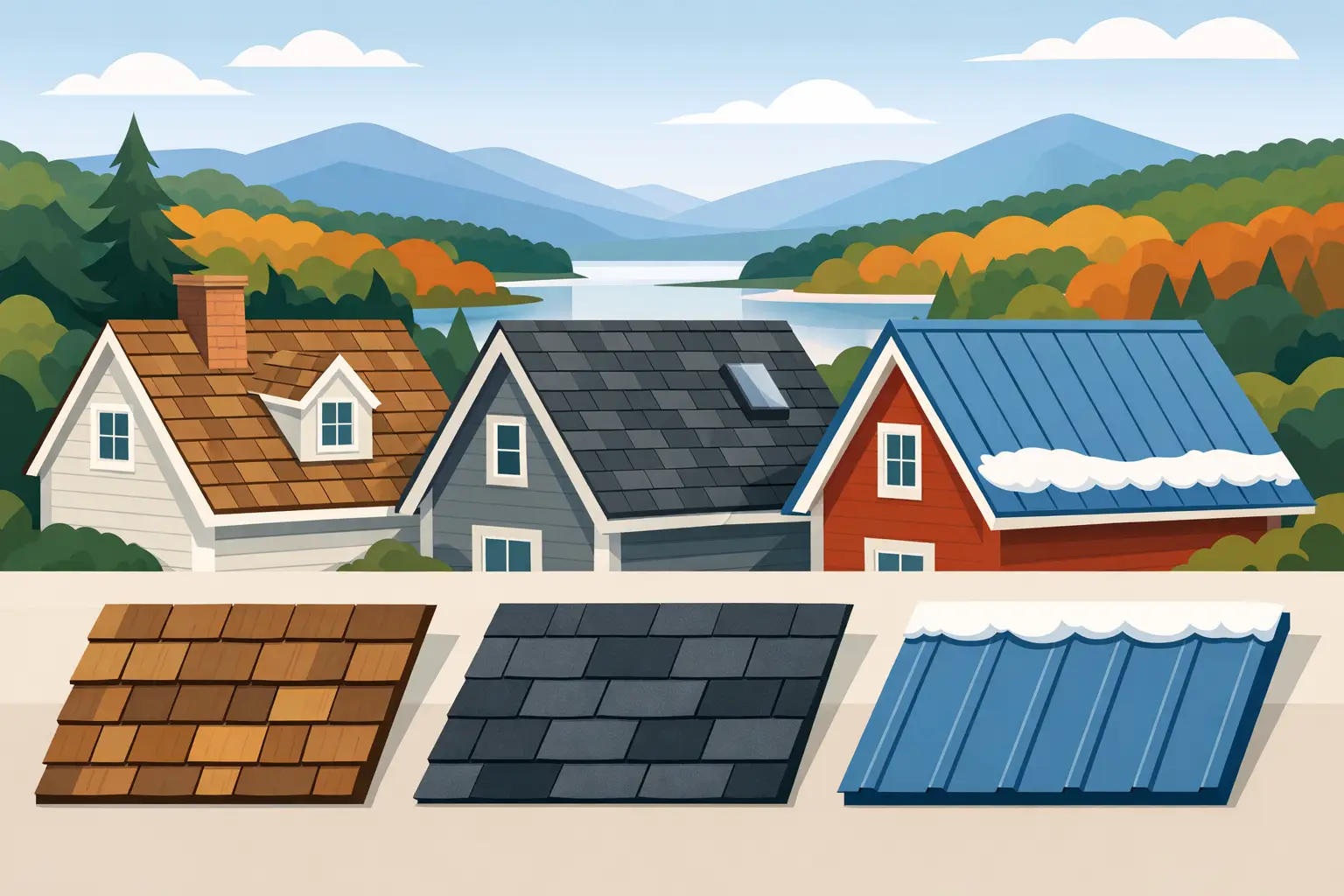
Asphalt shingles remain the go-to material for many homes because they hit a practical middle ground. They are cost-effective, available in a wide range of colors, and suitable for many architectural styles. For most homeowners, architectural shingles offer a stronger look and better durability than basic 3-tab options.
The biggest advantage is value. A well-installed asphalt roof can provide strong weather protection without pushing the project budget into another category. Repairs are usually straightforward, and replacement options are widely available if storm damage affects part of the roof.
The trade-off is lifespan. Even a high-quality asphalt system generally will not match the longevity of premium materials like metal, slate, or tile. In a New England climate, installation quality and attic ventilation also play a major role in how well shingles age. If heat and moisture are trapped, even a good product can wear out early.
For many homeowners, asphalt is the Good or Better choice because it offers dependable performance, strong curb appeal, and reasonable cost. It is often the best fit when you want a quality result without overbuilding for the neighborhood.
Metal roofing: durable, clean-looking, and often misunderstood
Metal roofing has earned more attention in recent years, and not just on barns or modern homes. It can be a sharp-looking option for many property styles, especially when homeowners want longer service life and stronger resistance to severe weather.
A properly installed metal roof is known for durability. It sheds snow well, resists fire, and can hold up strongly against wind. For homeowners tired of replacing standard roofing every couple of decades, that longer horizon can be appealing.
The main hurdle is price. Up-front cost is usually higher than asphalt, sometimes significantly higher depending on the profile and installation requirements. Metal also demands careful detailing. Poor installation can lead to noise concerns, oil canning, or flashing issues around penetrations and transitions.
That is why material alone is not the full story. A metal roof can be an excellent investment, but only when the home, the budget, and the installer are all the right fit.
Cedar shingles and shakes: natural character with more upkeep
Cedar has a warmth and texture that manufactured materials struggle to copy. On the right home, especially in historic or coastal settings, it can look outstanding. It also offers a natural appearance that ages with character.
But cedar is not a low-maintenance choice. It can require more attention over time, and in damp or shaded conditions it may be more vulnerable to moisture-related wear. Fire ratings, local code considerations, and long-term maintenance expectations all need to be reviewed before choosing it.
For some homeowners, cedar is worth it because appearance matters most. For others, it is a case where the beauty on day one does not outweigh the upkeep over the years. This is a classic it-depends material.
Slate and synthetic slate: premium looks, very different realities
Slate is one of the most durable and attractive roofing materials available. On the right property, it delivers a high-end appearance and serious longevity. Many older homes in the greater Boston area were built with premium exterior details, and slate can be a natural fit for that architectural character.
The challenge is weight, cost, and installation complexity. Not every home is structured for natural slate without added support. Repairs and replacements also require specialized skill. It is not a material for rushed work or bargain labor.
Synthetic slate gives homeowners a way to capture much of the look without all the structural demands of natural stone. Depending on the product, it can reduce weight and installation complications while still delivering a premium curb appeal.
Still, not all synthetic products perform the same way. This is where a contractor's experience matters. A good-looking sample board is not enough. You want to know how that product handles weather, fastening, and aging in real conditions.
Rubber and composite roofing for low-slope sections
Not every roof is a simple peak with easy runoff. Porches, additions, dormers, and low-slope sections often need different materials than the main roof. Rubber roofing membranes and composite options can be strong solutions in these areas.
These products are chosen more for performance than appearance, though some newer systems have improved visually. Their strength is water management. On low-slope areas where shingles are not appropriate, the right membrane can prevent chronic leak issues.
This is one place where cutting corners almost always comes back later. If part of your roofline has ponding risk or limited drainage, the installation details matter as much as the material choice.
A practical roofing materials guide for budget decisions
Most homeowners are not choosing between every roofing material on the market. They are usually deciding between a few realistic options based on cost, home style, and expected lifespan. That is why a Good, Better, Best approach works so well.
A Good option may be a dependable architectural asphalt roof that improves curb appeal and protects the home well. A Better option may involve upgraded shingles, stronger warranty coverage, and improved accessory components. A Best option may move into metal, synthetic slate, or another premium material where appearance and longevity justify the higher investment.
There is no shame in choosing the middle lane. In fact, that is often the smartest move. A roof should match the home and the homeowner's goals. Overspending on a material that does not add practical value is not always wise. Neither is chasing the lowest number if it means sacrificing installation quality.
What matters just as much as the material
Homeowners sometimes ask which product is best when the more useful question is who is installing it and how. Even the strongest roofing material can fail early if the crew cuts corners on flashing, ventilation, or cleanup. A roof is a system, not just a surface.
That is especially true in areas like Peabody and the North Shore, where weather can test every weak point. Ice dams, coastal moisture, and freeze-thaw cycles put pressure on roof details that are easy to overlook during the sales process. A careful contractor will talk through those details clearly, not brush past them.
Look for a process that includes a thorough inspection, a detailed written quote, realistic scheduling, and clear communication during the job. Daily cleanup matters too. It is not a small thing when a crew respects your property while the work is underway.
One reason homeowners continue to work with established local contractors is simple: accountability. Companies that have been serving the same communities for decades know their reputation is attached to every project. That kind of consistency still matters.
How to choose without second-guessing yourself
If you feel stuck, narrow the decision to three questions. How long do you want this roof to last. How much maintenance are you comfortable with. How important is the finished look from the street.
Once those answers are clear, the field gets smaller quickly. From there, the right quote should help you compare options in plain English. You should be able to see what changes from one tier to the next and why the pricing changes with it.
A roof replacement is a major investment, but it does not need to feel like a guessing game. The right material is the one that fits your house, holds up in local weather, and is installed by a crew that takes pride in getting the details right.
If you are weighing options now, give yourself room to ask questions and look past the sample board. The best roof decision is usually the one that feels steady, well explained, and built to last.