
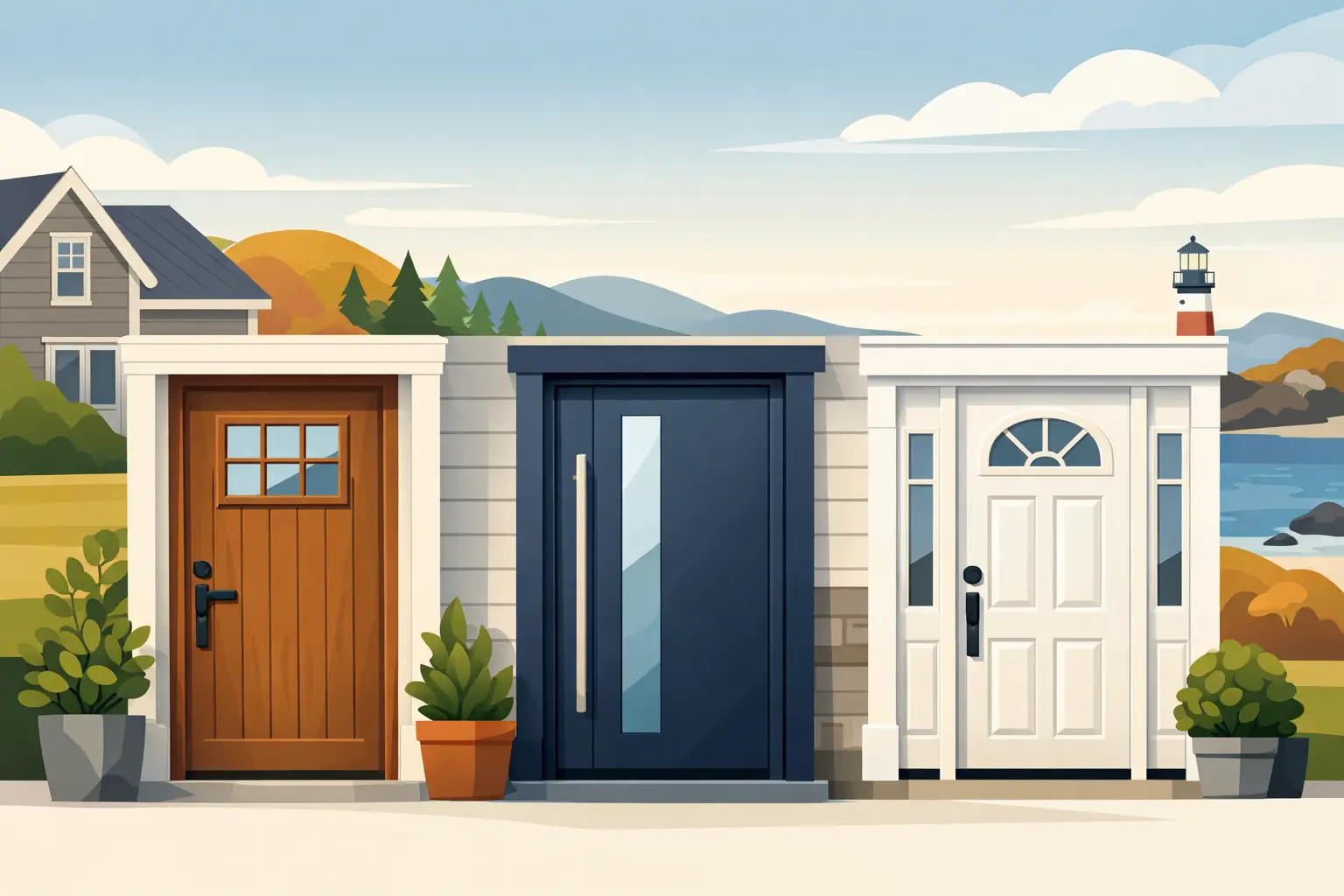
A front door takes more abuse than most homeowners realize. It faces driving rain, summer sun, winter freeze-thaw cycles, muddy boots, package traffic, and daily use that adds up fast. That is why choosing the best front door materials is less about trends and more about how the door will hold up, seal tightly, and look good year after year.
For homes across Massachusetts, that decision usually comes down to three main options: wood, fiberglass, and steel. Each has real strengths. Each also has trade-offs. The right choice depends on what matters most to you - appearance, maintenance, energy performance, security, or long-term value.
What makes the best front door materials?
A good front door should do four jobs well. It should protect the opening, resist weather, help with energy efficiency, and support the look of the home. If one of those areas falls short, the door can become a constant frustration.
In New England, weather resistance matters more than many product brochures let on. Salt air near the coast, heavy moisture, temperature swings, and strong seasonal winds can all shorten the life of the wrong material. A door that looks great in a showroom may not perform the same way after a few winters if it was not the right fit for the home and exposure.
That is also why installation matters just as much as material. Even the best product can underperform if the frame is out of square, the flashing is weak, or the weatherstripping is poorly fitted. Homeowners are usually happiest when the door material and the installation quality are treated as one decision, not two separate ones.
Fiberglass is often the best all-around choice
For many homes, fiberglass ranks at the top of the best front door materials because it balances durability, appearance, and low maintenance better than the alternatives. It does not dent as easily as steel, and it will not swell, warp, or rot like wood can when moisture becomes a long-term issue.
Fiberglass doors have improved a lot over the years. The better versions can mimic wood grain surprisingly well, which gives homeowners the warmer look of a stained wood door without the same level of upkeep. Painted fiberglass also holds up well, making it a flexible option for traditional colonials, capes, newer builds, and more customized facades.
Energy efficiency is another strong point. Many fiberglass doors have insulated cores that help reduce drafts and improve comfort near the entryway. That can matter more than people expect, especially in older homes where front entry areas are already prone to heat loss.
The downside is that not all fiberglass doors are created equal. Lower-end products can look flat or artificial up close, and cheaper hardware or sidelights can drag down the overall performance of the system. If you are considering fiberglass, quality level matters.
Steel front doors are strong and cost-effective
Steel is usually the practical choice for homeowners who want solid security, good energy performance, and a lower upfront cost. In many cases, a steel door gives you a dependable, clean-looking entry without stretching the budget as far as premium fiberglass or custom wood.
A steel door typically has an insulated core, which helps with efficiency. It also offers strong resistance to forced entry when paired with a quality frame and lockset. For homeowners focused on function first, that makes steel a very sensible option.
There are trade-offs, though. Steel can dent, and once it does, repairs are not always simple. If the finish gets scratched down to bare metal, rust can become a problem over time. That is especially worth considering in coastal areas or on entries with lots of exposure to wet weather.
Steel also tends to offer a more straightforward look. It works well on many homes, but it usually does not deliver the same high-end appearance as a well-made fiberglass or wood door. If curb appeal is a major priority, steel may feel a little limited unless you choose the style carefully.
Wood doors still have unmatched character
If the goal is natural beauty, wood remains one of the best front door materials available. A real wood door has depth, warmth, and detail that other materials still work hard to imitate. On historic homes or architecturally distinctive properties, wood can be the right visual choice.
Wood is also highly customizable. It can be crafted in a wide range of sizes, panel designs, glass layouts, and species. For homeowners restoring an older home or trying to preserve a certain look, that flexibility can be hard to beat.
The challenge is maintenance. Wood needs regular attention to protect it from moisture, sun exposure, and movement caused by changing humidity. Without consistent finishing and upkeep, a wood door can crack, swell, stick, or begin to deteriorate. Even a beautiful wood door can become a headache if the exposure is harsh and maintenance slips.
That does not mean wood is a bad choice. It means wood is the right choice for homeowners who understand the commitment and want the look badly enough to maintain it. On a covered entry with proper protection, wood can perform much better than it would in a fully exposed opening.
Best front door materials by homeowner priority
If you want the most balanced overall performance, fiberglass is hard to beat. It suits the widest range of homes and gives you strong durability with relatively little upkeep.
If budget and security are leading the decision, steel deserves a close look. It performs well for the price and makes sense for many straightforward replacements.
If architectural character matters most, wood still stands apart. It offers the richest appearance, but it asks more from the homeowner in return.
This is where a Good, Better, Best approach can help. Rather than searching for one universal answer, it makes more sense to compare materials based on your home, your budget, and how much maintenance you are realistically willing to take on.
Don’t overlook glass, frame quality, and exposure
Material matters, but the full door system matters more. Decorative glass can elevate the look of an entry, but it can also affect privacy, energy performance, and cost. Modern insulated glass options perform far better than older products, but more glass still changes how the door behaves.
The frame and sill are just as important. If those components are poorly built or poorly installed, drafts and water problems can show up long before the door slab itself fails. Homeowners often blame the material when the real issue is the surrounding system.
Exposure should also guide the choice. A front door under a deep porch has very different demands than one facing direct coastal wind and rain. In places around the North Shore, that difference is not minor. It can change which material gives you the best long-term value.
Style should support the house, not fight it
The best front door materials are not just about durability. They also need to make sense for the home. A sleek, modern slab door can look excellent on a contemporary exterior and completely out of place on a traditional colonial. The same goes for ornate glass or overly rustic textures.
A good front door should feel like it belongs there. That usually means considering panel layout, glass placement, hardware finish, and color alongside the material itself. Homeowners tend to be happiest when the door improves curb appeal without looking like a replacement chosen in isolation.
This is one reason professional guidance helps. Sometimes the best material on paper is not the best fit once you account for the style of the house, the amount of weather exposure, and the budget for the full opening.
So which material should you choose?
If you want the safest recommendation for most homes, start with fiberglass. It offers the strongest mix of durability, efficiency, low maintenance, and design flexibility. For many homeowners, it is the most practical long-term investment.
If you need to control cost and still want reliable performance, steel is a smart option. If you want the richest traditional appearance and are comfortable with upkeep, wood remains a strong premium choice.
A well-chosen front door should feel solid, close cleanly, and look right every time you pull into the driveway. The right material gets you there, but the real payoff comes from choosing a door system that fits your home, your climate, and the way you actually live. Since 1978, US Home Improvement has seen that the best results come from matching craftsmanship to the house, not forcing the house to fit the product.