
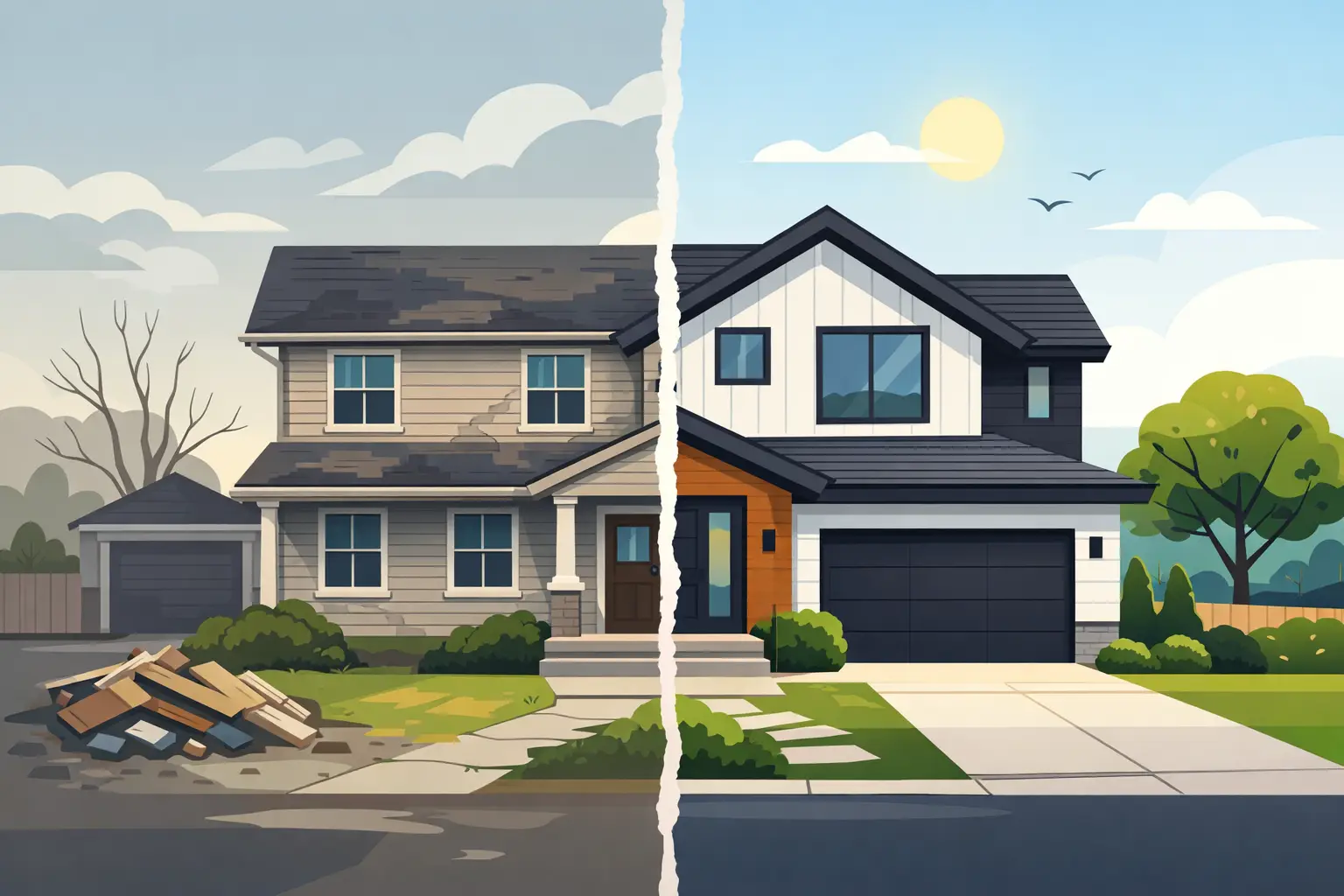
A full exterior remodel before-and-after project is about more than a striking set of photos. It shows what happens when separate problems - tired siding, aging roofing, drafty windows, a worn deck, and poor drainage - are handled as one coordinated plan. The finished home may look dramatically different, but the real value is in the work behind the finished surface: protecting the structure, managing water, improving comfort, and giving the property a clean, finished look that holds up.
For homeowners across Peabody and the Northshore, this approach can make particular sense. New England weather is hard on every exterior component. A roof, siding system, gutters, doors, and trim all need to work together through wind-driven rain, snow, freeze-thaw cycles, and humid summers. Addressing them in the right order helps avoid rework and gives the home a more consistent result.
What a Full Exterior Remodel Before and After Really Shows
The "before" side often starts with visible concerns: faded or cracked siding, shingles near the end of their useful life, peeling trim paint, stained gutters, or a deck that no longer feels safe or inviting. Those signs matter, but a careful exterior assessment goes further. A contractor should look for soft wood around windows and doors, flashing issues, poor roof drainage, loose trim, and areas where previous repairs were pieced together rather than properly integrated.
The "after" should not simply be a new color and cleaner lines. It should show a home with a coherent exterior system. Roof edges direct water into properly pitched gutters. Flashing is installed where rooflines, walls, windows, and doors meet. Siding and trim are finished cleanly around openings. New windows or doors are installed with the details needed to manage moisture, not just make the opening look better from the street.
That difference is why the best before-and-after transformations can feel so substantial. They solve the small issues homeowners have learned to live with: a cold room by the front door, overflowing gutters near the foundation, trim that needs repainting every few years, or a porch that has become unusable.
Start With the Problems That Can Cause Damage
A full remodel does not always mean replacing every exterior item. It means evaluating the house as a whole and putting the right work first. If the roof is leaking or its flashing has failed, roofing belongs ahead of cosmetic siding or paint work. If water is backing up because gutters are undersized or improperly pitched, that drainage issue needs attention before repairing damaged fascia or repainting trim.
This is where a detailed quote is useful. Homeowners should be able to see what is included, what is being repaired, what materials are proposed, and where options affect the final price. A Good, Better, Best approach can help compare durable solutions without forcing one-size-fits-all decisions.
For example, a homeowner may choose to replace a failing roof and gutters now, then add siding and new exterior doors in the same project if the budget allows. Another may have sound roofing but need new windows, siding replacement, and upgraded porch trim. The right scope depends on the condition of the home, the homeowner's plans, and what will prevent future disruption.
Plan the Work in the Right Sequence
Order matters on exterior projects. Installing a new deck before major siding work can create unnecessary complications. Repainting trim before replacing windows can mean paying to redo finish work. A coordinated crew schedule reduces those conflicts and keeps the site moving.
In many cases, the work proceeds from the top down and from weather protection to finish details. Roofing, flashing, and drainage are commonly handled first. Window and door openings can then be addressed, followed by siding, exterior trim, painting, and deck or porch finishing. The exact sequence changes with the house, but the goal stays the same: each finished component should protect and support the next one.
A reliable contractor also plans around realities that do not show up in a glossy project photo. Material lead times, permit requirements, weather delays, hidden rot, and access to the property can all affect timing. Clear communication is not an extra. It is part of professional project management. Homeowners deserve to know what is happening, what is next, and what decisions may be needed along the way.
Choose Materials for the House and the Weather
The most expensive choice is not always the best choice, and the lowest bid can leave out the details that protect the work. Material selection should fit the style of the house, the maintenance level the homeowner wants, and the exposure of the property.
Vinyl siding can offer a clean, low-maintenance finish and strong value for many homes. Fiber cement can be a good fit for homeowners who want a more traditional painted appearance, though it comes with different installation and maintenance considerations. Wood trim may be appropriate for certain architectural details, while composite trim can reduce upkeep in high-exposure areas. Roofing, window, door, and decking choices should be considered with the same care.
Color also deserves more thought than many homeowners expect. A deep siding color with bright white trim can sharpen a colonial or cape, while softer neutral combinations may suit a coastal home in Marblehead, Swampscott, or Beverly. Dark colors can create a bold look, but they may show dust, salt residue, or sun fading differently than lighter choices. Samples should be viewed outdoors at different times of day, not only under indoor lighting.
Do Not Let Curb Appeal Hide Poor Detail Work
A dramatic exterior transformation can make it tempting to focus only on color, shutters, lighting, or a new front door. Those finishing choices matter, especially when they give the home a more welcoming entry. But craftsmanship shows up in the close details.
Look at how trim aligns across windows. Check that siding courses are straight and transitions are clean. Ask how water will be directed away from vulnerable areas. Pay attention to the condition of fascia, soffits, porch columns, and deck framing, not just the visible boards. A clean finish is the result of good preparation, careful installation, and crews who take pride in the last ten percent of the job.
Daily cleanup matters, too. Exterior remodeling can be disruptive, particularly when multiple trades are working around a home. Organized material storage, safe work areas, and a site that is cleaned at the end of the day make the process easier for the people living there.
Set a Budget That Protects the Project
A full exterior project is a significant investment, so it is reasonable to look closely at cost. The goal is not to spend without limits. It is to avoid cutting the items that prevent water damage, shorten the life of new materials, or create a second project soon after the first one.
Set aside a contingency for conditions that cannot be confirmed until old materials come off. Damaged sheathing, rotten framing around a window, or failed flashing may not be visible from the driveway. A professional should explain how these discoveries are handled before work begins, including who approves changes and how pricing is documented.
It can also be smart to phase the work when the full scope is beyond the current budget. The key is to create a long-range plan first. A homeowner who knows future siding replacement is coming can make roofing and window choices now that will work with that later phase instead of fighting it.
The Best After Is One You Can Trust
The strongest full exterior remodel before-and-after result is not defined by a single reveal day. It is the home that feels solid in the next storm, stays comfortable through winter, sheds water where it should, and still looks carefully finished years later.
Since 1978, US Home Improvement has helped local homeowners plan exterior work with that standard in mind: clear options, skilled in-house crews, daily attention to the jobsite, and accountability for the final result. Take the first step with an on-site assessment. A thoughtful plan now can turn a collection of exterior concerns into a home you are proud to come back to every day.