
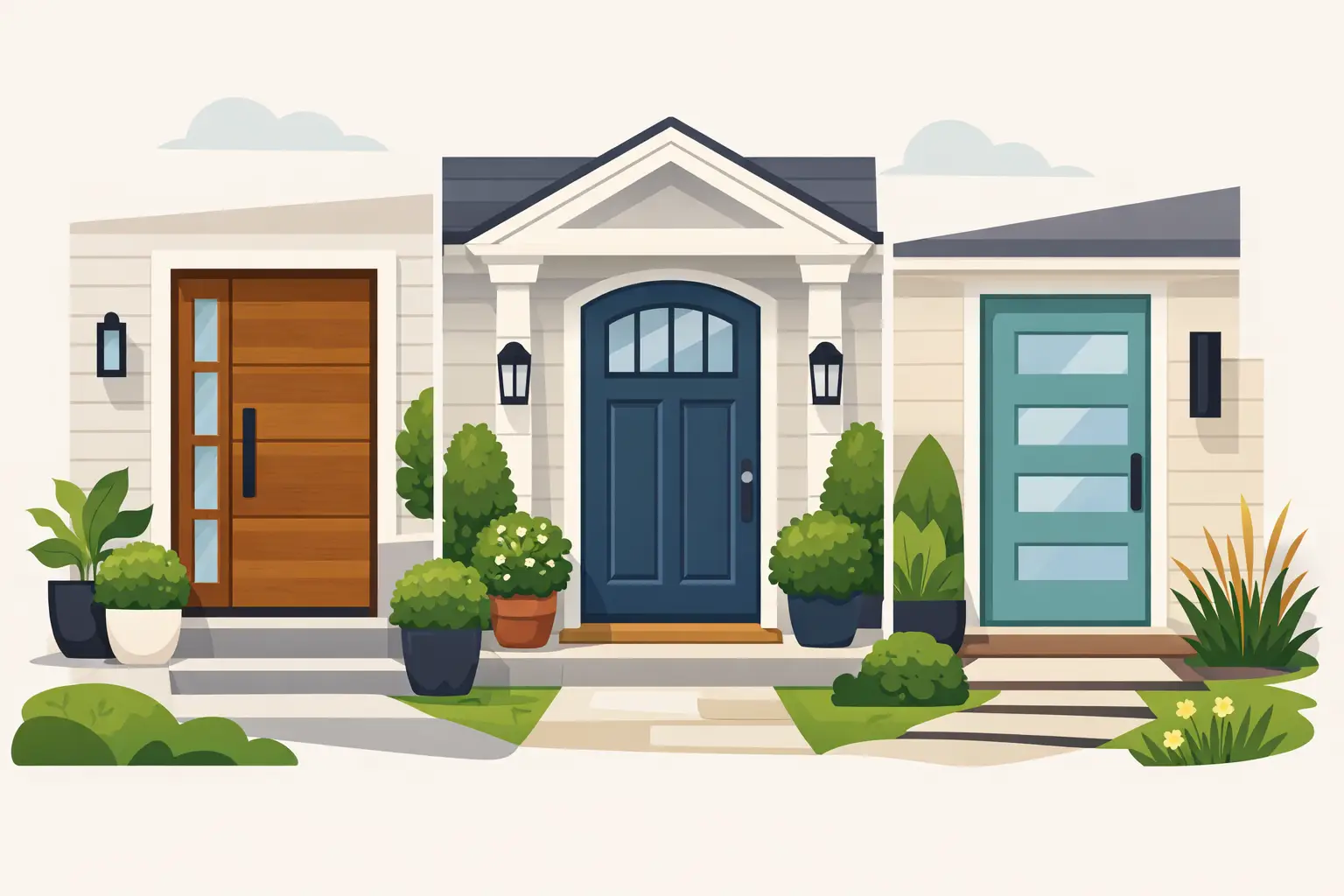
Your front door has a small footprint, but it does a great deal of visual work. It sets the tone before anyone notices the siding, landscaping, or new windows. The best front doors for curb appeal do more than look attractive in a showroom. They suit the home’s architecture, hold up through New England weather, and make the entry feel intentional from the street.
For homeowners planning an exterior update, a door should not be chosen by color alone. Material, glass, scale, hardware, trim, and installation all affect the finished result. A beautiful door that is poorly fitted, underinsulated, or out of proportion with the house will not deliver the long-term value most homeowners expect.
Start With the Style of Your Home
The right door usually supports the character already present in the house. It does not have to be a perfect historical match, but it should look like it belongs there.
A traditional Colonial, Cape, or Federal-style home often looks best with a six-panel, four-panel, or simple raised-panel door. A painted door in deep navy, classic black, red, or muted green can add personality without overwhelming the facade. If the entry is dark, a modest amount of divided-light glass can bring in daylight while keeping the look appropriate.
For a Craftsman-style home, consider a door with a solid lower section and small glass panes across the top. Natural wood tones, warm stains, and square-profile trim complement the straightforward craftsmanship of this style. On a ranch or mid-century home, a flush or lightly grooved door with clean lines can look sharper than an ornate panel design.
Contemporary homes give you more freedom with full-height glass, horizontal lines, or bold colors. The key is restraint. If the siding, roofline, and windows are already visually busy, a simpler front door often creates a stronger first impression.
Choose a Material That Can Handle the Job
Curb appeal matters, but a front entry door is also a working exterior component. It needs to resist drafts, moisture, temperature swings, and daily use. In Peabody and across the Northshore, that means choosing a material suited to snowy winters, humid summers, and coastal air where applicable.
Fiberglass offers the best all-around balance
Fiberglass is often the practical choice for homeowners who want the look of wood without wood’s regular maintenance demands. Quality fiberglass doors can be smooth for a painted finish or textured to resemble real wood grain. They resist warping, denting, rot, and moisture better than natural wood in exposed locations.
They are also available in many panel layouts, sidelights, transoms, and decorative glass options. That flexibility makes fiberglass a strong fit for everything from a classic Colonial entry to a more updated home. It is rarely the least expensive option, but it can be an excellent Better or Best investment when durability and appearance are equally important.
Steel delivers strength and value
A steel entry door can provide a clean, crisp look at a more accessible price point. It is strong, secure, and typically energy efficient when properly insulated. Steel is a smart choice for a protected front entry, a side door, or a homeowner who wants a painted finish with a straightforward design.
The trade-off is that steel can dent, and scratches should be addressed promptly to prevent rust. It also may not provide the same depth of detail as a premium fiberglass or wood door. Still, a well-installed steel door with quality trim, hardware, and paint can significantly improve a home’s street presence.
Wood brings unmatched character, with more upkeep
Nothing quite replaces the warmth and detail of a real wood door. Wood can be stained, shaped, and customized in ways other materials cannot fully duplicate. It is especially compelling on historic homes, high-end traditional properties, and entries where authenticity is central to the design.
However, wood needs a protected location and a commitment to maintenance. Sun, rain, and changing temperatures can affect the finish over time. A deep overhang helps. Without one, homeowners should expect periodic refinishing to keep the door looking its best. Wood is a great choice when it is selected with clear expectations, not simply because it looks good on day one.
Use Glass to Add Light Without Giving Up Privacy
Glass can make a front entry feel larger and more welcoming, especially when the foyer lacks natural light. It can also add curb appeal by breaking up a large wall of siding or brick around the entry.
The right amount of glass depends on your home’s layout and privacy needs. Clear glass works well when the entry faces a landscaped front yard or sits back from the road. For homes closer to the sidewalk or street, textured, frosted, or decorative glass allows light in while limiting direct views indoors.
Sidelights are particularly effective on wider facades because they create a more substantial entry. They can also make a standard-size door feel more generous. Keep in mind that more glass can mean less insulation than a solid door, although modern insulated glass packages perform far better than older units. For an exposed entry, choose energy-efficient glass and make sure the surrounding frame is built and sealed correctly.
Color Should Create Contrast, Not Chaos
A front door is one of the easiest places to use color with confidence. The most successful choices create enough contrast to be noticed without fighting the rest of the exterior.
Black remains popular because it works with nearly every siding color and pairs easily with brass, bronze, black, or nickel hardware. Navy, charcoal, forest green, and deep red are also dependable options for traditional homes. A warm wood stain can soften white, gray, blue, or neutral siding while adding texture to the facade.
Before selecting a color, look at the fixed elements you are not changing: roofing, brick, stone, shutters, window frames, and porch flooring. Paint samples can look different between morning and late afternoon, especially on a north-facing entry. Test a sample outside and view it from the curb, not just from a few feet away.
Hardware and Trim Finish the Design
Door hardware is a small detail that carries a lot of visual weight. A basic knob can make even a premium door feel unfinished, while a well-proportioned handle set gives the entry a more substantial, welcoming appearance.
Choose hardware that suits the home. Traditional entries often benefit from a classic handle set in satin nickel, oil-rubbed bronze, or aged brass. Modern homes may call for a simple rectangular pull or a clean black finish. Match the finish thoughtfully with nearby lighting, house numbers, and railings, but do not feel obligated to make every metal identical. Coordinated is better than overly matched.
Trim matters just as much. Wider, well-detailed casing can make a standard door look custom, while rotted or undersized trim can pull attention away from a new door. If you are replacing siding, windows, or porch components at the same time, plan the entry as part of the whole facade rather than as a separate purchase.
Installation Protects Both Appearance and Performance
A front door can be well made and still disappoint if it is not installed properly. An entry system needs to be level, plumb, square, flashed correctly, and sealed against weather. It also needs the right threshold, sweep, and weatherstripping to prevent drafts and water intrusion.
This is where a detailed site assessment pays off. Older homes around Greater Boston often have openings that are not perfectly square, hidden framing issues, or exterior trim that needs repair before a new door can be installed correctly. A reliable contractor should explain those conditions clearly, provide options where appropriate, and finish the surrounding work cleanly.
At US Home Improvement, the goal is not simply to put a new door in an opening. It is to help homeowners select an entry system that fits their home, their budget, and the way they want the exterior to feel for years ahead.
The Best Front Doors for Curb Appeal Fit the Whole House
There is no single best front door for every property. A fiberglass door may be the right answer for a busy family seeking low maintenance, while a carefully finished wood door may be worth the extra care on a historic home. A steel door can be an excellent value when the design and installation are handled with care.
Start with the home you have, then choose the door that improves it without pretending to be something else. When the material, style, color, glass, trim, and installation work together, the front entry becomes more than a replacement project. It becomes the part of the house that welcomes you home every day.