
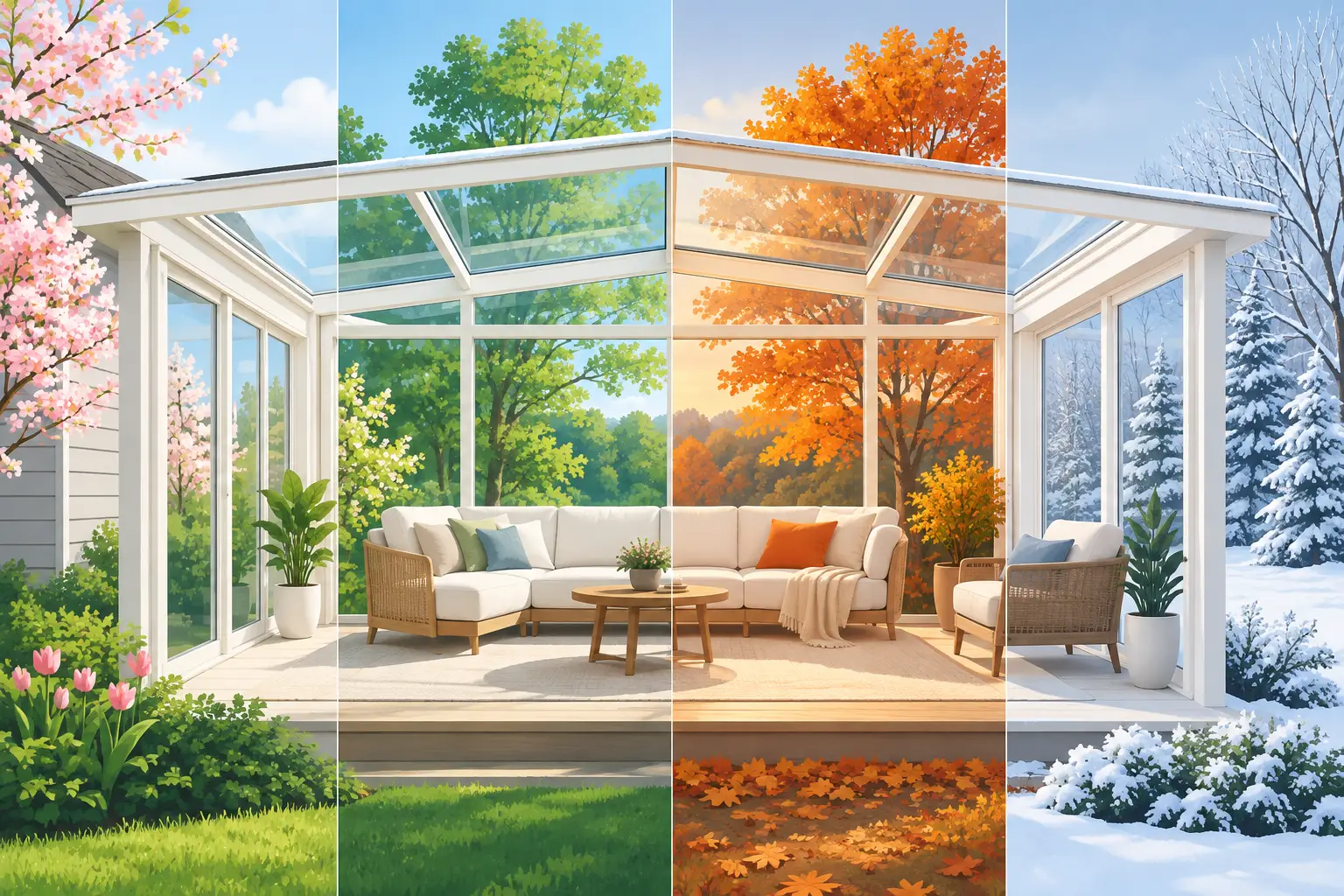
A sunroom can look beautiful in a brochure and still disappoint when the first February cold snap arrives. That is why a useful four season sunroom review has to look past the glass, the furniture, and the first impression. The real question is whether the room will feel comfortable, function well, and hold up through years of New England weather.
For many homeowners, a four season sunroom is not simply an add-on. It is a way to gain a bright breakfast space, a quiet reading room, a place for family gatherings, or a better view of the yard without giving up the comfort of the house. When it is planned and built correctly, it can become one of the most-used rooms in the home. When corners are cut, it can become a room that is too hot in July, too cold in January, and costly to fix.
What Makes a Sunroom a True Four Season Room?
The term "four season" is used broadly, so homeowners should ask for specifics. A true four season sunroom is designed to be used throughout the year, not just during mild spring and fall weather. That usually means insulated framing, high-performance windows, an insulated roof system, careful flashing, and a reliable plan for heating and cooling.
The most important detail is that the room works as part of the home rather than as a separate glass box. Its foundation, structure, insulation, and connection to the existing house all matter. A room with excellent windows can still be uncomfortable if the floor is uninsulated, the roof loses heat, or air leaks around the transition to the house.
In the Boston area and along the Northshore, this distinction matters. Snow loads, wind-driven rain, ice, humidity, and changing temperatures demand more than a seasonal enclosure. A well-built room should be engineered for local conditions and tied into the home with the same care given to a major exterior renovation.
Four Season Sunroom Review: The Honest Benefits and Trade-Offs
A four season room offers real benefits, but it is a more involved investment than a screened porch or three season addition. The right choice depends on how you expect to use the space, how long you plan to stay in the home, and what the existing structure can support.
The biggest advantage: everyday usable space
The main value is flexibility. A properly conditioned sunroom can serve as a sitting area in winter, a home office with natural light, a playroom, or a gathering space when family visits. It can make a modest backyard feel more connected to the home and give homeowners a comfortable place to enjoy a view in every season.
That extra usability is what separates it from a three season room. A seasonal room can be an excellent choice for fresh air and fair-weather entertaining. But if you picture yourself having morning coffee there in January or using the room after sunset on a cold November evening, a four season design is the more realistic fit.
The trade-off: higher upfront cost and more planning
Four season construction costs more because it requires better-performing materials and more detailed work. The project may involve a foundation or structural support, electrical work, HVAC considerations, window and door choices, roof integration, permits, and finish carpentry. The exact investment varies widely with size, site conditions, roofline, finishes, and whether the room is a prefabricated system or a custom-built addition.
The lowest quote is rarely the best comparison. Homeowners should look at what is included: insulation levels, window performance, structural work, drainage, trim, permits, interior finishes, and cleanup. If one estimate appears dramatically lower, it may leave out work that will later become a change order.
Comfort depends on the full system
High-quality glass helps, but it is not the entire comfort plan. South- and west-facing walls can receive intense afternoon sun. In winter, even efficient windows lose more heat than insulated walls. Heating and cooling equipment must be sized for the room, and the existing system may not have enough capacity to handle the added load.
Depending on the design, a dedicated mini-split, radiant floor heat, or an extension of the home’s HVAC system may be appropriate. Window shades, ceiling fans, roof overhangs, and thoughtful orientation can also make a meaningful difference. The best answer is not always the most expensive one. It is the one that fits the room’s exposure, size, and intended use.
Where a Four Season Sunroom Delivers the Most Value
A four season sunroom tends to make the most sense when it solves a clear need. Perhaps the family wants more gathering space but does not need a full kitchen addition. Perhaps a homeowner wants a bright, accessible room on the main level. Or perhaps the home has a deck or patio that is rarely used because of bugs, rain, or cold weather.
It can also be a strong lifestyle upgrade for homeowners who value their property and plan to stay for years. While no contractor should promise a dollar-for-dollar return at resale, a well-designed sunroom can improve how a home lives every day. Buyers often respond positively to bright, finished space that feels intentional and well maintained.
Design matters here. A sunroom that complements the home’s siding, trim, rooflines, and window style will usually feel like it belongs. One that looks tacked on may not offer the same long-term appeal. This is where experienced carpentry and exterior remodeling work are especially valuable: the new room needs to perform well, but it also needs to look right from every angle.
Questions Your Quote Should Answer
A detailed quote is one of the clearest signs that a contractor has thought through the project. Before moving ahead, homeowners should be able to understand the scope without guessing what happens next. Ask how the room will be supported, how it will be weatherproofed, and how the contractor will connect the new roof and walls to the existing home.
The proposal should also clarify these practical items:
- What windows, doors, insulation, roofing, and exterior finishes are included?
- How will heating, cooling, electrical work, and lighting be handled?
- Who is responsible for permits, inspections, and any engineering requirements?
- What is the expected schedule, and how will the crew protect the property and clean up each day?
It is also smart to ask how water will move away from the addition. Gutters, roof transitions, flashing, and grading may not be the most exciting parts of a sunroom project, but they are among the most important. Water problems often come from details that were overlooked at the start.
Choosing Between Good, Better, and Best
Not every home needs the highest-end version of every feature. A good plan starts with the non-negotiables: structural integrity, weather protection, quality installation, and a heating and cooling strategy that works. From there, homeowners can decide where upgrades add value for their situation.
For example, upgraded glass may be worthwhile on a wall that gets strong afternoon sun. Premium interior finishes may make sense if the room will be used for entertaining. A simpler layout may be the better investment if the goal is a quiet place to enjoy the backyard. A contractor should be able to explain those choices clearly, rather than pushing a one-size-fits-all package.
At US Home Improvement, that is the purpose of a detailed, tiered conversation: help homeowners match the project to their goals and budget while protecting the quality of the work behind the walls and under the roof. After serving local homeowners since 1978, the standard remains straightforward: build it carefully, communicate clearly, and stand behind the result.
Is a Four Season Sunroom Right for Your Home?
A four season sunroom is worth serious consideration if you want a genuinely usable room, not just a sheltered outdoor area. It is especially appealing when the home has a view, a well-used backyard, or a need for more everyday living space without the scale of a full addition.
It may not be the best choice if you only want occasional summer use, have a limited budget, or prefer the open-air feel of a screened porch. In those cases, a three season room or porch enclosure can be a smarter and more cost-conscious fit.
The best next step is an on-site conversation that looks at your home, your roofline, your sun exposure, and the way your family will use the room. A well-planned sunroom should not feel like an expensive compromise. It should feel like the room your home was missing.