
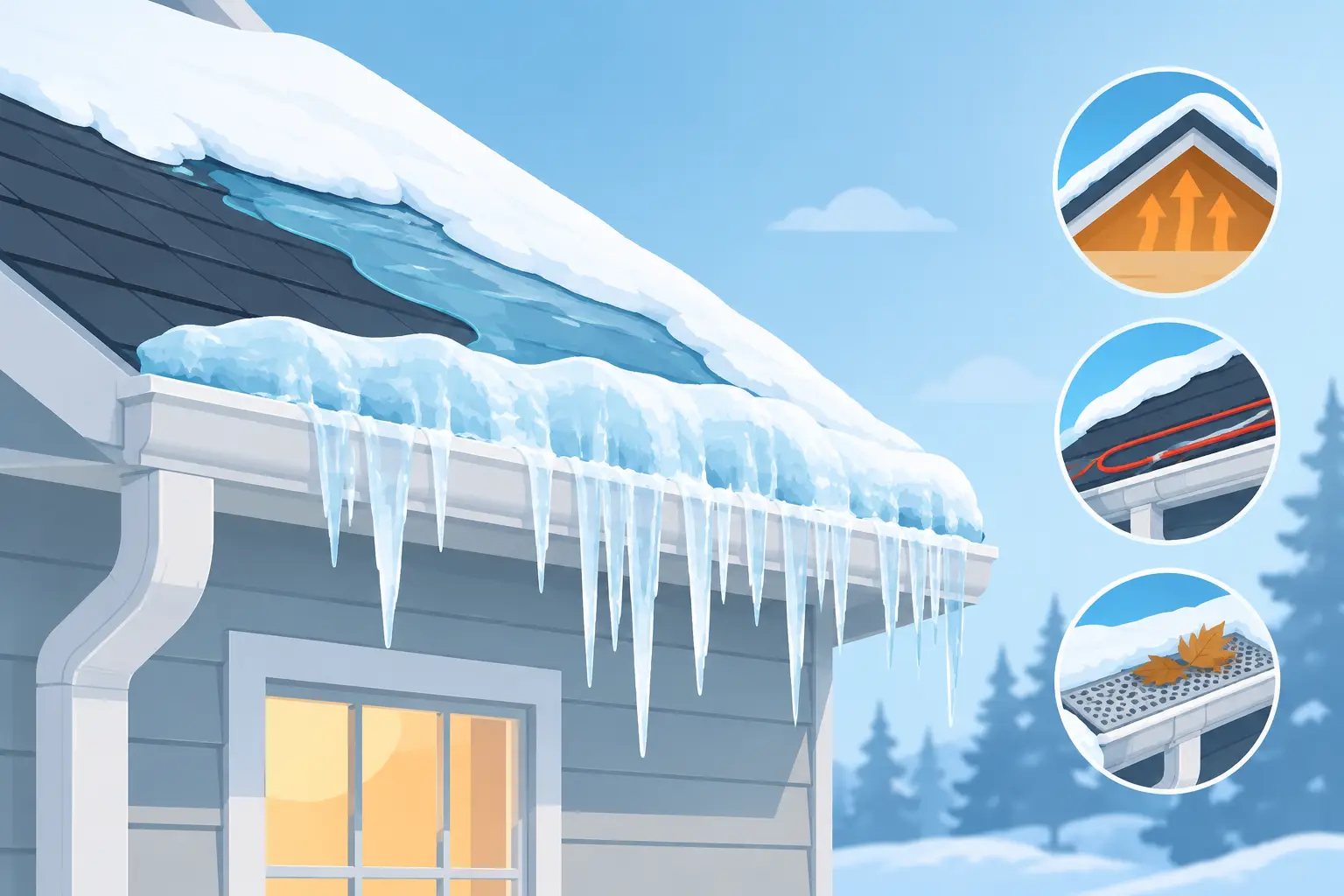
A thick ridge of ice at the edge of a roof may look like a normal New England winter problem. It is not. Ice dams can force melting water back beneath shingles, soak roof decking and insulation, stain ceilings, and pull gutters loose under added weight. By the time water appears inside, the issue may have been building for days.
For homeowners in Peabody and across the North Shore, the right response is not simply to chip away at the ice. The real fix begins with understanding why the roof is melting snow unevenly - and addressing the conditions that allow water to refreeze at the eaves.
What Causes Ice Dams?
Ice dams form when the upper portion of a roof is warmer than the roof edge. Snow on the warmer area melts and runs downhill. When that water reaches the colder overhang, it freezes. As the ice ridge grows, it blocks the path of later meltwater. The water then pools behind the dam and can work its way under shingles.
The key word is unevenly. Snow alone does not create a damaging ice dam. A consistently cold roof can hold snow without trouble. Problems begin when heat escapes from the living space or attic and warms sections of the roof deck.
Common contributors include inadequate attic insulation, gaps around light fixtures or plumbing penetrations, poorly sealed attic hatches, ductwork leaking warm air, and insufficient attic ventilation. Complex rooflines can also make matters worse. Valleys, dormers, skylights, and low-pitch sections collect snow and direct more water toward vulnerable areas.
Older homes are especially likely to have a patchwork of insulation and air sealing from past renovations. One area may be well insulated while another allows heat to escape freely. That difference can show up clearly after a snowfall: bare spots or fast-melting snow on one section of the roof are often signs worth investigating.
Why Ice Dam Damage Can Spread Quickly
Roofing materials are designed to shed water downward. They are not designed to hold standing water that is pushed uphill beneath the shingles. Once meltwater gets under the roof covering, it may wet the roof deck, underlayment, fascia boards, and framing.
Inside the home, the first warning may be a yellow ceiling stain, peeling paint near an exterior wall, a damp window casing, or water dripping from a recessed light. Waiting for a larger leak is a costly gamble. Wet insulation loses effectiveness, wood can deteriorate, and trapped moisture can create conditions for mold.
Gutters are also at risk. A gutter packed with ice can become extremely heavy, especially when more snow and meltwater accumulate above it. Fasteners can pull away from the fascia, sections can bend, and water may spill over the gutter and freeze on walkways below.
There is another trade-off homeowners sometimes miss: a roof may appear to be handling winter well because there is no indoor leak, while ice is quietly damaging trim, gutters, or the lower roof edge. A careful exterior inspection after storms is often more useful than waiting for an obvious interior symptom.
What to Do When You See Ice Dams
The priority is to reduce the immediate risk without damaging the roof or putting anyone in danger. Do not climb onto an icy roof. Do not use an axe, hammer, chisel, or metal shovel to break the ice. These methods can crack shingles, puncture roofing materials, damage gutters, and cause serious injury.
If it can be done safely from the ground, use a roof rake with a long handle to pull loose snow down from the lower few feet of the roof. Removing snow near the eaves reduces the amount of water available to feed the dam. Work gently, and do not scrape the roofing surface. A roof rake is a short-term measure, not a cure for a warm attic.
For active leaks, move furniture and valuables away from the affected area, collect dripping water, and document visible damage with photos. If a ceiling is bulging with water, treat it as a safety concern. Water can add significant weight, and there may be electrical hazards nearby. Contact a qualified roofing professional promptly rather than attempting a risky repair in freezing conditions.
Professional steam removal can be appropriate when a dam is severe or water intrusion is underway. Steam can remove ice with far less risk to shingles than chopping. It is a targeted emergency service, however, not a substitute for correcting the heat loss and ventilation issues that caused the dam.
Avoid Temporary Fixes That Create Bigger Problems
Rock salt, calcium chloride, and similar products are often suggested as quick fixes. Chemical de-icers can sometimes create channels through ice, but they should be used cautiously and only as directed. Many products can harm landscaping, discolor materials, or corrode metal components. They also do not solve the underlying condition.
Electric heat cables are another option that requires judgment. Properly installed cables can help manage known trouble spots, such as a difficult valley or a roof transition. But they consume electricity, need routine inspection, and can become a crutch when attic heat loss remains unaddressed. On many homes, investing in air sealing and insulation delivers a more durable result.
Preventing Ice Dams Starts in the Attic
The best defense is to keep the roof deck as close to the outdoor temperature as practical. That usually means controlling heat loss from below and allowing the attic to move moisture and excess heat out effectively.
Seal air leaks before adding more insulation
Insulation slows heat flow, but it does not stop air movement. Warm air leaking into an attic carries heat and moisture with it. Before simply adding another layer of insulation, identify and seal common leakage points: openings around wiring and pipes, gaps around chimneys using appropriate fire-safe materials, unsealed attic access panels, and penetrations for fans or recessed lights.
This work needs care. Attics may contain exposed wiring, old insulation, restricted access, or ventilation pathways that should not be blocked. A thoughtful evaluation helps distinguish between a simple insulation upgrade and a more involved building-envelope correction.
Maintain proper attic ventilation
Ventilation works together with air sealing and insulation. Soffit intake vents and ridge or high-level exhaust vents create a path for air to move through the attic. That airflow helps remove moisture and keeps the roof deck colder in winter.
Ventilation alone will not fix major heat loss. In fact, adding more roof vents without addressing warm air leaking into the attic can leave the basic problem unresolved. The right approach depends on the roof design, attic layout, insulation depth, and whether existing vents are clear and balanced.
Check the roof system while conditions are dry
A winter leak is not always caused by an ice dam. Worn shingles, failed flashing, damaged pipe boots, loose gutters, and aging underlayment can all allow water into the home. Once snow and ice are gone, a professional roof assessment can identify weak points that are difficult to see from the ground.
For a roof replacement, details matter. A properly installed ice and water barrier at vulnerable eaves and transitions provides a valuable secondary layer of protection if meltwater backs up. It is not a license to ignore insulation or ventilation, but it is an essential part of a well-built roofing system in Massachusetts.
When It Is Time to Call a Professional
Call for help promptly if water is entering the home, ice is weighing down gutters, a roof edge is visibly sagging, or you see recurring ice buildup in the same area after each storm. Repeated dams are a signal, not bad luck. They deserve a closer look at the full roof, attic, insulation, and ventilation system.
A dependable contractor should explain what they see in plain language and separate immediate protective work from longer-term improvements. Homeowners should know whether the recommendation addresses a damaged roof component, an attic performance issue, or both. The answer is often not one-size-fits-all.
US Home Improvement has served local homeowners since 1978, and the same principle applies to every exterior project: lasting work starts with finding the cause, not covering the symptom. A clear assessment and a carefully planned repair can protect the roof, the interior, and the investment you have made in your home.
When the next heavy snow arrives, watch how your roof behaves. A cold, even snow cover and clear eaves are good signs. If you see early melt patterns, thick ice at the edge, or water where it does not belong, acting before the next freeze-thaw cycle can make all the difference.