
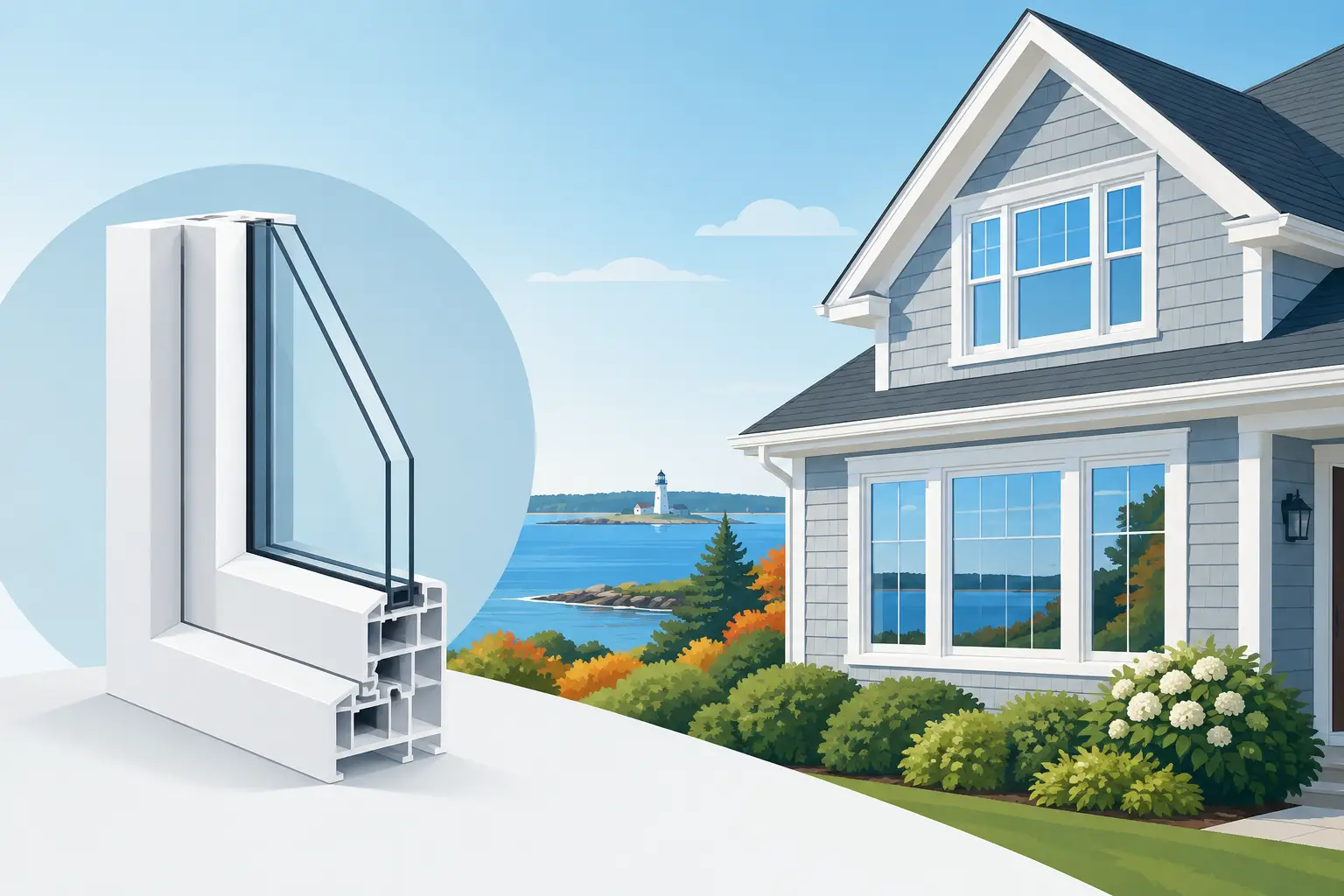
A window can look perfectly acceptable from the driveway and still be a source of cold drafts, condensation, difficult operation, and rising energy bills. This fiberglass window review looks past the showroom sample to help Massachusetts homeowners decide whether fiberglass is the right material for a long-term replacement project.
Fiberglass windows have earned a strong reputation for strength, stability, and clean sightlines. They are not automatically the best answer for every house or every budget, but they deserve serious consideration when durability and low maintenance are high on the list.
Fiberglass Window Review: What You Are Buying
Fiberglass window frames are made from glass fibers and resin formed into rigid, durable profiles. The material is very strong for its weight, which allows manufacturers to build narrow frames without sacrificing structural support. That can mean more visible glass, more daylight, and a sharper appearance than some bulkier frame options.
For homes in Peabody, on the Northshore, and across greater Boston, the material's stability is a major selling point. Our weather puts windows through humid summers, freezing temperatures, wind-driven rain, and repeated seasonal swings. Fiberglass expands and contracts at a rate closer to the glass in the window than vinyl does. In practical terms, that can help the frame, seals, and glass unit work together over time.
That does not mean every fiberglass product performs the same way. Frame design, weatherstripping, glass package, hardware, manufacturing quality, and installation all affect the final result. A strong frame cannot make up for poor air sealing around the opening or a rushed installation.
Where Fiberglass Earns Its Keep
The main advantage is long-term stability. Fiberglass resists warping, swelling, rot, and insect damage. Unlike wood, it does not need periodic scraping and repainting to protect the frame. Unlike lower-grade vinyl, it is less likely to become brittle or distort under years of temperature changes.
That stability also helps with operation. A well-built, properly installed fiberglass double-hung, casement, or awning window should open, close, lock, and seal reliably for years. Homeowners replacing older wood windows often notice the difference immediately: less sticking, fewer drafts, and a more secure feel when the sash is closed.
Fiberglass can also be a good fit for larger window openings. Picture windows, wide casements, and combinations of windows can benefit from the material's strength, especially where a homeowner wants slim profiles and broad views without moving into a more expensive custom solution.
The Trade-Offs to Expect
The biggest drawback is cost. Fiberglass windows generally cost more than standard vinyl windows, sometimes substantially more depending on size, configuration, glass upgrades, and finish choices. If the project is focused on a rental property, a short-term sale, or straightforward replacement of many small windows on a limited budget, a quality vinyl option may offer better value.
Color selection can also vary by manufacturer. Many fiberglass windows are available in attractive factory finishes, including dark exterior colors that may be harder on vinyl frames. Still, homeowners should confirm the available colors, interior finishes, and warranty terms before making a decision. If matching historic trim or a specific painted interior is the priority, wood or a clad-wood product may provide more flexibility.
Fiberglass is low maintenance, not no maintenance. Glass still needs cleaning. Tracks, weep holes, screens, hardware, and exterior caulk joints need occasional attention. A good window is part of an exterior wall system, and keeping water moving away from the home remains essential.
Energy Performance Depends on More Than the Frame
Fiberglass is often described as energy efficient, but the full window rating matters more than the frame material alone. The glass area is the largest part of most windows, so the glass package has a major effect on comfort and energy use.
For Massachusetts homes, homeowners should look at the U-factor, which measures how readily a window transfers heat. Lower numbers generally indicate better insulating performance. Solar heat gain, air leakage ratings, low-E coatings, insulated glass, and gas fills between panes also deserve attention. The right glass package depends on the home's orientation, the amount of shade, and whether the priority is reducing winter heat loss, limiting summer glare, or balancing both.
A triple-pane fiberglass window can deliver excellent comfort, but it is not always necessary in every room. It adds cost and weight. In a well-protected area with modest exposure, a high-quality double-pane window may be the sensible choice. On a windy wall, near a busy road, or in a bedroom where comfort and quiet matter most, upgraded glass may be worth the investment.
Condensation deserves a clear explanation during the estimate process. New, tighter windows can reduce drafts, but they may also reveal indoor humidity issues that old, leaky windows masked. Condensation on the room-side glass is often connected to indoor moisture, ventilation, and cold-weather conditions, not necessarily a defective window. A contractor should discuss this honestly rather than treating every moisture concern as a product failure.
Installation Is the Make-or-Break Part of the Project
A fiberglass frame will not perform as intended if it is installed into a damaged, out-of-square, or poorly flashed opening. This is where detailed site evaluation matters.
Before a replacement project begins, the installer should check the condition of the existing sill, framing, exterior trim, and surrounding siding. Signs of water damage, soft wood, staining, or failed flashing should be addressed before the new unit goes in. Covering a problem with aluminum wrap or new trim may look clean for a while, but it does not solve the source of water intrusion.
The right installation approach also depends on the home. An insert replacement can be a practical way to preserve existing frames when they are sound and the goal is a less invasive upgrade. A full-frame replacement exposes more of the opening and can be the better choice when frames are deteriorated, glass area needs to be maximized, or flashing details need correction.
Ask how the crew will insulate the gap around the new frame, manage exterior water, protect interior finishes, and handle trim repairs. A detailed quote should explain these steps in plain language. It should also identify what happens if concealed damage is found after the old window is removed. Clear expectations before work starts prevent stressful surprises during the job.
Are Fiberglass Windows Worth the Cost?
Fiberglass is usually worth considering for homeowners who plan to stay in the house, want a durable low-maintenance frame, and care about a refined finished appearance. It is especially compelling for exposed elevations, larger openings, and homes where seasonal movement has been hard on older windows.
It may not be the right choice when the budget is the driving factor and the existing openings are standard sizes with no unusual performance demands. A well-made vinyl window installed carefully can be a dependable solution. The goal is not to buy the most expensive window on the market. The goal is to choose a window system that fits the house, the exposure, the expected length of ownership, and the project budget.
A practical way to compare options is to review them as Good, Better, and Best choices. Compare the frame material, glass package, warranty, operating style, trim work, and installation scope side by side. This makes it easier to see where the extra investment improves comfort, appearance, or service life and where it may not add meaningful value for your home.
Questions to Settle Before You Choose
A productive window consultation should leave you with answers, not more jargon. Confirm whether the quoted window is fiberglass throughout or a composite product, what glass package is included, how the installer will address existing trim and framing, and who is responsible for the final finish work. Also ask to see the actual finish and hardware colors in daylight, not only in a catalog.
Pay attention to how the contractor explains the work. A dependable team should be willing to discuss scheduling, daily cleanup, protection of landscaping and interior spaces, and communication during the project. Windows are a visible upgrade, but the work behind the trim determines whether they stay dry, efficient, and easy to operate.
For homeowners who want a clear recommendation instead of a sales pitch, US Home Improvement can assess the condition of the openings and provide detailed options based on the home, not a one-size-fits-all package. The best next step is a careful on-site look at the windows you have, the problems you want solved, and the level of investment that will give you confidence for years to come.