A roof in Greater Boston has to handle more than rain. It faces freeze-thaw cycles, wind-driven coastal storms, humid summers, ice dams, falling branches, and long stretches of snow. That is why choosing roofing materials is not simply a matter of picking a color from a sample board. The right system needs to suit your home, your budget, and the conditions it will face year after year.
A good roof is built in layers, not just shingles. The visible material matters, but so do the underlayment, flashing, ventilation, ice-and-water protection, fasteners, and workmanship around chimneys, skylights, valleys, and roof-to-wall transitions. A quality installation gives the material its best chance to perform as promised.
Start With Your Home, Not the Product Brochure
Every roofing material has strengths. The better question is which one makes sense for your particular house. Roof pitch, architectural style, framing capacity, tree coverage, exposure to wind, and the condition of existing decking all affect the decision.
For example, a steep Colonial roof may be a natural fit for architectural asphalt shingles, while a low-slope rear addition may require a different roofing system altogether. A historic home in Salem or Marblehead may call for a material that respects the character of the property. A home near the coast may need extra attention to wind ratings and corrosion-resistant components.
Cost matters too, but the lowest initial price is not always the best value. A roof replacement is disruptive enough without cutting corners on materials or installation details that can lead to leaks later. Detailed quotes should make it clear what is being removed, what protection is being installed, how damaged decking is handled, and what cleanup is included.
Asphalt Shingles: The Practical Choice for Most Homes
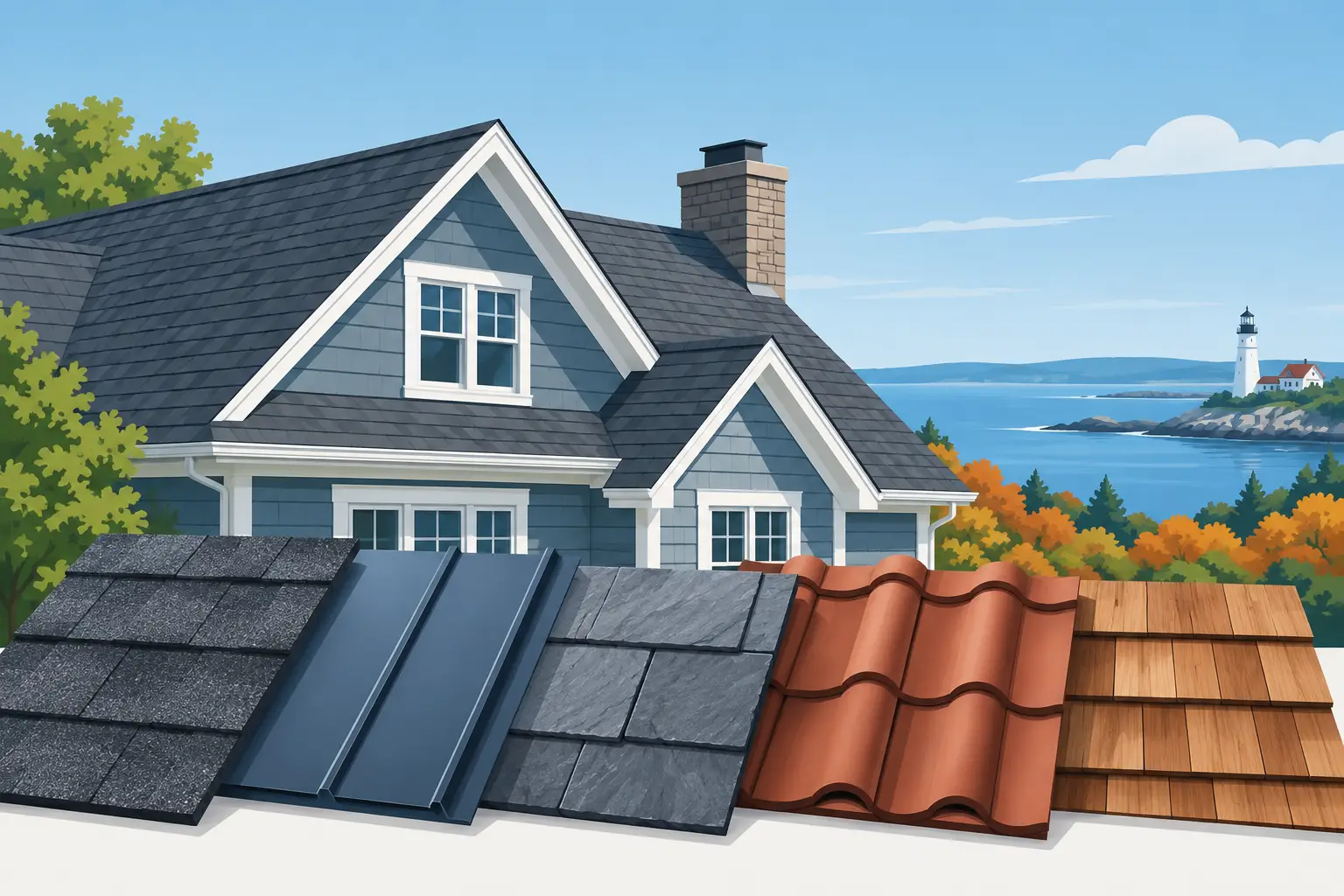
Architectural asphalt shingles are the most common choice for Massachusetts homes, and for good reason. They offer dependable weather protection, a wide range of colors and profiles, and a price point that works for many homeowners. They also complement most traditional Northshore and Boston-area home styles.
Compared with older three-tab shingles, architectural shingles are thicker and more dimensional. They typically hold up better in wind and provide a more substantial appearance from the street. With proper ventilation and installation, they can be an excellent long-term choice for a typical residential roof.
Where Asphalt Shingles Shine
Asphalt makes sense when you want a proven material with balanced cost, appearance, and performance. Repairs are generally straightforward, and homeowners can choose from basic, upgraded, and premium shingle options without changing the entire roofing approach.
The trade-off is lifespan. Asphalt does not last as long as metal, slate, or some synthetic options. Heat, poor attic ventilation, and heavy shade can shorten its service life. If your roof sits under mature trees, regular gutter cleaning and removal of debris are especially important. Moss and trapped moisture can wear on any roofing system over time.
Metal Roofing: Long Life With a Different Look
Metal roofing has become more popular with homeowners who want a longer-lasting option and a distinct architectural finish. Standing-seam metal roofs are known for their clean lines, strong weather resistance, and ability to shed snow efficiently. Metal shingles can provide a more traditional appearance while delivering many of the same durability benefits.
A professionally installed metal roof can last decades longer than a standard asphalt roof. It is also lightweight and can be a smart choice for certain roof designs. Many homeowners appreciate its crisp appearance, particularly on contemporary homes, farmhouses, cottages, and additions.
Metal is not the right answer for every project. It usually costs more upfront, and details matter greatly. Incorrect flashing, poorly placed fasteners, or inadequate allowance for metal movement can create problems. Homeowners should also consider snow retention. On a steep roof, snow can slide off metal quickly, so guards may be needed above walkways, entries, decks, or driveways.
The idea that metal roofs are always loud in the rain is overstated. When installed over proper roof decking and underlayment, the sound inside is often comparable to other roofing systems. The bigger consideration is whether the look and initial investment fit the home and your plans for it.
Slate and Synthetic Slate: Beauty With Important Trade-Offs
Natural slate has a place on some of New England's most distinctive homes. It offers unmatched character, impressive longevity, and a finish that can age beautifully. A well-maintained slate roof may last for generations.
That durability comes with major considerations. Slate is heavy, and the home structure must be able to support it. Installation requires specialized skill, repairs need experienced hands, and the material cost can be significant. Natural slate is a premium choice for homeowners preserving a historic home or making a long-term investment in a property with the right architecture.
Synthetic slate offers a similar visual effect at a lower weight and often a lower cost. It can be an appealing middle ground, but product quality and installation experience vary. Before choosing it, ask about the manufacturer's warranty, impact rating, color stability, and how replacement pieces will match if repairs are needed years from now.
Cedar, Tile, and Low-Slope Roofing Systems
Cedar shakes and shingles bring warmth and texture that few materials can match. They can look right at home on coastal cottages and traditional New England properties. However, cedar requires more maintenance than asphalt or metal, especially in shaded or damp locations. Fire ratings, local requirements, and treatment options should all be part of the conversation.
Clay and concrete tile are durable and visually striking, but their weight and style make them less common in this region. They can work on certain homes, yet the structure must be evaluated before installation. Cold-weather performance and the availability of qualified installers also deserve careful attention.
Flat and low-slope roofs require their own approach. Standard shingles should not be used below the manufacturer's recommended slope. For porches, additions, dormers, and modern-style roof sections, membrane systems such as EPDM, TPO, or modified bitumen may be the appropriate choice. These systems rely heavily on clean seams, drainage planning, flashing, and edge details. A small low-slope section should never be treated as an afterthought.
The Roofing Materials You Do Not See Matter Just as Much
Even the best shingles cannot compensate for weak installation practices. Water usually finds its way in at transitions, not in the middle of a roof field. Chimneys, valleys, pipe boots, sidewalls, skylights, and roof edges all need careful attention.
For Massachusetts homes, ice-and-water protection is particularly important at eaves and vulnerable areas. It helps protect against water backup caused by ice dams, though it is not a cure for ventilation or insulation problems. Proper attic airflow, air sealing, and insulation work together to reduce the conditions that create ice dams in the first place.
Flashing should be integrated correctly with the roofing and siding, not covered with caulk and hoped for the best. Roof decking should be inspected once the old roof comes off, because hidden rot or water damage can only be addressed after the existing materials are removed. These details affect both the roof's performance and the accuracy of the final project scope.
How to Make a Confident Decision
A practical way to compare options is to consider three timeframes: what you can invest now, how long you expect to own the home, and how much maintenance you are willing to take on. Asphalt is often the sensible Good or Better choice for homeowners seeking reliable protection and strong curb appeal. Premium architectural shingles, metal, and synthetic products can be a Better or Best investment when longer life, appearance, or specialized performance is the priority.
Do not choose based on a single square-foot price. Compare the full roofing system, the workmanship warranty, ventilation recommendations, removal and disposal, property protection, and daily cleanup. Ask how the crew will protect landscaping, manage unexpected decking repairs, and communicate if the weather changes the schedule.
At US Home Improvement, we have served local homeowners since 1978 with a straightforward approach: explain the options clearly, plan the work carefully, and stand behind the finished result. The right roof should leave you with more than a fresh exterior. It should give you confidence the next time the forecast turns rough.