
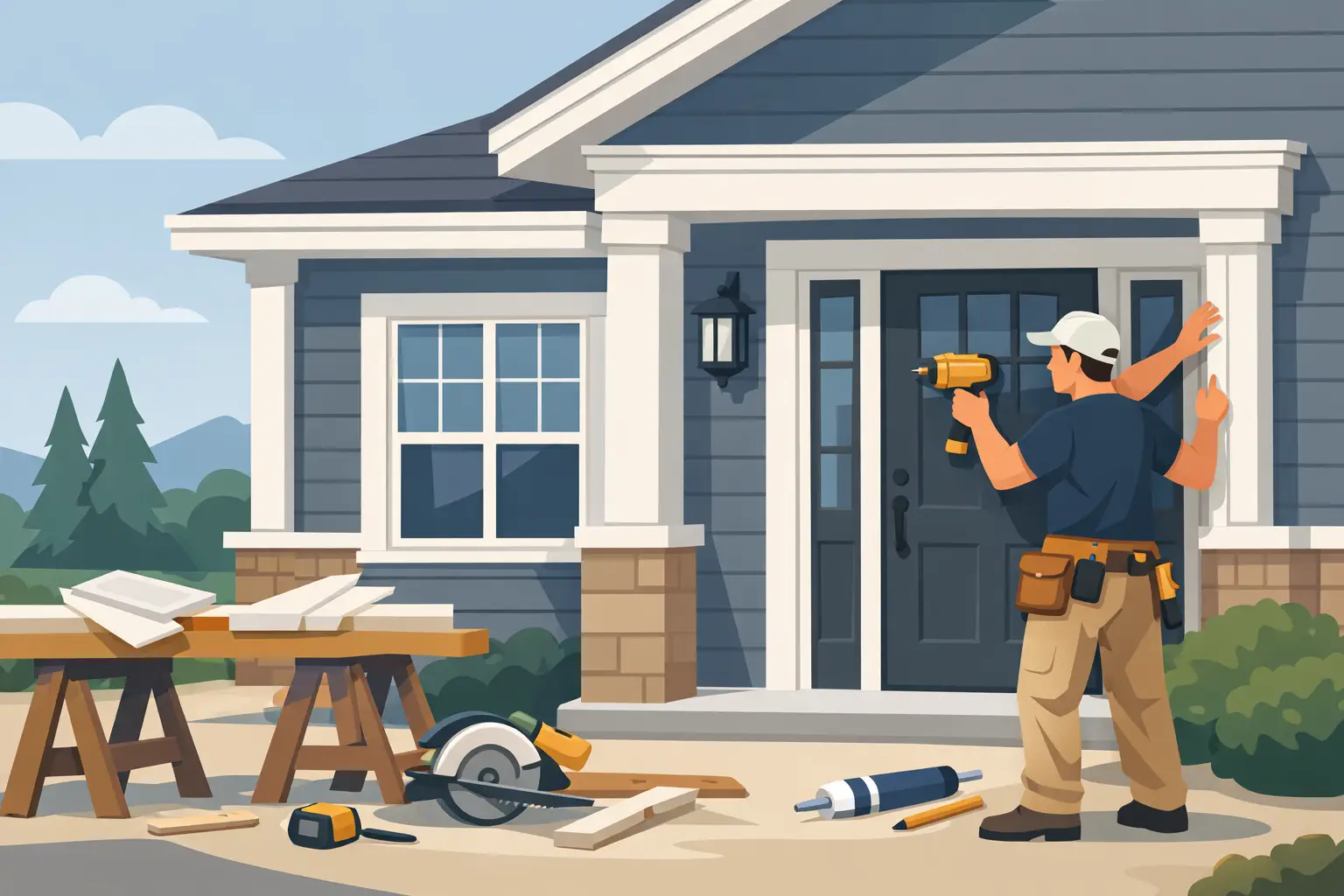
A new roof or fresh siding can change the whole look of a house, but the job rarely feels complete until the trim is right. Trim carpentry for exterior remodels is what turns separate pieces into a finished exterior - crisp around windows and doors, tight at corners, and built to hold up through New England weather.
Homeowners often notice trim only when something looks off. Gaps at the rake boards, swollen fascia, peeling corner boards, or mismatched window surrounds can make an otherwise solid renovation look unfinished. Good trim work fixes that. It sharpens curb appeal, protects vulnerable edges, and helps every other exterior product perform the way it should.
Why trim carpentry matters in exterior remodels
Exterior trim is not just decoration. It covers transitions, protects framing, and creates clean termination points where siding, roofing, windows, doors, and soffits meet. If those areas are handled poorly, water has more opportunities to get in, paint fails faster, and the whole front of the home can start to look tired long before the main materials wear out.
That is why trim work has to be planned as part of the full remodel, not treated like an afterthought. On a siding project, trim dimensions affect how courses land around openings. On a window replacement, the exterior casing has to work with flashing details and cladding thickness. On roofline work, fascia and rake boards need to be straight, solid, and properly tied into gutters and drip edges.
When the carpentry is done well, you may not think about it much afterward. That is usually the point. The exterior looks balanced. Lines are straight. Water sheds where it should. The home feels cared for.
What trim carpentry for exterior remodels usually includes
The scope depends on the house and the project, but exterior trim carpentry often covers fascia boards, rake boards, soffits, corner boards, frieze boards, window and door surrounds, porch trim, column wraps, and decorative details around gables or entryways. Sometimes the work is mostly replacement of rotted boards. Other times it is part of a larger design upgrade intended to give the house more presence.
Older homes in the Boston and Northshore area often need a careful balance. You want to preserve character, but you also want materials and installation details that can handle moisture, temperature swings, and normal maintenance demands. That is where experience matters. A trim package that looks right on a newer colonial may not suit a Victorian, cape, ranch, or expanded split-level.
There is also a practical side to scale. Trim that is too narrow can look cheap next to new siding and replacement windows. Trim that is too heavy can overwhelm the elevation. Good carpentry is not just cutting boards accurately. It is proportion, layout, and knowing how each exterior element works together.
Material choices and the trade-offs
There is no single best trim material for every house. It depends on the home style, exposure, maintenance expectations, and budget.
Wood still has a place, especially where homeowners want a traditional look or need to match existing historic details. It can be milled, repaired, and shaped in ways that synthetic materials cannot always duplicate. The trade-off is maintenance. Even quality wood trim needs proper priming, sealing, and paint upkeep, especially in high-exposure areas.
PVC trim is popular for many exterior remodels because it resists rot and holds up well in wet locations. It is a strong option around windows, doors, rooflines, and corners. But it has to be installed correctly. Expansion and contraction matter, fastener placement matters, and joints need the right adhesives and methods. Poor PVC installation can look just as sloppy as neglected wood.
Engineered trim products can also work well, particularly where homeowners want a balance between cost and durability. As with any product, details matter. The right material in the wrong location can still fail early.
A dependable contractor should be honest about these trade-offs. Some homes benefit from mixing materials - for example, using low-maintenance trim in the highest-risk moisture zones while preserving wood details where appearance matters most.
The details that separate clean work from costly problems
Most exterior trim failures start at joints, edges, or transitions. That is why craftsmanship matters more than broad promises about materials.
Window and door trim needs proper clearances, careful flashing integration, and clean, consistent reveals. Fascia work has to start with straight substrate and sound framing. Corner boards need to align cleanly from top to bottom, especially on taller elevations where even small errors become obvious from the street.
Caulking is another area where shortcuts show up fast. Too little and water gets in. Too much and the trim looks messy and amateurish. Paint prep matters too. Even the best carpentry will disappoint if surfaces are not properly finished.
This is one reason full-service exterior remodelers often have an advantage over pieced-together subcontracting. Trim intersects with siding crews, roof work, gutter alignment, window replacement, and painting. If those trades are not coordinated, the homeowner ends up with finger-pointing instead of answers.
When trim should be replaced during a remodel
Not every board needs to come off just because a home is being updated. But some signs should not be ignored.
Soft spots, active rot, open joints, peeling that keeps coming back, swollen edges, insect damage, or trim that has pulled away from the house are all warning signs. Sometimes the damage is visible. Sometimes it shows up only after old siding or capping is removed.
This is where a detailed quote matters. Homeowners should know what is included, what is assumed to be reusable, and how hidden damage will be handled if it is uncovered during the job. Clear communication upfront helps avoid surprises later.
There is also a design question. If you are investing in new siding, windows, or an upgraded entry, keeping undersized or badly worn trim can hold the whole project back. In those cases, replacement is not only about repair. It is about giving the remodel a finished, intentional look.
Good design is usually quieter than people expect
The best trim carpentry for exterior remodels does not always call attention to itself. Often, it simply makes the house look more put together.
That might mean wider window casing to give the facade more depth. It might mean cleaning up roofline details so gutters fit better and shadows look sharper. It might mean wrapping porch columns in a way that feels substantial instead of flimsy. For some homes, less is better. For others, the right build-out around doors and windows adds needed character.
A good contractor will help homeowners sort out what is worth doing and what is just extra cost. More trim is not automatically better. The right trim package should match the architecture, the neighborhood, and the level of maintenance the homeowner is comfortable with.
Why process matters as much as product
Exterior carpentry can disrupt daily life less than interior work, but it still affects the home in a big way. Homeowners want crews that show up, protect the property, keep the site orderly, and communicate when something changes.
That is especially true when multiple upgrades happen at once. If siding, roofing, trim, gutters, and painting are all in motion, sequencing matters. Trim often needs to be installed or repaired at just the right point in the project. Done too early, it can be damaged by later work. Done too late, it can create delays or force visual compromises.
That is why experienced exterior remodelers put a lot of emphasis on scheduling and coordination. It is not flashy, but it is part of good workmanship. Homeowners feel the difference when the project runs in a clear order and the finish details are not rushed at the end.
For families across Peabody and surrounding communities, that peace of mind often matters just as much as the finished look. A beautiful exterior upgrade should not come with confusion, missed handoffs, or a jobsite that feels unmanaged.
What to ask before approving exterior trim work
Before the project starts, ask what trim is being replaced, what material is being used, how joints and seams will be handled, and who is responsible for paint or finish work. Ask whether damaged sheathing or framing behind the trim is included if discovered. Ask how the trim profile and dimensions were chosen.
Those questions do two things. First, they help you understand what you are paying for. Second, they quickly reveal whether the contractor thinks about exterior remodeling as a complete system or just a collection of parts.
Since 1978, US Home Improvement has seen how often trim is the difference between a project that looks acceptable and one that truly looks finished. Homeowners may start with siding, windows, roofing, or a new entryway in mind, but the final impression usually comes down to the details.
If you are planning exterior work, give trim the attention it deserves. It is one of the clearest signs that a remodel was built to last, not just built to sell.