
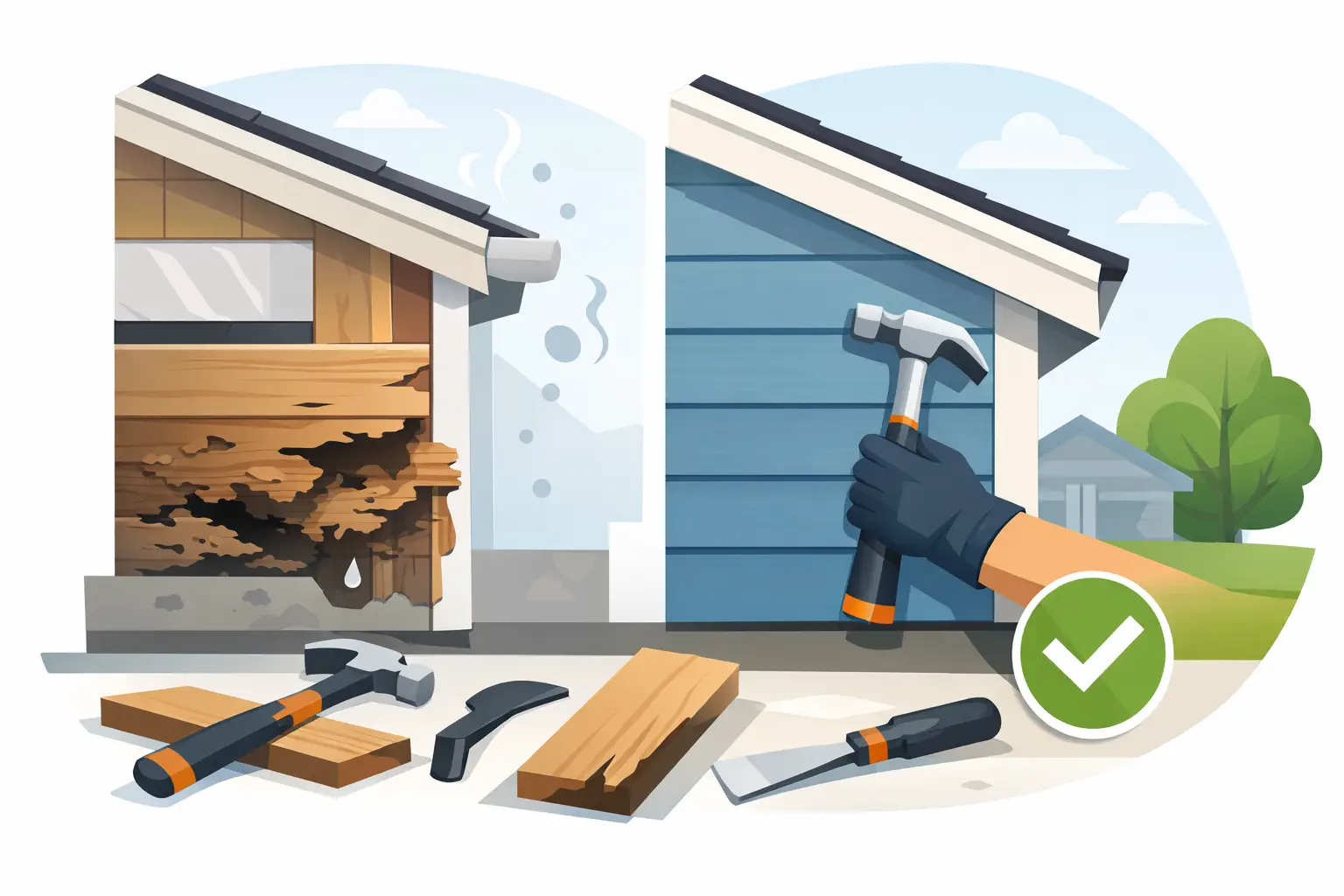
New siding can make a house look sharp again, but if the wood underneath is soft, wet, or already decaying, that fresh exterior is being installed over a problem that will keep growing. Rot repair before siding is not an upgrade add-on. It is part of doing the job right.
That matters even more in New England, where wind-driven rain, freeze-thaw cycles, ice dams, and years of deferred caulking can turn a small soft spot into a much larger repair. Homeowners are often surprised when a siding project uncovers damaged sheathing, trim, framing, or window surrounds. The surprise is normal. Ignoring it is where costs and headaches multiply.
Why rot repair before siding matters
Siding is only as reliable as the surface behind it. If the substrate is compromised, even high-quality siding and careful installation will not perform the way they should. Fasteners may not hold properly. Trim details can shift. Moisture can stay trapped where it should be draining and drying.
There is also a bigger issue than appearance. Rot is usually a symptom, not the whole problem. Water got in somewhere. That could mean failed flashing, worn caulk joints, roof runoff, gutter overflow, bad window integration, or siding details that were never installed correctly in the first place. If the damaged wood is replaced but the water path is not corrected, the same area can fail again.
For homeowners, this is where experience matters. A contractor should not just point to a bad board and suggest swapping it out. The real job is to find the cause, repair what is structurally unsound, and rebuild the wall assembly so the new siding has a dry, solid base.
Where rot is usually found before siding replacement
Most rot does not announce itself clearly from the street. It often shows up in predictable locations where water sits, sneaks in, or gets trapped.
Around windows and doors
Window sills, lower corners, head trim, and door surrounds are common trouble spots. Old caulk fails. Flashing details break down or were skipped entirely. Water gets behind trim and starts softening the wood beneath the paint.
Bottom wall sections and band boards
Areas close to grade take a beating from splash-back, snow buildup, and poor drainage. If mulch, soil, or hardscape sits too high against the house, moisture exposure increases. Over time, lower trim, sheathing edges, and framing can deteriorate.
Roof-to-wall intersections
Anywhere a roof line meets siding deserves a close look. Kick-out flashing, step flashing, and trim transitions have to move water away. If they do not, water often runs right behind the siding and into the wall.
Deck ledgers, porch connections, and attached structures
These are classic hidden-damage zones. Water can collect where a deck meets the home, especially if flashing was handled poorly years ago. By the time siding comes off, there may be more repair needed than anyone could see from the outside.
Signs you may need rot repair before siding
Some signs are obvious. Others are easy to miss until the demolition begins. If paint is bubbling, boards feel soft when pressed, trim is cracked at joints, or you see staining below windows, rot is possible. A musty smell near exterior walls can also point to long-term moisture intrusion.
Still, many houses show very little from the surface. That is why a detailed site visit matters. An experienced exterior contractor will probe suspect areas, evaluate transitions, and talk honestly about what is visible now versus what may only be confirmed once old materials are removed.
That conversation should be straightforward. No scare tactics. No pretending every job hides disaster. Some homes need only minor carpentry. Others need more extensive repair. The right approach is to prepare for both possibilities without overstating the worst case.
Rot repair before siding is not just carpentry
Homeowners sometimes hear “rot repair” and think in terms of replacing a few boards. Sometimes that is enough. Often it is not.
A proper repair may involve trim replacement, sheathing patches, framing repair, updated flashing, housewrap integration, and changes to how water exits around windows, doors, and roof lines. The goal is not simply to make the wall look sound. The goal is to make it perform.
This is one reason end-to-end exterior crews can make a difference. If carpentry, siding, and related weatherproofing are handled together, repairs tend to be more coordinated. The person fixing the wood should understand how the next layer will be installed. That is how details line up correctly instead of becoming a patchwork of disconnected work.
What the repair process usually looks like
Every house is different, but the sequence should be disciplined.
First comes inspection and quoting. Some damage can be identified before work starts, and some can only be estimated as a potential allowance because it is concealed. Honest contractors explain that clearly. They do not bury uncertainty, and they do not promise that nothing unexpected will appear.
Once siding is removed, the crew can assess the true condition of the wall. Damaged materials are cut back to solid wood. Then repairs are made with suitable replacement materials, and the cause of the moisture entry is addressed at the same time. After that, weather barrier details, flashing, and trim transitions are rebuilt so the new siding can be installed correctly.
The key is sequence. New siding should never go on before the wall is structurally sound and properly protected from water.
How rot repair affects project cost and timing
This is the question most homeowners ask first, and fairly so. Rot repair before siding can increase both cost and schedule, but the range varies widely.
Minor trim and sheathing repairs may add a modest amount to the job. More extensive framing or window-area reconstruction can move the budget more significantly. Timing works the same way. A few localized repairs may add only a day or two. Larger hidden issues can extend the project longer, especially if multiple elevations are affected.
That does not mean you should avoid the work. It means you should expect a contractor to explain the likely scenarios upfront. Detailed quotes, realistic allowances where needed, and clear communication during demolition all help keep the project manageable. For many homeowners, peace of mind comes from knowing the process is organized, not from hearing an unrealistically low number on day one.
Should you repair only the damaged spots?
Sometimes yes. Sometimes no.
If the damage is isolated and the surrounding assembly is sound, targeted repair is practical. But if rot is widespread, or if the underlying water-management details have failed in multiple places, partial fixes can become false economy. You may save money in the short term only to revisit adjacent sections later.
This is where a good contractor earns trust. The right recommendation is not always the biggest scope. It is the scope that makes sense for the house, the condition of the exterior, and the homeowner's budget. A Good, Better, Best conversation can be useful here when it is handled honestly. One option may address urgent repairs only. Another may solve the broader moisture issue and extend the life of the whole exterior.
Rot repair before siding and window replacement
If windows are old, leaking, or due for replacement soon, this is the time to think about sequencing. Replacing siding now and windows two years from now can mean disturbing finished work and paying twice for some labor.
That does not mean every siding job needs new windows. It means the exterior should be planned as a system. Windows, trim, flashing, and siding all meet at vulnerable points. Coordinating those parts often produces a cleaner result and better long-term value.
For homeowners in older housing stock around the North Shore and greater Boston, this is especially relevant. Many homes have gone through decades of piecemeal repairs. A well-planned project can finally correct layers of small problems that have been compounding for years.
What to look for in a contractor
You want someone who treats rot repair before siding as part of the real job, not as an inconvenient surprise to rush through. Ask how concealed damage is handled, who performs the carpentry, how moisture sources are diagnosed, and how the crew will communicate if additional repair is uncovered.
Look for practical answers. Will they document what they find? Will they explain options clearly? Will they rebuild flashing and weather barrier details instead of just replacing visible boards? Will the site stay organized and cleaned up daily?
That kind of discipline is usually a sign of a contractor who has done this work for a long time. Companies like US Home Improvement, serving local homeowners since 1978, understand that craftsmanship is not only about the final siding line. It is also about what gets fixed underneath, where most of the important work is hidden when the job is done.
A new exterior should not cover uncertainty. It should remove it. If your home needs siding, take the extra step to make sure the structure behind it is dry, sound, and repaired the right way the first time.