
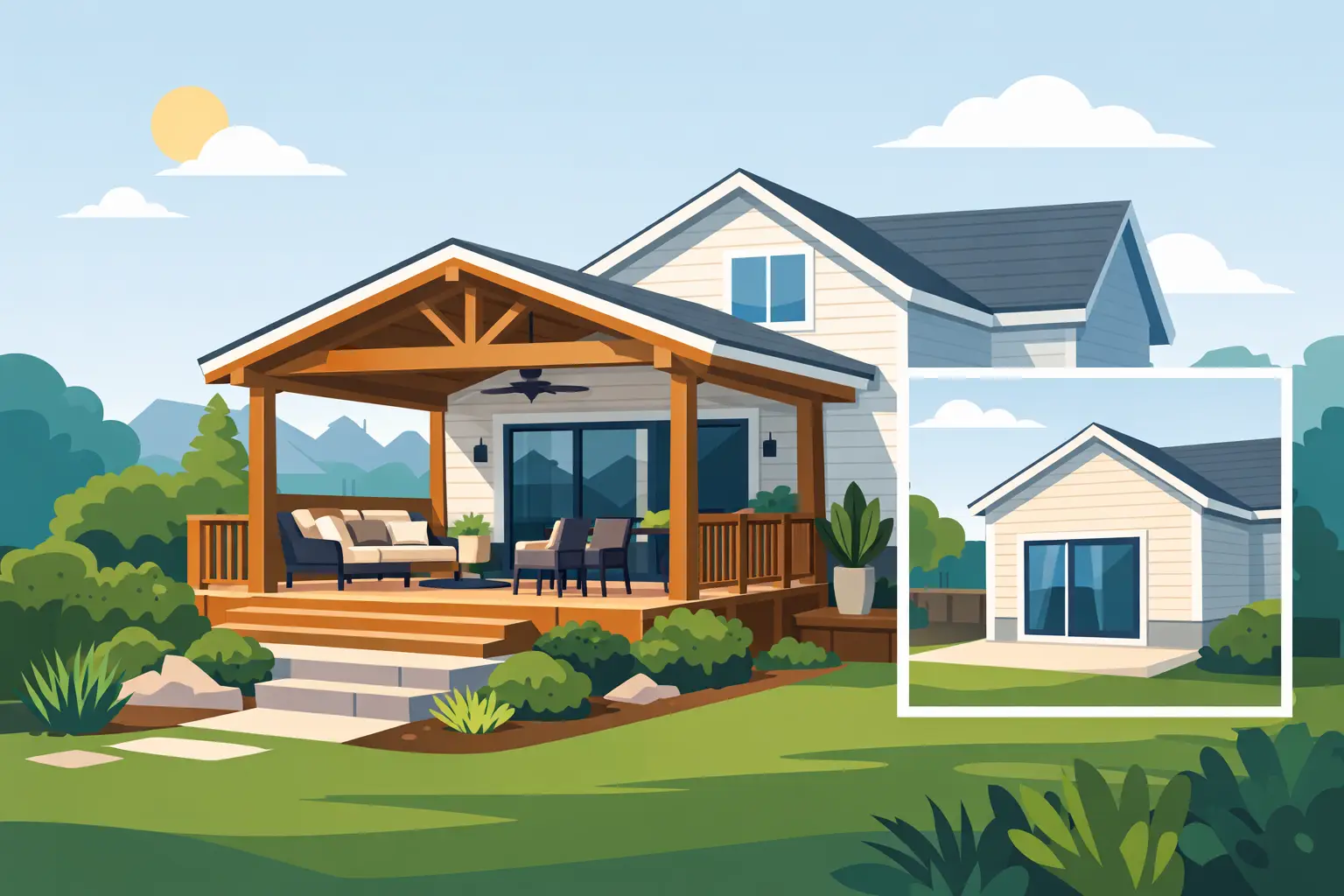
A backyard project usually looks simple on paper until the real questions start. How deep should the deck be to fit a table and still allow room to walk? Will the roof make the house feel darker inside? Can the new structure handle New England weather without turning into a maintenance problem? A good covered deck addition example helps answer those questions before construction starts.
For many homeowners in Essex County and the greater Boston area, the goal is not just adding a deck. It is creating an outdoor space that feels finished, useful, and built to last. A covered deck can give you shade in July, shelter during a light rain, and a more comfortable transition between your home and yard for much more of the year. The right design does that without looking like an afterthought.
A practical covered deck addition example
Picture a two-story colonial with a modest backyard and a rear door off the kitchen. The homeowners want a space for family dinners, morning coffee, and a grill station that stays usable even when the weather is less than ideal. They also do not want a huge structure that overwhelms the house.
In this example, the deck footprint is 16 by 20 feet. That size is large enough to create distinct use zones without eating the entire yard. The covered portion spans 16 by 14 feet, leaving a 16 by 6-foot open section for grilling and direct sunlight. That balance matters. Fully covering the entire deck can be the right move on some homes, but many families prefer a mixed layout so the space does not feel too enclosed.
The framing is pressure-treated lumber, built for structural performance and code compliance. The finished deck surface is a composite board in a medium brown tone that works well with a range of siding colors and keeps annual maintenance lower than traditional wood. White PVC trim wraps the perimeter for a clean finish. The roof structure ties into the existing house roofline rather than using a detached canopy style. Visually, that gives the addition a more permanent, custom-built appearance.
The roof pitch is designed to match the home as closely as possible, and the roofing material is selected to blend with the existing shingles. Square support posts are wrapped and trimmed so they feel substantial instead of temporary. A simple rail system keeps sightlines open to the yard. On the inside edge near the house, recessed lighting is added to the ceiling so the deck remains useful after sunset without harsh glare.
Why this example works
The strength of this covered deck addition example is not just the size or material selection. It is how the project solves everyday problems.
First, it creates usable shade without sacrificing all-natural light. Because only part of the deck is covered, the kitchen and adjacent living spaces still receive daylight. This is a common concern, especially on the back of the home where families already want to preserve brightness indoors.
Second, it respects how people actually use outdoor spaces. The covered area holds the dining table and lounge seating. The open section handles the grill, which is usually the safer and more practical choice. That split also keeps smoke and heat from collecting under the roof.
Third, the addition looks connected to the home. This is where many projects either add value or miss the mark. A covered deck should look like it belongs there. Rooflines, post details, trim, railing style, and stair placement all have to work together. If one of those elements feels off, the whole project can read as an add-on instead of an upgrade.
Design choices that change the outcome
A covered deck is not one decision. It is a series of decisions that affect comfort, appearance, and long-term durability.
Roof style and attachment
The roof is one of the biggest choices. A shed roof can be efficient and clean-looking, especially on simpler home styles. A gable roof can create a more open feel and a stronger architectural statement. Which one is best depends on the house, the available height, and how the structure ties into existing framing.
This is also where professional planning matters. Attaching a roof to a home is not the same as building an open deck. Water management, flashing details, snow loads, and structural connections all need to be handled correctly. In Massachusetts, where weather can be rough, shortcuts here usually show up later as leaks, movement, or premature wear.
Materials and maintenance
Wood has natural warmth and can look excellent, but it asks more from the homeowner over time. Composite decking and PVC trim cost more upfront, yet many families choose them for a reason. Less painting, less staining, and less worry about weather exposure can make the investment worthwhile.
For the ceiling, some homeowners prefer a painted beadboard look for a more finished porch feel. Others keep it simpler with clean soffit-style panels that are easy to maintain. There is no one correct answer. It depends on the style of the home and how polished you want the finished space to feel.
Size and furniture layout
A deck that looks large from the yard can still feel cramped once furniture is in place. That is why layout should be considered before the first board goes down. In the example above, the covered area supports a dining table and seating because it was sized for those uses from the beginning.
A good rule is to think in circulation paths, not just square footage. You need room to pull out chairs, carry food from the kitchen, and move safely on stairs. Homeowners often focus on making the deck bigger, but smarter layout usually delivers more value than simply adding more square feet.
Budget expectations and where costs move
Homeowners often ask for a simple price, but covered decks do not lend themselves to one-number answers. The cost depends on size, height off grade, roofing complexity, finish materials, stairs, lighting, and whether the project requires adjustments to siding, doors, or nearby exterior features.
In general, a covered deck costs more than an open deck because you are building both a platform and a roof structure. That is obvious, but the less obvious part is how quickly details affect the number. A low platform in a straightforward backyard is one thing. A second-story walkout with custom stairs, wrapped columns, electrical work, and a roof tied into a complicated existing structure is another.
That is why detailed quoting matters. Homeowners deserve to see what is included and where options exist. In many cases, a Good, Better, Best approach helps narrow choices without lowering standards. You may decide to keep the structural scope the same while adjusting railing material, ceiling finish, or lighting package to match your budget.
Common trade-offs homeowners should consider
Every covered deck project has trade-offs. The key is making them on purpose.
A deeper roof gives more weather protection, but it can reduce interior light. Premium low-maintenance materials cut upkeep, but they raise initial cost. A larger footprint improves usability, but it may change yard space and increase permit and construction complexity. These are not reasons to avoid the project. They are reasons to plan it carefully.
The best results usually come from thinking beyond the deck itself. How will the stairs land in the yard? Will the roof line block a second-floor window? Do you want privacy screening from neighbors, or would that make the space feel closed in? Those questions shape the final outcome as much as the decking color does.
Covered deck addition example ideas for different homes
Not every home needs the same solution. On a small cape, a compact covered deck off the back door may work best as a sheltered landing with enough room for a bistro set and a grill nearby. On a larger colonial, a wider roofed section can support outdoor dining and a sitting area with better flow from the kitchen. On a ranch, a low-profile roof and broad stair layout can make the yard feel more connected and accessible.
What matters most is fit. The project should match the scale of the home, the way your family lives, and the weather conditions it has to handle year after year. That is where an experienced exterior contractor earns trust - not by pushing the biggest option, but by guiding you to the right one.
For homeowners who want an outdoor space that feels finished, dependable, and easy to enjoy, a covered deck is often one of the smartest upgrades you can make. When it is planned well, it does more than add square footage. It gives your home a better way to live outside, with fewer compromises when the weather changes. Take the first step by thinking through how you want the space to work, then build from there.