
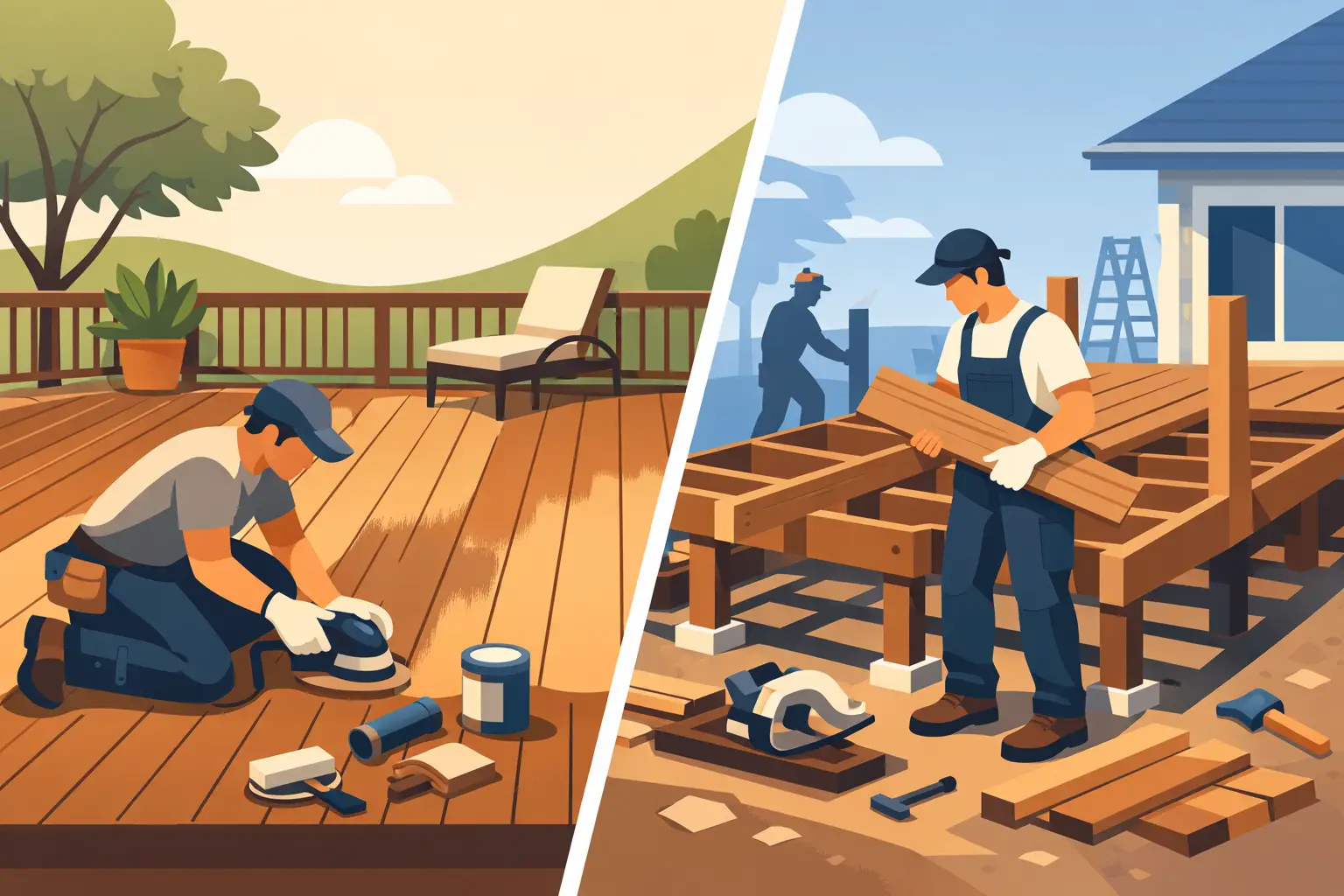
A deck can look tired long before it is unsafe. Faded boards, peeling stain, surface cracks, and splinters are frustrating, but they do not automatically mean the entire structure needs to come down. The real question behind deck resurfacing versus rebuild is whether the framing beneath those boards is still sound enough to support a new surface safely.
For homeowners across the North Shore and greater Boston, that distinction matters. Our freeze-thaw winters, wet springs, humid summers, and coastal exposure can be tough on lumber, fasteners, and deck connections. A lower-cost surface upgrade is a smart investment when the structure is solid. A rebuild is the better value when hidden deterioration would make resurfacing a short-lived fix.
What Deck Resurfacing Actually Means
Deck resurfacing keeps the existing structural framework while replacing the visible, walkable components. Depending on the deck's condition and design, that can include new decking boards, railings, stairs, trim, and sometimes new fascia. Homeowners often choose composite decking during a resurfacing project to reduce future staining, sanding, and board replacement.
The appeal is clear. When the joists, beams, posts, footings, and house connection are in good condition, resurfacing can refresh the appearance of the entire outdoor space without paying to rebuild parts that still have useful life. It can also be a good time to update an older railing system, improve stair lighting, or choose a color that better fits new siding, doors, or exterior paint.
But resurfacing is not simply laying new boards over an old deck. The existing framing needs a careful inspection first. New composite boards can last for decades, but they cannot correct rot in a rim joist, loose hardware at the ledger, undersized joists, or posts that have begun to decay near grade.
When Resurfacing Is a Smart Choice
Resurfacing generally makes sense when the deck's problems are limited to the finish materials. The boards may be worn, cupped, splintered, or beyond reasonable repair, while the framework remains straight, dry, and properly supported.
A good candidate often has solid joists with no soft spots or deep rot, posts that are secure and sit on proper footings, beams without significant splitting or sagging, and a ledger board that is properly flashed and fastened to the house. Railings and stairs may be outdated or loose, but those elements can often be replaced as part of the new surface package.
Age alone does not decide the issue. A well-built deck that has been kept clear of wet leaves, regularly maintained, and protected from standing water may be a strong resurfacing candidate after many years. On the other hand, a younger deck built with poor drainage details can develop serious problems early.
Resurfacing also works well for homeowners who are happy with the deck's size, layout, and location. If the footprint already fits how your family uses the yard, replacing the surface can deliver a major visual improvement without redesigning the whole space.
One Important Material Detail
If you are switching from wood decking to composite, the framing should be checked for proper joist spacing. Many composite products require closer spacing than traditional wood boards, especially when boards are installed on a diagonal. This is not a detail to guess at. Proper spacing helps prevent sagging and gives the finished deck the clean, firm feel homeowners expect.
When a Full Deck Rebuild Is the Better Investment
A rebuild means removing the old deck and constructing a new structure from the ground up. It costs more upfront, but it is often the responsible choice when the deck has structural concerns, code issues, or a layout that no longer serves the home.
Visible warning signs include posts that are soft, cracked, or sinking; joists with widespread rot; a bouncy or sagging deck surface; rusted or failing connectors; and railings that move when pressure is applied. Another major concern is the ledger board, where the deck attaches to the house. Water infiltration or improper flashing in this area can damage both the deck and the home's exterior wall.
A rebuild also gives you the chance to correct older construction practices. Many aging decks were built before current expectations for flashing, lateral connections, guardrail strength, stair geometry, and footing depth. Bringing a deck up to current requirements is not about adding paperwork. It is about building a safer outdoor structure for daily use, guests, children, and changing weather.
Layout is another reason to rebuild. Perhaps the existing deck is too small for entertaining, the stairs block access to the yard, or the door location has changed during a kitchen or addition project. Starting fresh lets you adjust the footprint, add multiple levels, create a grilling area, or design more practical steps and railings rather than forcing new materials onto an outdated plan.
Deck Resurfacing Versus Rebuild: The Cost Question
It is natural to start with budget, but the lowest initial price is not always the best value. Resurfacing usually costs less because it reuses the framing and reduces demolition and labor. It can be an excellent choice when an inspection confirms the structure has years of service left.
A rebuild requires more labor, new framing materials, footings, hardware, and potentially design or permitting work. Still, it eliminates uncertainty about what is behind the boards. It also gives you a complete system designed to work together, from the foundation and framing to the decking, railings, stairs, and drainage details.
The expensive mistake is spending money on premium new decking over framing that fails a few years later. At that point, the new surface may need to be removed so the structure can be repaired or replaced. A detailed quote should clearly separate what can be retained from what should be replaced, so you can compare options honestly.
For many homeowners, a Good, Better, Best approach is useful. One option may focus on practical resurfacing with durable materials. Another may include upgraded railings, picture-frame borders, and improved stair details. A full rebuild option can show the cost of correcting structural concerns and redesigning the space for long-term use. Seeing those paths side by side makes the decision less stressful.
What a Thorough Deck Inspection Should Cover
The surface of a deck tells only part of the story. A proper evaluation should look underneath, around the house connection, and at points where water collects. The contractor should check framing condition, hardware, post bases, footings, drainage, stair support, railings, and the integrity of the attachment to the home.
Pay attention to how the conversation is handled. A dependable contractor should be able to explain what they found in plain language, show you areas of concern when possible, and identify whether an issue is cosmetic, repairable, or structural. Vague warnings without evidence are not helpful, but neither is a quick promise that every old deck can be resurfaced.
In Peabody and surrounding communities, permit requirements can also affect the scope. A rebuild or significant structural alteration may require plans and permits, while a straightforward surface replacement may be treated differently. A professional team should help set expectations before work begins rather than surprising you after demolition is underway.
Plan for the Deck You Want to Use
The best decision is not only about what your deck needs today. Think about how you expect to use it over the next 10 to 20 years. A quiet landing for two chairs has different structural and design needs than a gathering space for family cookouts. If you expect to add a hot tub, outdoor kitchen, pergola, or screened enclosure later, say so before the work is priced.
Material choices deserve the same forward thinking. Pressure-treated wood can be a practical, budget-conscious option, but it needs ongoing care. Composite decking generally costs more initially and offers lower maintenance, consistent color options, and freedom from many common wood issues. Neither choice is right for every project. The right one is the material that fits your budget, maintenance expectations, and the condition of the structure supporting it.
US Home Improvement has served local homeowners since 1978 with the kind of careful evaluation exterior projects deserve. Whether a deck needs a fresh surface or a complete new start, clear recommendations, clean work areas, and solid craftsmanship should be part of the plan.
Before choosing a path, ask for an on-site assessment that looks below the boards as closely as it looks at them. A deck should be more than attractive from the kitchen window. It should feel solid underfoot, handle New England weather, and give your household a place to enjoy for years ahead.