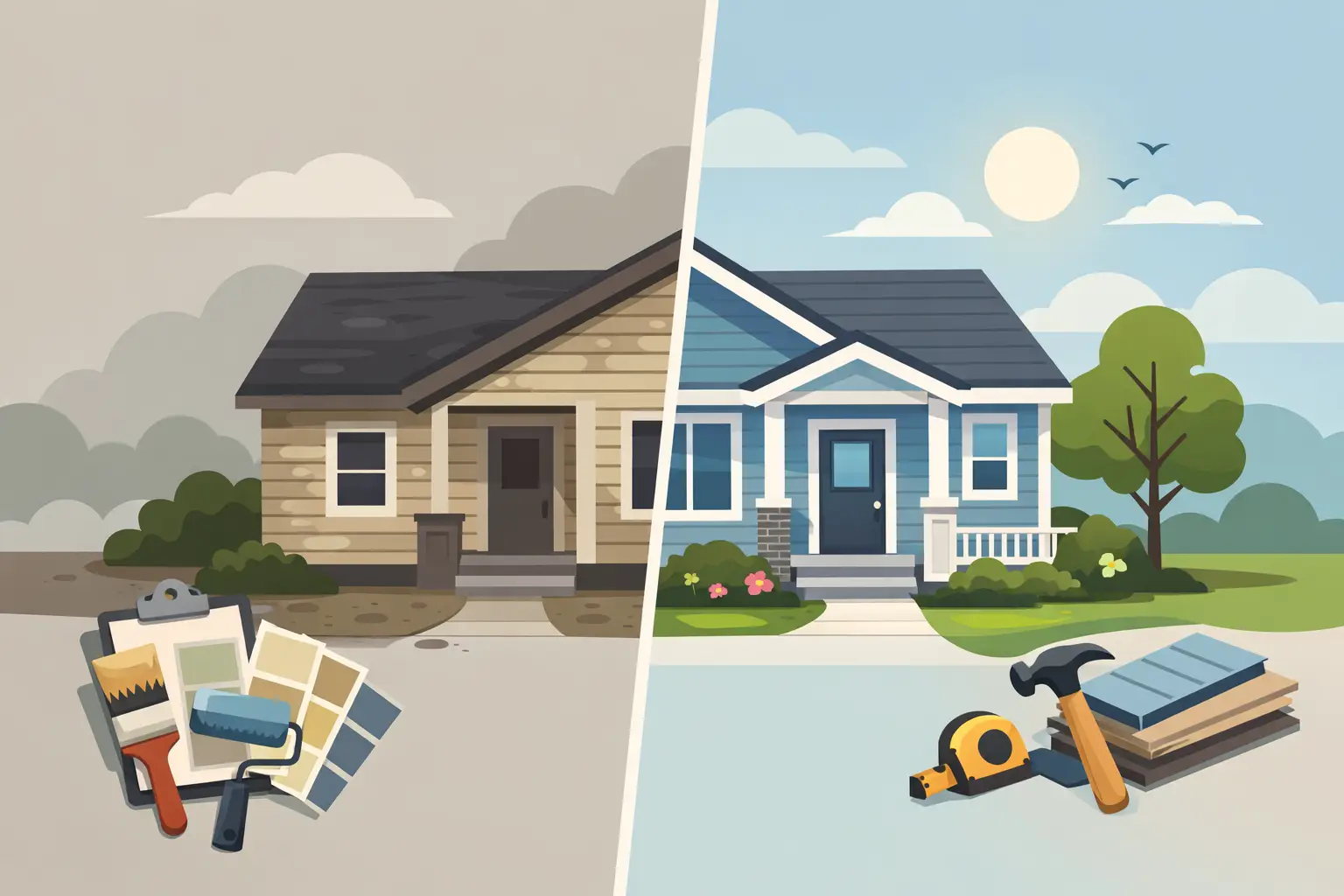
A tired exterior tells on a house fast. Faded color, loose panels, swollen trim, and old patchwork repairs can make the whole property feel worn out, even when the structure underneath is solid. That is why a before and after siding makeover gets so much attention from homeowners across the Northshore and greater Boston area. Few exterior projects change the look, protection, and overall confidence in a home as quickly.
The part homeowners often miss is that siding is not just about appearance. A real makeover is part design decision, part weather-defense upgrade, and part craftsmanship test. If the layout is right but the installation is rushed, the "after" photo may look good for a season and disappoint after a few New England winters. Good results come from choosing the right material, matching it to the house, and making sure every detail around corners, windows, trim, and moisture control is handled correctly.
What a before and after siding makeover really changes
The visual difference is obvious. Old siding can flatten the look of a house, especially when the color has faded unevenly or the profile feels dated. New siding sharpens the lines of the home, defines trim, and gives the exterior a cleaner, more finished appearance.
But the bigger change is often what you stop worrying about. When deteriorated siding is replaced properly, homeowners usually gain better protection against wind-driven rain, fewer maintenance headaches, and less concern about hidden damage spreading behind the walls. If the project also includes upgraded trim, moisture barriers, and coordinated exterior details, the home feels more solid because it is more solid.
That is why the best before and after siding makeover stories are not just cosmetic. The house looks newer, but it also performs better.
Why some homes need more than new panels
A siding project can uncover things that were easy to miss from the ground. Water damage around windows, soft sheathing, failed caulking, insect damage, and aging trim are common findings once old materials come off. This is where experience matters.
A contractor who treats siding as a full exterior system will look beyond the face of the wall. That means paying attention to house wrap, flashing, trim integration, and the transitions where siding meets roofing, doors, decks, and foundation lines. If those details are ignored, even expensive materials can underperform.
For some homeowners, this is the difference between a cheap refresh and a real upgrade. One costs less up front. The other is built to hold up.
Before and after siding makeover choices that affect the result
Not every makeover should look dramatic. Sometimes the smartest choice is simply making the house look cleaner, brighter, and more balanced while keeping its original character. A colonial in Essex County may benefit from classic horizontal lines and crisp white trim. A cape near the coast might call for a color that hides weathering better and suits the neighborhood. A larger home with mixed rooflines may need board and batten or accent areas to break up the mass.
Material choice matters too. Vinyl siding remains popular because it is cost-effective, low maintenance, and available in a wide range of colors and profiles. It can deliver a strong before and after transformation without pushing the project into premium pricing.
Fiber cement offers a different kind of value. It gives a more substantial look and excellent durability, but installation is more labor-intensive and the total cost is usually higher. Wood has timeless appeal, but it asks more from the homeowner in upkeep. Composite options can be a good middle ground, depending on the style of the home and the long-term maintenance plan.
There is no one right answer. It depends on the house, the budget, and how long you plan to stay.
Color does more work than most homeowners expect
Color can make a small home feel larger, a dated home feel current, or an uneven facade feel more organized. Lighter siding tends to make details read more clearly. Darker tones can look rich and modern, but they also show dust more quickly and can make a simple home feel heavier if the trim is not balanced well.
This is where sample viewing matters. A color chip in the hand does not always match what happens across a full sun-facing wall. In New England light, gray can turn blue, beige can wash out, and bold tones can feel stronger than expected. It pays to check samples outdoors and at different times of day.
Trim and accessories can make or break the after photo
Homeowners sometimes focus so much on the siding field that they overlook the finish details. But trim package, corner boards, window surrounds, soffits, and fascia are what make the installation look intentional instead of pieced together.
A well-planned makeover often includes replacing worn trim, cleaning up problem transitions, and making sure gutters, shutters, and exterior fixtures work with the new palette. These details are not extras in the visual sense. They are part of why the house looks complete when the job is done.
The process behind a smooth siding transformation
Most homeowners are not looking for a complicated project. They want clear pricing, realistic timing, respectful crews, and a finished result that feels worth the investment. That is why the process matters almost as much as the product.
A good siding project starts with a detailed site visit, not a rough guess. The home should be measured carefully, existing conditions reviewed, and weak points identified before work begins. Homeowners should also be given practical choices, not a single take-it-or-leave-it number. A Good, Better, Best approach often helps because it shows where the money goes and what each level improves.
Once the project starts, daily cleanup and communication matter. Siding replacement is visible, noisy, and disruptive for a short time. Crews that show up on time, protect the site, and keep homeowners updated take a lot of the stress out of the job.
That is one reason many local homeowners choose established companies like US Home Improvement. The value is not only in the finished exterior. It is in having an experienced team that can manage the project cleanly from quote to final walkthrough.
When siding alone is not enough
Some of the strongest before and after results come when siding is paired with related exterior upgrades. Old windows can make a freshly sided house still look tired. Worn entry doors, bent gutters, peeling porch trim, or an aging roofline can limit the impact of the investment.
That does not mean every homeowner needs a full exterior renovation at once. It means planning matters. If a roof is nearing the end of its life, or window replacement is already on the horizon, it makes sense to sequence the work intelligently. A contractor with broader exterior experience can help avoid rework and keep the overall design consistent.
What homeowners should watch for in estimates
The lowest number can be tempting, especially on a project with a large visible price tag. But siding estimates are not always equal. One quote may include full tear-off, damaged substrate replacement allowances, trim updates, and better moisture protection. Another may leave those items vague and turn them into change orders later.
Ask what happens if hidden damage is found. Ask how windows and doors will be flashed. Ask what trim is included and what cleanup looks like. The quality of the answers usually tells you a lot about how the project will run.
A makeover should leave you with fewer unknowns, not more.
The value of local experience
Homes in Massachusetts deal with freeze-thaw cycles, coastal moisture, wind, and strong seasonal swings. Materials and installation methods that seem fine elsewhere may not be the best fit here. That is why local experience counts.
A contractor who has worked on homes across Peabody, Essex County, and the greater Boston area understands the common trouble spots. They know how older homes were built, where water tends to get in, and how to match modern siding performance with the character of established neighborhoods.
That kind of judgment does not show up in a brochure. It shows up years later, when the siding still looks straight, the trim still feels tight, and the home still looks cared for.
The best after result is peace of mind
The strongest siding makeover does not shout. It fits the home, improves the details, and makes the whole property feel well kept again. You pull into the driveway and notice the difference every time, not because it looks flashy, but because it looks right.
If your exterior is showing its age, start with a careful look at what is really happening, not just what is visible from the street. The right plan can give you a before and after siding makeover that adds curb appeal now and confidence for years after the crews have packed up.